

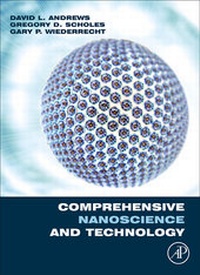
Comprehensive Nanoscience and Technology
Academic Press
Published on 3. November 2010
Book
2774 pages
978-0-12-374390-9 (ISBN)
Description
From the Introduction:Nanotechnology and its underpinning sciences are progressing with unprecedented rapidity. With technical advances in a variety of nanoscale fabrication and manipulation technologies, the whole topical area is maturing into a vibrant field that is generating new scientific research and a burgeoning range of commercial applications, with an annual market already at the trillion dollar threshold. The means of fabricating and controlling matter on the nanoscale afford striking and unprecedented opportunities to exploit a variety of exotic phenomena such as quantum, nanophotonic and nanoelectromechanical effects. Moreover, researchers are elucidating new perspectives on the electronic and optical properties of matter because of the way that nanoscale materials bridge the disparate theories describing molecules and bulk matter. Surface phenomena also gain a greatly increased significance; even the well-known link between chemical reactivity and surface-to-volume ratio becomes a major determinant of physical properties, when it operates over nanoscale dimensions.
Against this background, this comprehensive work is designed to address the need for a dynamic, authoritative and readily accessible source of information, capturing the full breadth of the subject. Its six volumes, covering a broad spectrum of disciplines including material sciences, chemistry, physics and life sciences, have been written and edited by an outstanding team of international experts. Addressing an extensive, cross-disciplinary audience, each chapter aims to cover key developments in a scholarly, readable and critical style, providing an indispensible first point of entry to the literature for scientists and technologists from interdisciplinary fields. The work focuses on the major classes of nanomaterials in terms of their synthesis, structure and applications, reviewing nanomaterials and their respective technologies in well-structured and comprehensive articles with extensive cross-references.
It has been a constant surprise and delight to have found, amongst the rapidly escalating number who work in nanoscience and technology, so many highly esteemed authors willing to contribute. Sharing our anticipation of a major addition to the literature, they have also captured the excitement of the field itself in each carefully crafted chapter. Along with our painstaking and meticulous volume editors, full credit for the success of this enterprise must go to these individuals, together with our thanks for (largely) adhering to the given deadlines. Lastly, we record our sincere thanks and appreciation for the skills and professionalism of the numerous Elsevier staff who have been involved in this project, notably Fiona Geraghty, Megan Palmer and Greg Harris, and especially Donna De Weerd-Wilson who has steered it through from its inception. We have greatly enjoyed working with them all, as we have with each other.
Against this background, this comprehensive work is designed to address the need for a dynamic, authoritative and readily accessible source of information, capturing the full breadth of the subject. Its six volumes, covering a broad spectrum of disciplines including material sciences, chemistry, physics and life sciences, have been written and edited by an outstanding team of international experts. Addressing an extensive, cross-disciplinary audience, each chapter aims to cover key developments in a scholarly, readable and critical style, providing an indispensible first point of entry to the literature for scientists and technologists from interdisciplinary fields. The work focuses on the major classes of nanomaterials in terms of their synthesis, structure and applications, reviewing nanomaterials and their respective technologies in well-structured and comprehensive articles with extensive cross-references.
It has been a constant surprise and delight to have found, amongst the rapidly escalating number who work in nanoscience and technology, so many highly esteemed authors willing to contribute. Sharing our anticipation of a major addition to the literature, they have also captured the excitement of the field itself in each carefully crafted chapter. Along with our painstaking and meticulous volume editors, full credit for the success of this enterprise must go to these individuals, together with our thanks for (largely) adhering to the given deadlines. Lastly, we record our sincere thanks and appreciation for the skills and professionalism of the numerous Elsevier staff who have been involved in this project, notably Fiona Geraghty, Megan Palmer and Greg Harris, and especially Donna De Weerd-Wilson who has steered it through from its inception. We have greatly enjoyed working with them all, as we have with each other.
More details
Language
English
Place of publication
San Diego
United States
Publishing group
Elsevier Science Publishing Co Inc
Target group
Professional and scholarly
<b>Primary Audience</b>
(Upper Under-) Graduate Students and Researchers from Chemistry, Physics, Material Science, Biology or Engineering departments.
<b>Secondary Audience</b>
<ul></ul>Nano research labs, institutes, professional firms and corporations (private and public) whose activities relate to Nano & Bio-materials and material science.
Dimensions
Height: 260 mm
Width: 195 mm
Weight
7690 gr
ISBN-13
978-0-12-374390-9 (9780123743909)
Copyright in bibliographic data and cover images is held by Nielsen Book Services Limited or by the publishers or by their respective licensors: all rights reserved.
Schweitzer Classification
Other editions
New editions
Book
01/2019
2nd Edition
Academic Press
€2,612.14
Shipment within 15-20 days
Additional editions
David Andrews | Gregory Scholes | Gary Wiederrecht
Comprehensive Nanoscience and Technology
E-Book
10/2010
1st Edition
Academic Press
from
€1,705.00
Available for download
Persons
Greg Scholes is an Associate Professor at the University of Toronto in the Department of Chemistry. His present research focuses on elucidating the principles deciding electronic structure, optical properties, and photophysics of nanoscale systems by combining synthesis, theory, and ultrafast laser spectroscopy. Recent awards honoring his research achievements include election to the Academy of Sciences, Royal Society of Canada in 2009, the 2007 Royal Society of Canada Rutherford Medal in Chemistry, a 2007 NSERC Steacie Fellowship, the 2006 Canadian Society of Chemistry Keith Laidler Award, and an Alfred P. Sloan Fellowship (2005?2006). Dr. Scholes serves as a Senior Editor for the Journal of Physical Chemistry and Associate Editor for the Journal of Nanophotonics. Scholes enjoys basketball, hiking, photography, family and friends. Gary Wiederrecht is the Group Leader of the Nanophotonics Group in the Center for Nanoscale Materials at Argonne National Laboratory. His research interests center on the photochemistry and photophysics of nanoparticles and periodic assemblies, hybrid nanostructures, photochemical energy conversion, and non-linear optical responses resulting from photoinduced charge separation. His experimental expertise is in the areas of ultrafast optical spectroscopy and scanning probe microscopy, including near-field scanning optical microscopy. He has received an R&D100 award, the Department of Energy Young Scientist Award, and the Presidential Early Career Award for Scientists and Engineers. He has authored or co-authored approximately 80 peer-reviewed research articles, and works collaboratively with scientists around the world. He enjoys traveling, nature, and spending time with his family.Chemist, Group Leader, Nanophotonics GroupArgonne National Laboratory Chemistry Division, E1619700 South Cass AvenueArgonne, IL 60439-4831 David L. Andrews is Emeritus Professor of Chemical Physics at the University of East Anglia, UK. His research, covering a wide range of topics in spectroscopy, optics, photonics, and quantum science, has produced over four hundred scientific papers, nearly all of them applying the tools of molecular quantum electrodynamics. As an author and editor, he has already published more than twenty books, including Lasers in Chemistry, Resonance Energy Transfer, Structured Light and its Applications, Optical Nanomanipulation, and an Introduction to Photon Science and Technology. David has organized more than a hundred international conferences, both in Europe and North America, including several now well-established series: Complex Light and Optical Forces at Photonics West, Nanophotonics at Photonics Europe, and several iterations of the International Conference on Optical Angular Momentum. He is an awardee of the RSC Horizon Prize in 2022 and the IOP Thomas Young Award in 2023. David is a Fellow of SPIE - the international society for optics and photonics; also Optica; the Institute of Physics; and the Royal Society of Chemistry. He served as elected President of SPIE in 2021.
Content
Volume 1 - Nanomaterials;
Volume 2 - Biological Nanoscience;
Volume 3 - Nanostructured Surfaces;
Volume 4 - Nanofabrication and Devices;
Volume 5 - Self Assembly and Nanochemistry
Volume 2 - Biological Nanoscience;
Volume 3 - Nanostructured Surfaces;
Volume 4 - Nanofabrication and Devices;
Volume 5 - Self Assembly and Nanochemistry