

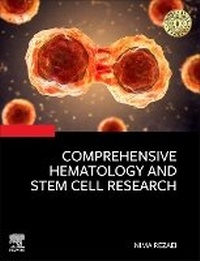
Comprehensive Hematology and Stem Cell Research
Elsevier (Publisher)
Published on 13. September 2024
Book
2572 pages
978-0-443-15717-2 (ISBN)
Description
**2025 PROSE Award Category Winner in Clinical Medicine**
Comprehensive Hematology and Stem Cell Research is the first major reference to cover both stem cell research and therapy as well as the range of hematological disorders they are currently used to treat and may potentially be able to treat in the future. This five volume set includes fundamentals, such as the underlying mechanisms of the blood and immune system, highlighting blood disorders and cancers of the blood, including lymphoma, leukemia, and myeloma. Other sections cover stem cell research and therapy, from harvesting stem cells to their utilization in cancer treatments.
Finally, the work looks to the future and explores newer stem cell research that may lead to future treatments. This book is an excellent resource for students at the graduate and post-graduate levels, academics, and researchers in the fields hematology, immunology and oncology.
Comprehensive Hematology and Stem Cell Research is the first major reference to cover both stem cell research and therapy as well as the range of hematological disorders they are currently used to treat and may potentially be able to treat in the future. This five volume set includes fundamentals, such as the underlying mechanisms of the blood and immune system, highlighting blood disorders and cancers of the blood, including lymphoma, leukemia, and myeloma. Other sections cover stem cell research and therapy, from harvesting stem cells to their utilization in cancer treatments.
Finally, the work looks to the future and explores newer stem cell research that may lead to future treatments. This book is an excellent resource for students at the graduate and post-graduate levels, academics, and researchers in the fields hematology, immunology and oncology.
More details
Language
English
Place of publication
Philadelphia
United States
Target group
Professional and scholarly
College/higher education
Dimensions
Height: 276 mm
Width: 215 mm
Weight
450 gr
ISBN-13
978-0-443-15717-2 (9780443157172)
Copyright in bibliographic data and cover images is held by Nielsen Book Services Limited or by the publishers or by their respective licensors: all rights reserved.
Schweitzer Classification
Other editions
Additional editions
E-Book
08/2024
Elsevier
€2,204.00
Available for download
Person
Professor Nima Rezaei gained his medical degree (MD) from Tehran University of Medical Sciences and subsequently obtained an MSc in Molecular and Genetic Medicine and a PhD in Clinical Immunology and Human Genetics from the University of Sheffield, UK. He also spent a short-term fellowship of Pediatric Clinical Immunology and Bone Marrow Transplantation in the Newcastle General Hospital. Professor Rezaei is now the Full Professor of Immunology and Vice Dean of Research, School of Medicine, Tehran University of Medical Sciences, and the co-founder and Head of the Research Center for Immunodeficiencies. He is also the founding President of the Universal Scientific Education and Research Network (USERN). Professor Rezaei has already been the Director of more than 55 research projects and has designed and participated in several international collaborative projects. Professor Rezaei is an editorial assistant or board member for more than 30 international journals. He has edited more than 35 international books, has presented more than 500 lectures/posters in congresses/meetings, and has published more than 1,000 scientific papers in the international journals.
Content
Section 1. Hematological Disorders
In this section, hematologic disorders which affect the blood cells, including red blood cells, white blood cells, and platelets, as well as blood-forming organs, including bone marrow, lymph nodes, and spleen will be explained. Hematologic disorders include hemoglobinopathies, anemias, cytopenias, sickle cell disease, myeloproliferative disorders, coagulopathies, and hematologic malignancies.
Section 2. Stem Cells and Immunity
In this section, stem cells which are undifferentiated cells that can differentiate into various types of cells and proliferate indefinitely to produce more of the same stem cell will be explained. The properties as well as different sources, including embryonic (e.g., mesenchymal stem cells), fetal, adult, and amniotic will be included.
Section 3. Advances in Stem Cell Therapy and Regeneration
In this section, stem cell therapy and tissue engineering to treat or prevent a disease will be explained. Advantages and disadvantages of current therapeutic modalities as well as breakthrough research and updates on progress in this field will be included.
In this section, hematologic disorders which affect the blood cells, including red blood cells, white blood cells, and platelets, as well as blood-forming organs, including bone marrow, lymph nodes, and spleen will be explained. Hematologic disorders include hemoglobinopathies, anemias, cytopenias, sickle cell disease, myeloproliferative disorders, coagulopathies, and hematologic malignancies.
Section 2. Stem Cells and Immunity
In this section, stem cells which are undifferentiated cells that can differentiate into various types of cells and proliferate indefinitely to produce more of the same stem cell will be explained. The properties as well as different sources, including embryonic (e.g., mesenchymal stem cells), fetal, adult, and amniotic will be included.
Section 3. Advances in Stem Cell Therapy and Regeneration
In this section, stem cell therapy and tissue engineering to treat or prevent a disease will be explained. Advantages and disadvantages of current therapeutic modalities as well as breakthrough research and updates on progress in this field will be included.