

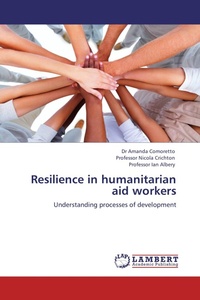
Resilience in Humanitarian Aid Workers
Understanding processes of development
Published on 29. July 2011
Book
Paperback/Softback
376 pages
978-3-8454-1611-3 (ISBN)
Description
Resilience describes factors that promote wellbeing in individuals undergoing stressful life conditions. The majority of investigations conducted on coping mechanisms have focused on policemen, soldiers, and health care. Only recently has attention towards workplace adversity in humanitarian aid workers become the focus of attention. While some aid workers leave their organisations because of issues associated with workplace adversity many are likely to remain. This raises the issue of why some people are able to thrive despite challenging career choices, while others do not. In this book three protective categories applicable to populations at risk for stress are identified as responsible for the development of resilience: individual characteristics, social support, and cognitive features. A model is developed theorising that positive or negative change in resilience is governed by the relations among protective factors within the individual and the environment. This theoretical framework contributes to the understanding of how resilience develops in field-based humanitarian aid workers allowing them to survive and thrive within extremely challenging environments.
More details
Language
English
Place of publication
Germany
Product notice
Paperback (trade)
Unsewn / adhesive bound
Dimensions
Height: 220 mm
Width: 150 mm
Thickness: 24 mm
Weight
578 gr
ISBN-13
978-3-8454-1611-3 (9783845416113)
Copyright in bibliographic data and cover images is held by Nielsen Book Services Limited or by the publishers or by their respective licensors: all rights reserved.
Schweitzer Classification