

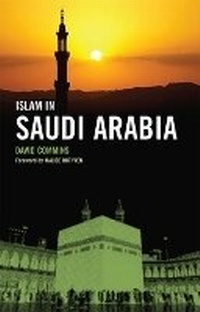
Islam in Saudi Arabia
Published on 1. May 2015
Book
Paperback/Softback
277 pages
978-0-8014-5691-6 (ISBN)
Description
"Royal power, oil, and puritanical Islam are primary elements in Saudi Arabia's rise to global influence. Oil is the reason for Western interest in the kingdom and the foundation for commercial, diplomatic, and strategic relations. Were it not for oil, the government of Saudi Arabia would lack the resources to construct a modern economy and infrastructure, and to thrust the kingdom into regional prominence. Were it not for oil, Saudi Arabia would not be able to fund institutions that spread its religious doctrine to Muslim and non-Muslim countries. That doctrine, commonly known as Wahhabism, is a puritanical form of Islam that is distinctive in a number of ways, most visibly for how it makes public observance of religious norms a matter of government enforcement rather than individual disposition and social conformity, as it is in other Muslim countries."-from the Introduction
Saudi Arabia is often portrayed as a country where religious rules dictate every detail of daily life: where women may not drive; where unrelated men and women may not interact; where women veil their faces; and where banks, restaurants, and cafes have dual facilities: one for families, another for men. Yet everyday life in the kingdom does not entirely conform to dogma. David Commins challenges the stereotype of Saudi Arabia as a country immune to change by highlighting the ways that urbanization, education, consumerism, global communications, and technological innovation have exerted pressure against rules issued by the religious establishment.
Commins places the Wahhabi movement in the wider context of Islamic history, showing how state-appointed clerics built on dynastic backing to fashion a model society of Sharia observance and moral virtue. Beneath a surface appearance of obedience to Islamic authority, however, he detects reflections of Arabia's heritage of diversity (where Shi'ite and Sufi tendencies predating the Saudi era survive in the face of discrimination) and the effects of its exposure to Western mores.
Saudi Arabia is often portrayed as a country where religious rules dictate every detail of daily life: where women may not drive; where unrelated men and women may not interact; where women veil their faces; and where banks, restaurants, and cafes have dual facilities: one for families, another for men. Yet everyday life in the kingdom does not entirely conform to dogma. David Commins challenges the stereotype of Saudi Arabia as a country immune to change by highlighting the ways that urbanization, education, consumerism, global communications, and technological innovation have exerted pressure against rules issued by the religious establishment.
Commins places the Wahhabi movement in the wider context of Islamic history, showing how state-appointed clerics built on dynastic backing to fashion a model society of Sharia observance and moral virtue. Beneath a surface appearance of obedience to Islamic authority, however, he detects reflections of Arabia's heritage of diversity (where Shi'ite and Sufi tendencies predating the Saudi era survive in the face of discrimination) and the effects of its exposure to Western mores.
Reviews / Votes
[Commins] has produced a succinct and insightful survey of puritanical Wahhabi Islam in Saudi Arabia. He covers history, doctrinal issues, the symbiosis of the ruling family with the Wahhabi clergy, and everyday Islamic practice in the realms of education, moral standards, law, charity, and gender.(Foreign Affairs) This book makes a valuable contribution to understanding the interplay among culture (religion), politics, and society in Saudi Arabia. Commins (history, Dickinson College) accounts for the rise of modern Wahhabi religious doctrine and its interplay with other religious and political currents in the Arabian Peninsula.
(Choice) There is a need for a book like Islam in Saudi Arabia. Unlike a good deal of recent academic and journalistic writing on Saudi Arabia that tends to treat the country in a kind of exceptionalist framework or as a so-called enigma, David Commins underscores that-just like any other country-there are transparent and standard means of analyzing aspects of Saudi society.
(Canadian Journal of History)
More details
Language
English
Place of publication
Ithaca
United States
Target group
College/higher education
Product notice
Paperback (trade)
Illustrations
1 halftone, 2 tables, 2 charts - 1 Halftones, black and white
Dimensions
Height: 229 mm
Width: 152 mm
Thickness: 18 mm
Weight
454 gr
ISBN-13
978-0-8014-5691-6 (9780801456916)
Copyright in bibliographic data and cover images is held by Nielsen Book Services Limited or by the publishers or by their respective licensors: all rights reserved.
Schweitzer Classification
Persons
David Commins is Professor of History at Dickinson College. He is the author of The Wahhabi Mission and Saudi Arabia, The Gulf States: A Modern History, and Islamic Reform: Politics and Social Change in Late Ottoman Syria. Malise Ruthven is the author of many books, including Fundamentalism: The Search for Meaning and Islam in the World.
Content
Foreword by Malise Ruthven1. Introduction
2. The Establishment of the Wahhabi Tradition
3. Wahhabism and the Modern Saudi State
4. Religion and Daily Life
5. Islam in Contemporary Saudi Society
6. Religious Politics
7. The International Reach of Wahhabism
8. ConclusionNotes
Suggestions for Further Reading
Index
2. The Establishment of the Wahhabi Tradition
3. Wahhabism and the Modern Saudi State
4. Religion and Daily Life
5. Islam in Contemporary Saudi Society
6. Religious Politics
7. The International Reach of Wahhabism
8. ConclusionNotes
Suggestions for Further Reading
Index