

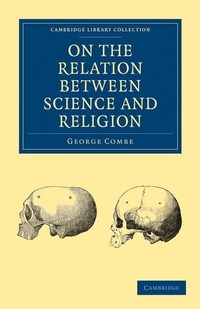
On the Relation Between Science and Religion
Published on 20. July 2009
Book
Paperback/Softback
324 pages
978-1-108-00451-0 (ISBN)
Description
George Combe (1788-1858) rose from humble origins to tour widely in Europe and the United States lecturing on phrenology, the popular Victorian belief that character traits were determined by the configuration of the skull. His most famous book, The Constitution of Man, published in 1828, put forward a naturalist agenda and sold approximately 350,000 copies. In 1857, Combe published On the Relation between Science and Religion. He denounces dogmatism and sectarianism, and argues insistently that religious leaders should encourage the study of science as revealing God's governance. He proposes that phrenology sheds light on the divine purpose and moral laws through an improved understanding of the human mind, and criticises both scientists and religious leaders who maintain that higher thought has nothing to do with the brain. His book ranges widely across the concerns of Victorian educated classes, and addresses questions many of which still resonate today.
More details
Series
Language
English
Place of publication
Cambridge
United Kingdom
Target group
Professional and scholarly
Product notice
Paperback (trade)
Illustrations
Worked examples or Exercises
Dimensions
Height: 216 mm
Width: 140 mm
Thickness: 19 mm
Weight
459 gr
ISBN-13
978-1-108-00451-0 (9781108004510)
Copyright in bibliographic data and cover images is held by Nielsen Book Services Limited or by the publishers or by their respective licensors: all rights reserved.
Schweitzer Classification
Content
Introduction; 1. On the present state of the relation between science and religion; 2. Definition of the words science and religion; 3. Of the physical elements of man; 4. Of the extent to which man is able to discover the ultimate elements of essence of the external world; 5. Of God; 6. Can we trace divine government in the phenomena of the physical and moral worlds?; 7. Historical evidence that the divine government of nations is moral; 8. Is this world, such as it is now, an institution?; 9. Practical considerations; 10. Conclusions; Appendix.