

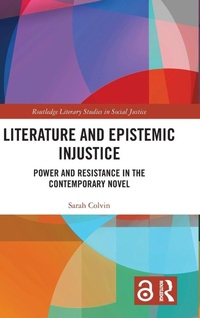
Literature and Epistemic Injustice
Power and Resistance in the Contemporary Novel
1st Edition
Published on 11. November 2025
Book
Hardback
244 pages
978-1-032-64924-5 (ISBN)
Description
A vital resource for anyone interested in literature and politics, this is the first in-depth study of epistemic injustice as a concept for literary studies. Focusing on contemporary fiction in an age of post-truth, it shows how eight novels set in different global contexts reveal epistemic injustice as an authoritarian practice and offer an aesthetics of resistance. Epistemic injustice valorises the thinking of those in power while suppressing other people's knowledge; it declares some people omniscient and others targets for violence. This book tracks how the novels make tangible its strategic use and effects while suggesting - in their form as well as their content - that something else is possible. Bridging political philosophy and literary analysis in clear prose, this study offers exciting new stimuli for reading groups and general readers as well as for students of literature.
The Open Access version of this book, available at http://www.taylorfrancis.com, has been made available under a Creative Commons Attribution-Non Commercial-No Derivatives (CC BY-NC-ND) 4.0 license.
The Open Access version of this book, available at http://www.taylorfrancis.com, has been made available under a Creative Commons Attribution-Non Commercial-No Derivatives (CC BY-NC-ND) 4.0 license.
Reviews / Votes
Literature and Epistemic Injustice adeptly interweaves theory with rich readings of contemporary novels to give timely, vital insights into literature's role in both revealing oppression and countering it. Colvin urgently reminds us of what defines our humanity through and across difference--our need to share, learn, and be heard through stories.-Didem Uca, Assistant Professor of German Studies, Emory University, USA
More details
Series
Language
English
Place of publication
London
United Kingdom
Publishing group
Taylor & Francis Ltd
Target group
College/higher education
Postgraduate
Illustrations
2 s/w Tabellen, 1 s/w Zeichnung, 1 s/w Abbildung
2 Tables, black and white; 1 Line drawings, black and white; 1 Illustrations, black and white
Dimensions
Height: 235 mm
Width: 157 mm
Thickness: 19 mm
Weight
532 gr
ISBN-13
978-1-032-64924-5 (9781032649245)
Copyright in bibliographic data and cover images is held by Nielsen Book Services Limited or by the publishers or by their respective licensors: all rights reserved.
Schweitzer Classification
Other editions
Additional editions
E-Book
11/2025
Routledge
€0.00
Available for download
E-Book
11/2025
Routledge
€0.00
Available for download
Person
Sarah Colvin is the Schroeder Professor at the University of Cambridge, UK. She has authored and edited a number of books including Shadowland: The Story of Germany Told by its Prisoners (2022) and (with Stephanie Galasso) Epistemic Justice and Creative Agency: Global Perspectives on Literature and Film (Routledge, 2023)
Content
Acknowledgements
INTRODUCTION
PART I 'WE CANNOT BREATHE'. PRACTICES OF POWER
CHAPTER 1. VIOLENT TIMES
I. Necropolitical space-time
Petrifying times and twin temporalities in 1000 Coils of Fear
II. Epistemic ghosting
Picaresque unheroism and ghosted knowledge in Voroshilovgrad
CHAPTER 2. ABSENT VOICES
I. Epistemologies of ignorance and petrified stories
White lies in the Bardo
II. Deadly silences
Violent silencing, necro-joking and necro-pleasure in We That Are Young
CHAPTER 3. DIVISIVE FORMS
I. Hierarchies and binaries
Logics of purity in We That Are Young
II. Split-separation in the necropatriarchy
The murderous Midas touch. Purity and profiteering in Ada's Realm
CHAPTER 4. PETRIFIED BODIES
I. Written on the body
Traces of injustice in We Need New Names
II. The body as archive
Marks of violence in Glory
CHAPTER 5. THE END OF MEANING
I. The pure and simple ... lie
Life and Death and the lie of state
II. Postnarrative
'There is no why here'. Ultimate epistemic injustice in Glory
PART 2 BREATHING FIRE. ANIMATING AESTHETICS
CHAPTER 6. INSURRECTIONARY TIMES
I. Transtemporal possibilities
Time in the singular plural. 1000 Coils of Fear and Ada's Realm
II. Epistemic revenants
Haunting and counter-memory. Voroshilovgrad and Glory
CHAPTER 7. OTHER VOICES
I. Eccentric narrators
Disruptive knowledge. Picaresque and trickster voices in We Need New Names and Life and Death Are Wearing Me Out
II. Guerrilla epistemology
Animals as epistemic guerrilleros. Life and Death Are Wearing Me Out and Glory
CHAPTER 8. BODIES IN RELATION
I. Affirmative pleasure
Counter-pleasure and blues irony in Life and Death Are Wearing Me Out and Voroshilovgrad
II. Motherhood and mayonnaise
Chiasmus and curdling. Lincoln in the Bardo and Ada's Realm
CHAPTER 9. THE FUTURE OF MEANING
I. Meaning beyond monody
Provoking pluralism in Lincoln in the Bardo and We That Are Young
II. Animapoetics. Stories in the face of death
'There's a chance you won't be remembered as a total asshole'. Hope and community in Voroshilovgrad and Glory
CONCLUSION
BIBLIOGRAPHY
Index
INTRODUCTION
PART I 'WE CANNOT BREATHE'. PRACTICES OF POWER
CHAPTER 1. VIOLENT TIMES
I. Necropolitical space-time
Petrifying times and twin temporalities in 1000 Coils of Fear
II. Epistemic ghosting
Picaresque unheroism and ghosted knowledge in Voroshilovgrad
CHAPTER 2. ABSENT VOICES
I. Epistemologies of ignorance and petrified stories
White lies in the Bardo
II. Deadly silences
Violent silencing, necro-joking and necro-pleasure in We That Are Young
CHAPTER 3. DIVISIVE FORMS
I. Hierarchies and binaries
Logics of purity in We That Are Young
II. Split-separation in the necropatriarchy
The murderous Midas touch. Purity and profiteering in Ada's Realm
CHAPTER 4. PETRIFIED BODIES
I. Written on the body
Traces of injustice in We Need New Names
II. The body as archive
Marks of violence in Glory
CHAPTER 5. THE END OF MEANING
I. The pure and simple ... lie
Life and Death and the lie of state
II. Postnarrative
'There is no why here'. Ultimate epistemic injustice in Glory
PART 2 BREATHING FIRE. ANIMATING AESTHETICS
CHAPTER 6. INSURRECTIONARY TIMES
I. Transtemporal possibilities
Time in the singular plural. 1000 Coils of Fear and Ada's Realm
II. Epistemic revenants
Haunting and counter-memory. Voroshilovgrad and Glory
CHAPTER 7. OTHER VOICES
I. Eccentric narrators
Disruptive knowledge. Picaresque and trickster voices in We Need New Names and Life and Death Are Wearing Me Out
II. Guerrilla epistemology
Animals as epistemic guerrilleros. Life and Death Are Wearing Me Out and Glory
CHAPTER 8. BODIES IN RELATION
I. Affirmative pleasure
Counter-pleasure and blues irony in Life and Death Are Wearing Me Out and Voroshilovgrad
II. Motherhood and mayonnaise
Chiasmus and curdling. Lincoln in the Bardo and Ada's Realm
CHAPTER 9. THE FUTURE OF MEANING
I. Meaning beyond monody
Provoking pluralism in Lincoln in the Bardo and We That Are Young
II. Animapoetics. Stories in the face of death
'There's a chance you won't be remembered as a total asshole'. Hope and community in Voroshilovgrad and Glory
CONCLUSION
BIBLIOGRAPHY
Index