

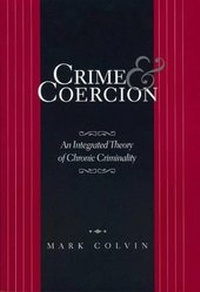
Crime and Coercion
An Integrated Theory of Chronic Criminality
Published on 23. October 2000
Book
Hardback
240 pages
978-0-333-94682-4 (ISBN)
Description
In his theory of criminal behaviour, Mark Colvin argues that chronic criminals emerge from a developmental process characterized by recurring, erratic episodes of coercion. Colvin's differential coercion theory, which integrates several existing criminological perspectives, lays out a compelling argument that coercive forces create social and psychological dynamics that lead to chronic criminal behaviour. While Colvin's presentation focuses primarily on chronic street criminals, the theory is also applied to exploratory offenders and white collar criminals. In addition, Colvin presents a critique of current crime control measures, which rely heavily on coercion, and offers in their place a comprehensive crime reduction programme based on consistent, non-coercive practices.
More details
Language
English
Place of publication
Basingstoke
United Kingdom
Target group
College/higher education
Professional and scholarly
Dimensions
Height: 216 mm
Width: 145 mm
Thickness: 19 mm
Weight
356 gr
ISBN-13
978-0-333-94682-4 (9780333946824)
Copyright in bibliographic data and cover images is held by Nielsen Book Services Limited or by the publishers or by their respective licensors: all rights reserved.
Schweitzer Classification
Other editions
Additional editions
Book
10/2000
Palgrave MacMillan
€53.49
Shipment within 15-20 days
E-Book
09/2000
Palgrave MacMillan
€53.49
Available for download
Person
MARK COLVIN is Associate Professor of Sociology at George Mason University where he teaches undergraduate and graduate courses in criminology.
Content
Introduction Emergence of a Differential Coercion Theory of Criminality The Immediate Contexts of Coercion The Larger Contexts of Coercion: Economics and Culture Coercion in the Foreground of Crime A Theory-Driven Response to Crime: Toward A Non-Coercive Society Appendix: A Guide to Literature on Measuring Key Variables