

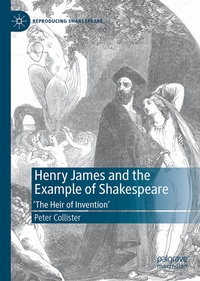
Henry James and the Example of Shakespeare
Description
The figure of Shakespeare-indeed, the idea of Shakespeare-is regularly invoked in the writing of Henry James, filled as it is with echoes and quotations from the plays. In Henry James and the Example of Shakespeare: The Heir of Invention the playwright emerges in James's characterization (fictional and critical) as an exemplary observer of complex humanity, a practitioner of scenic and dramatic form and a national figure prone to public curiosity. While the biographical Shakespeare remains necessarily obscure, his plays proved accessible, their protagonists, themes and scenic forms offering James enduring models of performance and narrative. Demonstrating his distinctive critical voice, the novelist proves himself committed to the plays as texts as well as vehicles for performance. Aside from his unassailable status as artist for James, Shakespeare also marked his introduction-a form of initiation-into the complexity of European heritage. In his appreciation of less traditional Victorian performance practices (illustrated, for instance, in the visits of Italian actors), James showed unusual flexibility in engaging with both European and American cultural traditions.
More details
Person
Peter Collister has published many essays in Europe and America on a range of nineteenth-century British and French authors. The author of Writing the Self: Henry James and America , he has edited the award-winning volumes, The Complete Writings of Henry James on Art and Drama , James's autobiographical works, A Small Boy and Others , Notes of a Son and Brother and The Middle Years , as well as The American Scene . His critical biography of James was published in 2023 and he is currently preparing for publication a scholarly edition of James's biography, William Wetmore Story and his Friends .
Content
.- 1: Shakespeare and James: drama and the Victorian theatre.- 2: James and Charles Kean's historic production of Henry VIII.- 3: 'A modern invocation' of King John: James's fiction of the 1890s.- 4: 'The Birthplace' and the anonymous artist.- 5: A 'theatre of others': alternative Shakespearean performances.- 6: 'We are mocked with art': James, authorship and the torment of The Tempest.