


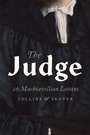
The Judge
26 Machiavellian Lessons
Published on 26. October 2017
Book
Hardback
296 pages
978-0-19-049014-0 (ISBN)
Description
There is no book of political strategy more canonical than Niccolo Machiavelli's The Prince, but few ethicists would advise policymakers to treat it as a bible. The lofty ideals of the law, especially, seem distant from the values that the word "Machiavellian" connotes, and judges are supposed to work above the realm of politics. In The Judge, however, Ronald Collins and David Skover argue that Machiavelli can indeed speak to judges, and model their book after The Prince. As it turns out, the number of people who think that judges in the U.S. are apolitical has been shrinking for decades. Both liberals and conservatives routinely criticize their ideological opponents on the bench for acting politically. Some authorities even posit the impossibility of apolitical judges, and indeed, in many states, judicial elections are partisan. Others advocate appointing judges who are committed to being dispassionate referees adhering to the letter of the law. However, most legal experts, regardless of their leanings, seem to agree that despite widespread popular support for the ideal of the apolitical judge, this ideal is mere fantasy.
This debate about judges and politics has been a perennial in American history, but it intensified in the 1980s, when the Reagan administration sought to place originalists in the Supreme Court. It has not let up since. Ronald Collins and David Skover argue that the debate has become both stale and circular, and instead tackle the issue in a boldly imaginative way. In The Judge, they ask us to assume that judges are political, and that they need advice on how to be effective political actors. Their twenty-six chapters track the structure of The Prince, and each provides pointers to judges on how to cleverly and subtly advance their political goals. In this Machiavellian vision, law is inseparable from realpolitik. However, the authors' point isn't to advocate for this coldly realistic vision of judging. There ultimate goal is identify both legal realists and originalists as what they are: explicitly political (though on opposite ends of the ideological spectrum). Taking its cues from Machiavelli, The Judge describes what judges actually do, not what they ought to do.
This debate about judges and politics has been a perennial in American history, but it intensified in the 1980s, when the Reagan administration sought to place originalists in the Supreme Court. It has not let up since. Ronald Collins and David Skover argue that the debate has become both stale and circular, and instead tackle the issue in a boldly imaginative way. In The Judge, they ask us to assume that judges are political, and that they need advice on how to be effective political actors. Their twenty-six chapters track the structure of The Prince, and each provides pointers to judges on how to cleverly and subtly advance their political goals. In this Machiavellian vision, law is inseparable from realpolitik. However, the authors' point isn't to advocate for this coldly realistic vision of judging. There ultimate goal is identify both legal realists and originalists as what they are: explicitly political (though on opposite ends of the ideological spectrum). Taking its cues from Machiavelli, The Judge describes what judges actually do, not what they ought to do.
Reviews / Votes
The book is filled with historical gems and this alone makes it a worthwhile read. But itas the central premise that gives the book its edge. So, do the authors prove that hypocrisy is the key to judicial greatness? Some of the examples Collins and Skover present are hard to dispute. * Judge Alex Kozinski, Law360 *More details
Language
English
Place of publication
New York
United States
Target group
Professional and scholarly
Dimensions
Height: 222 mm
Width: 145 mm
Thickness: 19 mm
Weight
499 gr
ISBN-13
978-0-19-049014-0 (9780190490140)
Copyright in bibliographic data and cover images is held by Nielsen Book Services Limited or by the publishers or by their respective licensors: all rights reserved.
Schweitzer Classification
Other editions
Persons
Ronald K.L. Collins is Harold S. Shefelman Scholar, University of Washington School of Law.
David M. Skover is Fredric C. Tausend Professor of Law, Seattle University School of Law
David M. Skover is Fredric C. Tausend Professor of Law, Seattle University School of Law
Content
Prologue
1. The Confirmation Process and the Virtues of Duplicity
2. How to be Aggressive and Passive . . . and Great
3. Recusal and the Vices of Impartiality
4. The Use and Misuse of the Politics of Personality
5. Fortuna: The Role of Chance in Choosing Cases
6. When and Why to Avoid a Case
7. Carpe Diem: When to Embrace Controversy
8. Tactical Tools: Using Procedure to One's Advantage
9. Oral Arguments: What to Say and How
10. When to Lose a Case and Win a Cause
11. In Defense of Unprincipled Decisionmaking
12. How to Manipulate the Rule of Law
13. When Precedents Are to Be Honored (If Only Formally)
14. When to Take Command and Make Demands
15. The Boldest Moves: When and How to Make Them
16. On Writing: When Style Should Trump Substance
17. When It Is Wise to Write a Separate Opinion
18. Law Clerks: When and How to Use Them
19. How to Befriend Those in the Media
20. Cameras in the Courtroom: Seizing the Future
21. On Television: The Medium Is Not the Message
22. On Publishing Books: When and of What Kind
23. The Threat of Impeachment and How Best to Avoid It
24. When It Is Best to Retire
25. Directing History: A Justice's Working Papers and What to Do with Them
26. How to Best Secure an Enduring Legacy
Epilogue
Acknowledgements
About the Authors
Notes
Index
1. The Confirmation Process and the Virtues of Duplicity
2. How to be Aggressive and Passive . . . and Great
3. Recusal and the Vices of Impartiality
4. The Use and Misuse of the Politics of Personality
5. Fortuna: The Role of Chance in Choosing Cases
6. When and Why to Avoid a Case
7. Carpe Diem: When to Embrace Controversy
8. Tactical Tools: Using Procedure to One's Advantage
9. Oral Arguments: What to Say and How
10. When to Lose a Case and Win a Cause
11. In Defense of Unprincipled Decisionmaking
12. How to Manipulate the Rule of Law
13. When Precedents Are to Be Honored (If Only Formally)
14. When to Take Command and Make Demands
15. The Boldest Moves: When and How to Make Them
16. On Writing: When Style Should Trump Substance
17. When It Is Wise to Write a Separate Opinion
18. Law Clerks: When and How to Use Them
19. How to Befriend Those in the Media
20. Cameras in the Courtroom: Seizing the Future
21. On Television: The Medium Is Not the Message
22. On Publishing Books: When and of What Kind
23. The Threat of Impeachment and How Best to Avoid It
24. When It Is Best to Retire
25. Directing History: A Justice's Working Papers and What to Do with Them
26. How to Best Secure an Enduring Legacy
Epilogue
Acknowledgements
About the Authors
Notes
Index