

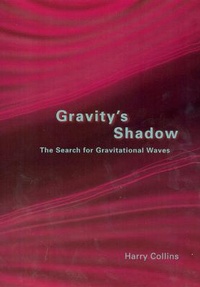
Gravity's Shadow
The Search for Gravitational Waves
Published on 1. September 2004
Book
Paperback/Softback
864 pages
978-0-226-11378-4 (ISBN)
Description
According to the theory of relativity, we are constantly bathed in gravitational radiation. When stars explode or collide, a portion of their mass becomes energy that disturbs the very fabric of the space-time continuum like ripples in a pond. But proving the existence of these waves has been difficult; the cosmic shudders are so weak that only the most sensitive instruments can be expected to observe them directly. Fifteen times during the last thirty years scientists have claimed to have detected gravitational waves, but so far none of those claims have survived the scrutiny of the scientific community. Gravity's Shadow chronicles the forty-year effort to detect gravitational waves, while exploring the meaning of scientific knowledge and the nature of expertise.
Gravitational wave detection involves recording the collisions, explosions, and trembling of stars and black holes by evaluating the smallest changes ever measured. Because gravitational waves are so faint, their detection will come not in an exuberant moment of discovery but through a chain of inference; for forty years, scientists have debated whether there is anything to detect and whether it has yet been detected. Sociologist Harry Collins has been tracking the progress of this research since 1972, interviewing key scientists and delineating the social process of the science of gravitational waves.
Engagingly written and authoritatively comprehensive, Gravity's Shadow explores the people, institutions, and government organizations involved in the detection of gravitational waves. This sociological history will prove essential not only to sociologists and historians of science but to scientists themselves.
Gravitational wave detection involves recording the collisions, explosions, and trembling of stars and black holes by evaluating the smallest changes ever measured. Because gravitational waves are so faint, their detection will come not in an exuberant moment of discovery but through a chain of inference; for forty years, scientists have debated whether there is anything to detect and whether it has yet been detected. Sociologist Harry Collins has been tracking the progress of this research since 1972, interviewing key scientists and delineating the social process of the science of gravitational waves.
Engagingly written and authoritatively comprehensive, Gravity's Shadow explores the people, institutions, and government organizations involved in the detection of gravitational waves. This sociological history will prove essential not only to sociologists and historians of science but to scientists themselves.
More details
Language
English
Place of publication
Chicago
United States
Publishing group
The University of Chicago Press
Target group
Professional and scholarly
Dimensions
Height: 23 mm
Width: 15 mm
Thickness: 5 mm
Weight
1276 gr
ISBN-13
978-0-226-11378-4 (9780226113784)
Copyright in bibliographic data and cover images is held by Nielsen Book Services Limited or by the publishers or by their respective licensors: all rights reserved.
Schweitzer Classification
Other editions
Additional editions
E-Book
08/2010
1st Edition
University of Chicago Press
€78.89
Available for download