

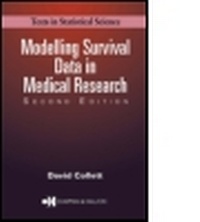
Modelling Survival Data in Medical Research
Published on 9. December 1993
Book
Paperback/Softback
XVII, 347 pages
978-0-412-44890-4 (ISBN)
Description
In the course of medical research, data on the time to the occurrence of a partic of a patient, are frequently encountered. Such data ular event, such as the death are generically referred to as survival data. However, the event of interest need not necessarily be death, but could, for example, be the end of aperiod spent in remission from a disease, relief from symptoms, or the recurrence of a particular condition. Although there are a number of books devoted to the analysis of sur vival data, this book is designed to meet the need for an intermediate text which emphasises the application of the methodology to survival data arising from med ical studies, which shows how widely-available computer software can be used in survival analysis, and which will appeal to statisticians engaged in medical re search. This book is based on a course on the analysis of survival data from clinical trials which has been given annually by the Statistical Services Centre ofthe Department of Applied Statistics, University of Reading, since 1986. Although it is written primarily for those working as statisticians in the pharmaceutical industry and in medical research institutes, much of the text should be accessible to numerate scientists and clinicians working alongside statisticians on the analysis of their own data sets. This book could also be used as a text to accompany undergraduate and postgraduate courses on survival analysis in universities and other institutes of higher education.
More details
Series
Language
English
Place of publication
Boston, MA
United Kingdom
Publishing group
Taylor & Francis Ltd
Target group
Professional and scholarly
Research
Dimensions
Height: 23.5 cm
Width: 15.5 cm
Weight
563 gr
ISBN-13
978-0-412-44890-4 (9780412448904)
DOI
10.1007/978-1-4899-3115-3
Schweitzer Classification
Other editions
New editions
Book
03/2003
2nd Edition
Chapman & Hall/CRC
€97.98
Article is exhausted; no reprint
Additional editions

David Collett
Modelling Survival Data in Medical Research
Book
12/1993
1st Edition
Chapman and Hall
€42.08
Article exhausted; check different version
Content
Survival Analysis
Special Features of Survival Data
Some Examples
Survivor Function and Hazard Function
Further Reading
Some Non-Parametric Procedures
Estimating the Survivor Function
Estimating the Hazard Function
Estimating the Median and Percentiles of Survival Times
Confidence Intervals for the Median and Percentiles
Comparison of Two Groups of Survival Data
Comparison of Three or More Groups of Survival Data
Stratified Tests
Log-Rank Test for Trend
Further Reading
Modelling Survival Data
Modelling the Hazard Function
The Linear Component of the Proportional Hazards Model
Fitting the Proportional Hazards Model
Confidence Intervals and Hypothesis for the ss's
Comparing Alternative Models
Strategy for Model Selection
Interpretation of Parameter Estimates
Estimating the Hazard and Survivor Functions
Proportional Hazards Modelling and the Log-Rank Test
The Weibull Model for Survival Data
Models for the Hazard Function
Assessing the Suitability of a Parametric Model
Fitting a Parametric Model to a Single Sample
A Model for the Comparison of Two Groups
The Weibull Proportional Hazards Model
Comparing Alternative Weibull Models
An Alternative Form of the Proportional Hazards Model
Further Reading
Model Checking in the Proportional Hazards Model
Residuals for the Cox Regression Model
Plots Based on Residuals
Some Comments and Recommendations
Identification of Influential Observations
Treatment of Influential Observations
Residuals for the Weibull Proportional Hazards Model
Identification of Influential Observations
Testing the Assumption of Proportional Hazards
Further Reading
Some Other Parametric Models for Survival Data
Probability Distributions for Survival Data
Exploratory Analyses
The Accelerated Failure Time Model
Log-Linear Form of the Accelerated Failure Time Model
Fitting and Comparing Accelerated Failure Time Models
The Proportional Odds Model
Further Reading
Time Dependent Variables
Types of Time-Dependent Variable
A Model with Time-Dependent Variables
Some Applications of Time-Dependent Variables
Comparison of Treatments
Two Examples
Further Examples
Interval-Censored Survival Data
Modelling Interval-Censored Survival Data
Modelling the Recurrence Probability in the Follow-Up Period
Modelling the Recurrence Probability at Different Times
Discussion
Further Reading
Sample Size Requirements for a Survival Study
Distinguishing between Two Treatment Groups
Calculating the Required Number of Deaths
Calculating the Required Number of Patients
Further Reading
Some Additional Topics
Non-Proportional Hazards
Model Choice
Informative Censoring
Multistate Models
Computer Software for Survival Analysis
Computational Methods Used in Packages for Survival Analysis
SAS
BMDP
SPSS
GLIM and Genstat
Illustrations of the Use of SAS, BMDP and SPSS
SAS Macros for Model Checking
Relative Merits of SAS, BMDP and SPSS for Survival Analysis
Appendix A: Maximum Likelihood Estimation
A.1: Inference about a Single Unknown Parameter
A.2: Inference about a Vector of Unknown Parameters
Appendix B: Standard Error of Weibull Percentiles
B.1: Standard Error of a Percentile of the Weibull Distribution
B.2: Standard Error of a Percentile in the Weibull Model
Appendix C: Two SAS Macros
C.1: The SAS Macro coxdiag
C.2: The SAS Macro weibdiag
References
Index of Examples
Index
Special Features of Survival Data
Some Examples
Survivor Function and Hazard Function
Further Reading
Some Non-Parametric Procedures
Estimating the Survivor Function
Estimating the Hazard Function
Estimating the Median and Percentiles of Survival Times
Confidence Intervals for the Median and Percentiles
Comparison of Two Groups of Survival Data
Comparison of Three or More Groups of Survival Data
Stratified Tests
Log-Rank Test for Trend
Further Reading
Modelling Survival Data
Modelling the Hazard Function
The Linear Component of the Proportional Hazards Model
Fitting the Proportional Hazards Model
Confidence Intervals and Hypothesis for the ss's
Comparing Alternative Models
Strategy for Model Selection
Interpretation of Parameter Estimates
Estimating the Hazard and Survivor Functions
Proportional Hazards Modelling and the Log-Rank Test
The Weibull Model for Survival Data
Models for the Hazard Function
Assessing the Suitability of a Parametric Model
Fitting a Parametric Model to a Single Sample
A Model for the Comparison of Two Groups
The Weibull Proportional Hazards Model
Comparing Alternative Weibull Models
An Alternative Form of the Proportional Hazards Model
Further Reading
Model Checking in the Proportional Hazards Model
Residuals for the Cox Regression Model
Plots Based on Residuals
Some Comments and Recommendations
Identification of Influential Observations
Treatment of Influential Observations
Residuals for the Weibull Proportional Hazards Model
Identification of Influential Observations
Testing the Assumption of Proportional Hazards
Further Reading
Some Other Parametric Models for Survival Data
Probability Distributions for Survival Data
Exploratory Analyses
The Accelerated Failure Time Model
Log-Linear Form of the Accelerated Failure Time Model
Fitting and Comparing Accelerated Failure Time Models
The Proportional Odds Model
Further Reading
Time Dependent Variables
Types of Time-Dependent Variable
A Model with Time-Dependent Variables
Some Applications of Time-Dependent Variables
Comparison of Treatments
Two Examples
Further Examples
Interval-Censored Survival Data
Modelling Interval-Censored Survival Data
Modelling the Recurrence Probability in the Follow-Up Period
Modelling the Recurrence Probability at Different Times
Discussion
Further Reading
Sample Size Requirements for a Survival Study
Distinguishing between Two Treatment Groups
Calculating the Required Number of Deaths
Calculating the Required Number of Patients
Further Reading
Some Additional Topics
Non-Proportional Hazards
Model Choice
Informative Censoring
Multistate Models
Computer Software for Survival Analysis
Computational Methods Used in Packages for Survival Analysis
SAS
BMDP
SPSS
GLIM and Genstat
Illustrations of the Use of SAS, BMDP and SPSS
SAS Macros for Model Checking
Relative Merits of SAS, BMDP and SPSS for Survival Analysis
Appendix A: Maximum Likelihood Estimation
A.1: Inference about a Single Unknown Parameter
A.2: Inference about a Vector of Unknown Parameters
Appendix B: Standard Error of Weibull Percentiles
B.1: Standard Error of a Percentile of the Weibull Distribution
B.2: Standard Error of a Percentile in the Weibull Model
Appendix C: Two SAS Macros
C.1: The SAS Macro coxdiag
C.2: The SAS Macro weibdiag
References
Index of Examples
Index