

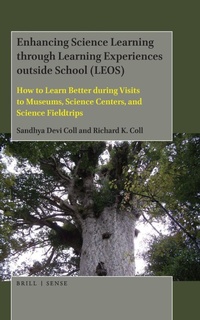
Enhancing Science Learning through Learning Experiences outside School (LEOS)
How to Learn Better during Visits to Museums, Science Centers, and Science Fieldtrips
Published on 26. September 2019
Book
Hardback
126 pages
978-90-04-39608-1 (ISBN)
Description
The authors provide practical, research-informed, guidelines and detailed lesson plans that improve learning of chemical, physical, biological, and Earth & space sciences. The context for learning is the myriad of exciting opportunities provided by informal science institutions such as zoos, museums, space centers and the outdoors. Many such institutions seek to educate the public and inspire budding scientists. Visits outside school help students relate science to everyday life, providing strong motivation to learn science for all abilities. This book shows the key to making such visits effective, is when they are linked to classroom learning using a learning management system, drawing upon modern students' fascination with digital technologies and mobile devices.
Reviews / Votes
"The need to enhance the quality of the learning of science that takes place in formal educational contexts (schools) is now recognised world-wide. The value of other contexts as such- for example, museums, zoos, botanical gardens, and computer-based access to these- are gradually being identified and their contribution to the learning in formal contexts established. At the same time, the descriptors of the learning that may take place- free-choice, non-formal, informal - are being refined. This plethora of opportunities places great demands on science teachers, who have to address definite learning objectives in particular subjects -normally physics, chemistry, biology, earth science- and with specific groups of students. This volume gives practical advice, based on research, to teachers on how this may best be done. By using that advice, teachers will most effectively prepare students for the multi-model world in which the social media play an increasing part."- John K. Gilbert, Professor Emeritus, The University of Reading
More details
Language
English
Place of publication
Leiden
Netherlands
Target group
Professional and scholarly
Product notice
sewn/stitched
Cloth over boards
Dimensions
Height: 239 mm
Width: 157 mm
Thickness: 15 mm
Weight
340 gr
ISBN-13
978-90-04-39608-1 (9789004396081)
Copyright in bibliographic data and cover images is held by Nielsen Book Services Limited or by the publishers or by their respective licensors: all rights reserved.
Schweitzer Classification
Other editions
Additional editions
Sandhya Devi Coll | Richard K. Coll
Enhancing Science Learning through Learning Experiences outside School (LEOS)
How to Learn Better during Visits to Museums, Science Centers, and Science Fieldtrips
Book
09/2019
Brill
€60.50
Shipment within 10-20 days
Persons
Sandhya Devi Coll, Ph.D., works for the World Health Organization as a Technical Officer, promoting national health education. She is a passionate and highly experienced secondary school science teacher. Her research focusses on innovative use of digital technologies to enhance learning outside schools.
Richard K. Coll, Ph.D., Sc.Ed.D., is Deputy Vice-Chancellor - Education at The University of the South Pacific. He has authored more than 250 scholarly articles. His research focusses on cooperative and science education.
Richard K. Coll, Ph.D., Sc.Ed.D., is Deputy Vice-Chancellor - Education at The University of the South Pacific. He has authored more than 250 scholarly articles. His research focusses on cooperative and science education.
Content
Foreword
?David F. Treagust
About the Cover
List of Figures and Tables
Part 1: What Research Has to Tell Teachers about Learning Experiences outside School (LEOS)
Chapter 1: Enhancing Science Learning
?Chapter Overview
?Introduction
?Educational Context
?Research in LEOS
?Structure and Organization of the Book
?Assumptions and Terms Used in LEOS Writing and Literature
Chapter 2: Formal, Informal, Non-Formal Learning & Free-Choice Learning
?Chapter Overview
?Introduction
?Theories of Learning
?Behaviorist Theories of Learning
?Constructivism
?Social Constructivism
?Sociocultural Theories of Learning
?Types of Learning
?Formal Learning
?Non-Formal Learning
?Informal Learning
Chapter 3: Learning Experiences outside School
?Chapter Overview
?Introduction
?Ways by Which LEOS May Be Facilitated
?Learning Environments and LEOS
?LEOS: Implications for School Science
Chapter 4: The Learner-Integrated Field Trip Inventory (LIFTI)
?Chapter Overview
?Introduction
?Learner-Integrated Field Trip Inventory (LIFTI)
Chapter 5: Integrating Formal, Informal and Non-Formal Learning Using the Digitally-Integrated Fieldtrip Inventory (DIFI)
?Chapter Overview
?Introduction
?Blended Learning
?The Digitally-Integrated Fieldtrip Inventory (DIFI)
Part 2: The Practice of Learning Experiences outside School
Chapter 6: Learning Biological Sciences via Learning Experiences outside School
?Introduction
?Biological Sciences
?Reflections and Conclusions
Chapter 7: Learning Chemical Sciences via Learning Experiences outside School
?Introduction
?Chemical Sciences
?Reflections and Conclusions
Chapter 8: Learning Earth & Space Sciences via Learning Experiences outside School
?Introduction
?Earth & Space Sciences
?Reflections and Conclusions
Chapter 9: Learning Physical Sciences via Learning Experiences outside School
?Introduction
?Physical Sciences
?Reflections and Conclusions
Appendix: The New Zealand Curriculum and Science Curriculum
Index
?David F. Treagust
About the Cover
List of Figures and Tables
Part 1: What Research Has to Tell Teachers about Learning Experiences outside School (LEOS)
Chapter 1: Enhancing Science Learning
?Chapter Overview
?Introduction
?Educational Context
?Research in LEOS
?Structure and Organization of the Book
?Assumptions and Terms Used in LEOS Writing and Literature
Chapter 2: Formal, Informal, Non-Formal Learning & Free-Choice Learning
?Chapter Overview
?Introduction
?Theories of Learning
?Behaviorist Theories of Learning
?Constructivism
?Social Constructivism
?Sociocultural Theories of Learning
?Types of Learning
?Formal Learning
?Non-Formal Learning
?Informal Learning
Chapter 3: Learning Experiences outside School
?Chapter Overview
?Introduction
?Ways by Which LEOS May Be Facilitated
?Learning Environments and LEOS
?LEOS: Implications for School Science
Chapter 4: The Learner-Integrated Field Trip Inventory (LIFTI)
?Chapter Overview
?Introduction
?Learner-Integrated Field Trip Inventory (LIFTI)
Chapter 5: Integrating Formal, Informal and Non-Formal Learning Using the Digitally-Integrated Fieldtrip Inventory (DIFI)
?Chapter Overview
?Introduction
?Blended Learning
?The Digitally-Integrated Fieldtrip Inventory (DIFI)
Part 2: The Practice of Learning Experiences outside School
Chapter 6: Learning Biological Sciences via Learning Experiences outside School
?Introduction
?Biological Sciences
?Reflections and Conclusions
Chapter 7: Learning Chemical Sciences via Learning Experiences outside School
?Introduction
?Chemical Sciences
?Reflections and Conclusions
Chapter 8: Learning Earth & Space Sciences via Learning Experiences outside School
?Introduction
?Earth & Space Sciences
?Reflections and Conclusions
Chapter 9: Learning Physical Sciences via Learning Experiences outside School
?Introduction
?Physical Sciences
?Reflections and Conclusions
Appendix: The New Zealand Curriculum and Science Curriculum
Index