

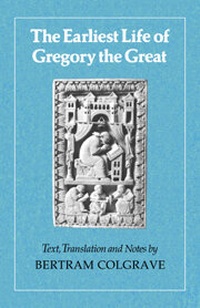
The Earliest Life of Gregory the Great
Published on 12. September 1985
Book
Hardback
189 pages
978-0-521-30924-0 (ISBN)
Description
In his role of apostle of the English and promoter of Augustine's mission, Gregory the Great became the subject of what is one of the earliest pieces of literature surviving from the Anglo-Saxon period: a Life written by an unknown author at Whitby around 680-704. Although crude in its latinity and idiosyncratic in its presentation, this work is a fascinating source of early traditions about the conversion of the English - including the famous story of Gregory's encounter with the Anglian slave boys - and an important witness to the veneration felt for the saint himself. It casts valuable light on English history in the seventh century, particularly on the career of Edwin of Northumbria, and is the source of two of the most famous legends of the Middle Ages, the Mass of St Gregory and the story of Trajan's rescue from hell. The Life of Gregory seems to be the earliest of the Saints' lives of this period and it is in many ways the most remarkable.
More details
Language
English
Place of publication
Cambridge
United Kingdom
Target group
Professional and scholarly
Dimensions
Height: 216 mm
Width: 138 mm
Thickness: 18 mm
Weight
315 gr
ISBN-13
978-0-521-30924-0 (9780521309240)
Copyright in bibliographic data and cover images is held by Nielsen Book Services Limited or by the publishers or by their respective licensors: all rights reserved.
Schweitzer Classification
Other editions
New editions
Bertram Colgrave
The Earliest Life of Gregory the Great
Book
09/1985
Cambridge University Press
€60.30
Shipment within 15-20 days
Additional editions
Bertram Colgrave
The Earliest Life of Gregory the Great
Book
09/1985
Cambridge University Press
€60.30
Shipment within 15-20 days
Content
Preface; Abbreviations; Introduction; 1. Historical background; 2. Gregory the Great; 3. Whitby; 4. Author and date; 5. Sources; 6. The author's Latin style; 7. The relation between Bede and the Whitby writer; 8. Later history of the life; 9. The manuscript; Latin text; Translation; Notes; Select bibliography; Appendix; Index.