

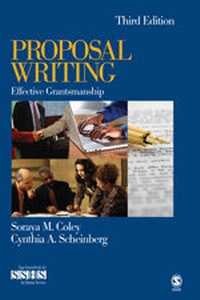
Proposal Writing
Effective Grantsmanship
3rd Edition
Published on 19. September 2007
Book
Paperback/Softback
144 pages
978-1-4129-3775-7 (ISBN)
Description
This book is written primarily for students or beginning-to-moderately experienced grantwriters working in nonprofit corporations, school districts, or city or county agencies, and provides a step-by-step guide to writing a successful grant proposal.
The third edition has been retitled; Proposal Writing: The New Grantsmanship and Funding Strategies because the authors have broadened their scope while still maintaining the aspects that made the previous editions bestsellers. A new organization provides greater coherence and logic in the presentation of the chapters. Throughout the book, readers are presented with agency/organizational analyses using a conceptual framework that is tied to a theoretical perspective about the desired outcomes. This framework provides the coherence for the book and assists individuals with the "mechanics" of writing and challenges them to understand why a particular strategy and with what desired and measurable outcome are they seeking. The book also conveys the "new grantsmanship" which is essential for navigating the economic, political, and social dimesions of proposal and grant writing.
The third edition has been retitled; Proposal Writing: The New Grantsmanship and Funding Strategies because the authors have broadened their scope while still maintaining the aspects that made the previous editions bestsellers. A new organization provides greater coherence and logic in the presentation of the chapters. Throughout the book, readers are presented with agency/organizational analyses using a conceptual framework that is tied to a theoretical perspective about the desired outcomes. This framework provides the coherence for the book and assists individuals with the "mechanics" of writing and challenges them to understand why a particular strategy and with what desired and measurable outcome are they seeking. The book also conveys the "new grantsmanship" which is essential for navigating the economic, political, and social dimesions of proposal and grant writing.
More details
Edition
3rd Revised edition
Language
English
Place of publication
Thousand Oaks
United States
Target group
College/higher education
This is an excellent guide for beginning grant writers as well as graduate courses such as Grantwriting and Fundraising for Social Work, Social Work Program Planning, and Social Work Administration in the department of social work.
Edition type
Revised edition
Dimensions
Height: 216 mm
Width: 140 mm
Weight
170 gr
ISBN-13
978-1-4129-3775-7 (9781412937757)
Copyright in bibliographic data and cover images is held by Nielsen Book Services Limited or by the publishers or by their respective licensors: all rights reserved.
Schweitzer Classification
Other editions
New editions
Book
07/2013
4th Edition
SAGE Publications Inc
€75.70
Article exhausted; check for reprint
Previous edition
Soraya M. Coley | Cynthia A. Scheinberg
Proposal Writing
Book
05/2000
2nd Edition
SAGE Publications Inc
€47.24
Article exhausted; check for reprint
Persons
Soraya M. Coley is president of Cal Poly Pomona University. Prior to that, she served as provost and vice president for academic affairs at California State University, Bakersfield, and at Alliant International University, as well as dean of the College of Human Development and Community Service at California State University, Fullerton. She has nearly 30 years of higher education experience and has worked with nonprofits, community-based and civic organizations on program design, evaluation, and grant writing.
Cynthia A. Scheinberg is a psychologist (inactive) with 23 years of senior administrative leadership in the nonprofit sector. She has successfully designed, written, obtained, and implemented federal, state, foundation, and local government funding. In addition, she taught program design and proposal writing for 18 years at California State University, Fullerton in the Human Services Department. Now happily retired, she consults on program design, grant writing and compliance issues, and in her free time, enjoys grandchildren and playing clarinet in two community bands.
Cynthia A. Scheinberg is a psychologist (inactive) with 23 years of senior administrative leadership in the nonprofit sector. She has successfully designed, written, obtained, and implemented federal, state, foundation, and local government funding. In addition, she taught program design and proposal writing for 18 years at California State University, Fullerton in the Human Services Department. Now happily retired, she consults on program design, grant writing and compliance issues, and in her free time, enjoys grandchildren and playing clarinet in two community bands.
Content
Foreword by Armand Lauffer
Preface to the Third Edition
Ch 1: An Orientation to Proposal Writing
Definitions
Types of Grant Applications
Components of a Proposal
The Process of Submitting a Proposal
The Difference Between Grants and Contracts
Organizing the Writing
Writing for an Established Organization or a New Organization
Writing Style and Format
Ch 2: Using Technology in Proposal Development
The Role and Use of Search Engines
Review of Funder's Web Sites
Evaluating Data and Other Information
Electronic Submission of the Proposal
Ch 3: Understanding the Agency, the Community, and the Funder
Understanding the Agency
Understanding the Community
Understanding the Funder
Ch 4: Problem- or Needs-Based Program Development
Understanding the Community Through Data
Understanding Barriers to Service
Program Design and Theoretical Orientations
Conceptualizing Program Ideas
Working with a Collaborative
Sustainability and Institutionalization
Ch 5: Writing the Needs or Problem Statement
Definitions
The Purpose of the Needs/Problem Statement
A Guide to Writing the Needs/Problem Statement
Ch 6: Writing Goals, Objectives and Implementation Plan
Section One: Goals and Objectives
Section Two: Implementation Plan
Ch 7: Writing the Evaluation Plan
The Benefits of Evaluation
Developing an Evaluation Plan
Writing the Evaluation Section
Other Evaluation Considerations
Ch 8: Creating the Budget
Types of Budgets
Budgeting for the First-Time Grant Writer
Other Budgeting Issues
Ch 9: Agency Capability and Finishing Touches
The Agency Capability Statement
Requesting Letters of Support
The Proposal Abstract
The Title and Title Page
The Cover Letter
Frequently Asked Questions (FAQs)
Appendix A: Estimating Time
Appendix B: Funding Resource Information
References and Suggested Readings
About the Authors
Preface to the Third Edition
Ch 1: An Orientation to Proposal Writing
Definitions
Types of Grant Applications
Components of a Proposal
The Process of Submitting a Proposal
The Difference Between Grants and Contracts
Organizing the Writing
Writing for an Established Organization or a New Organization
Writing Style and Format
Ch 2: Using Technology in Proposal Development
The Role and Use of Search Engines
Review of Funder's Web Sites
Evaluating Data and Other Information
Electronic Submission of the Proposal
Ch 3: Understanding the Agency, the Community, and the Funder
Understanding the Agency
Understanding the Community
Understanding the Funder
Ch 4: Problem- or Needs-Based Program Development
Understanding the Community Through Data
Understanding Barriers to Service
Program Design and Theoretical Orientations
Conceptualizing Program Ideas
Working with a Collaborative
Sustainability and Institutionalization
Ch 5: Writing the Needs or Problem Statement
Definitions
The Purpose of the Needs/Problem Statement
A Guide to Writing the Needs/Problem Statement
Ch 6: Writing Goals, Objectives and Implementation Plan
Section One: Goals and Objectives
Section Two: Implementation Plan
Ch 7: Writing the Evaluation Plan
The Benefits of Evaluation
Developing an Evaluation Plan
Writing the Evaluation Section
Other Evaluation Considerations
Ch 8: Creating the Budget
Types of Budgets
Budgeting for the First-Time Grant Writer
Other Budgeting Issues
Ch 9: Agency Capability and Finishing Touches
The Agency Capability Statement
Requesting Letters of Support
The Proposal Abstract
The Title and Title Page
The Cover Letter
Frequently Asked Questions (FAQs)
Appendix A: Estimating Time
Appendix B: Funding Resource Information
References and Suggested Readings
About the Authors