

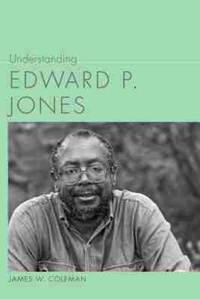
Understanding Edward P. Jones
Will be published approx. on 30. August 2016
Book
Hardback
144 pages
978-1-61117-644-5 (ISBN)
Description
In Understanding Edward P. Jones, James W. Coleman analyzes Jones's award-winning works as well as the significant influences that have shaped his craft. Born and raised in Washington, D.C., Jones has made that city and its African American community the subject of or background for most of his fiction.
Though Jones's first work was published in 1976, his career developed slowly. While he worked for two decades as a proofreader and abstractor, Jones published short fiction in such periodicals as Essence, the New Yorker, and Paris Review. His first collection, Lost in the City, won the PEN/Hemingway Award, and subsequent books, including The Known World and All Aunt Hagar's Children, received similar accolades, including the National Book Critics Circle Award and the Pulitzer Prize for Fiction.
Following an overview of Jones's life, influences, and career, Coleman provides an introduction to the technique of Jones's fiction, which he likens to a tapestry, woven of intricate, varied, and sometimes disparate elements. He then analyzes the formal structure, themes, and characters of The Known World and devotes a chapter each to the short story collections Lost in the City and All Aunt Hagar's Children. His discussion of these volumes focuses on Jones's narrative technique; the themes of family, community, and broader tradition; and the connections through which the stories in each volume collectively create a thematic whole. In his final chapter, Coleman assesses Jones's encompassing outlook that sees African American life in distinct periods but also as a historical whole, simultaneously in the future, the past, and the present.
Though Jones's first work was published in 1976, his career developed slowly. While he worked for two decades as a proofreader and abstractor, Jones published short fiction in such periodicals as Essence, the New Yorker, and Paris Review. His first collection, Lost in the City, won the PEN/Hemingway Award, and subsequent books, including The Known World and All Aunt Hagar's Children, received similar accolades, including the National Book Critics Circle Award and the Pulitzer Prize for Fiction.
Following an overview of Jones's life, influences, and career, Coleman provides an introduction to the technique of Jones's fiction, which he likens to a tapestry, woven of intricate, varied, and sometimes disparate elements. He then analyzes the formal structure, themes, and characters of The Known World and devotes a chapter each to the short story collections Lost in the City and All Aunt Hagar's Children. His discussion of these volumes focuses on Jones's narrative technique; the themes of family, community, and broader tradition; and the connections through which the stories in each volume collectively create a thematic whole. In his final chapter, Coleman assesses Jones's encompassing outlook that sees African American life in distinct periods but also as a historical whole, simultaneously in the future, the past, and the present.
More details
Series
Language
English
Place of publication
South Carolina
United States
Target group
College/higher education
Product notice
sewn/stitched
Cloth over boards
Dimensions
Height: 231 mm
Width: 150 mm
Thickness: 15 mm
Weight
386 gr
ISBN-13
978-1-61117-644-5 (9781611176445)
Copyright in bibliographic data and cover images is held by Nielsen Book Services Limited or by the publishers or by their respective licensors: all rights reserved.
Schweitzer Classification
Other editions
Additional editions
James W. Coleman
Understanding Edward P. Jones
E-Book
07/2016
1st Edition
University of South Carolina Press
from
€83.99
Available for download
Person
James W. Coleman is a professor of English at the University of North Carolina at Chapel Hill, USA. He earned his B.A from Virginia Union University and his M.A. and Ph.D. degrees from the University of Chicago. Coleman is the author of Blackness and Modernism: The Literary Career of John Edgar Wideman, Black Male Fiction and the Legacy of Caliban, Faithful Vision: Treatments of the Sacred, Spiritual, and Supernatural in Twentieth-Century African American Fiction, and Writing Blackness: John Edgar Wideman's Art and Experimentation.