


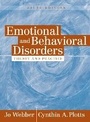
Emotional and Behavioral Disorders
Theory and Practice
4th Edition
Published on 23. July 2002
Book
Hardback
416 pages
978-0-205-32209-1 (ISBN)
Description
This book clearly explains five theoretical models and directly links the theories to practical applications for students with emotional and behavioral disorders.
Rarely are theory and application connected in such a user-friendly way. This well-organized and convenient-to-use text uses advance organizers, key points, and text-breakers such as "Case Studies" and "Applied Examples" to enhance flow and readability. The theme of this edition remains an ecological/systems perspective of emotional and behavioral disorders, reflected in the examples used and the references cited.
Rarely are theory and application connected in such a user-friendly way. This well-organized and convenient-to-use text uses advance organizers, key points, and text-breakers such as "Case Studies" and "Applied Examples" to enhance flow and readability. The theme of this edition remains an ecological/systems perspective of emotional and behavioral disorders, reflected in the examples used and the references cited.
More details
Edition
4th edition
Language
English
Place of publication
United States
Publishing group
Pearson Education (US)
Target group
Professional and scholarly
Dimensions
Height: 241 mm
Width: 178 mm
Weight
712 gr
ISBN-13
978-0-205-32209-1 (9780205322091)
Copyright in bibliographic data and cover images is held by Nielsen Book Services Limited or by the publishers or by their respective licensors: all rights reserved.
Schweitzer Classification
Other editions
New editions
Book
06/2007
5th Edition
Pearson
€219.47
Article is exhausted; no reprint
Previous edition

Book
12/1995
3rd Edition
Allyn & Bacon
€79.51
Article exhausted; check for reprint
Content
Each Chapter begins with "Orientation" and "Overview."
Preface.
1. A Historical Perspective.
Ancient Views: Greeks and Romans.
Early Middle Ages- 1600s (Segregation Phase).
1700s-1800s (Transition Phase).
Mid-1900s.
1960 to 1980.
1980s to Present.
2. Definition and Identification.
How are Emotional/Behavioral Disorders Defined?
What are the Characteristics of Students with Emotional/Behavioral Disorders?
How are Emotional/behavioral Disorders Identified?
3. Biophysical Model.
Definition and Basic View.
Etiology and Development of Disordered Behavior.
Typical Evaluation Procedures.
Applications of Biophysical Theory.
Summary.
4. Psychodynamic Model.
Definition and Basic View.
Etiology and Development of Disordered Behavior.
The Psychodynamic Goal: Healthy Development.
Typical Evaluation Application.
Educational Application.
Summary.
5. Cognitive Model.
Definition and Basic View.
Etiology and Development of Disordered Behavior.
Typical Evaluation Procedures.
Educational Application.
Summary.
6. Behavioral Model.
Definition and Basic View.
Etiology and Development of Disordered Behavior.
Typical Evaluation Procedures.
Educational Application.
Summary.
7. Ecological/Systems Model.
Definition and Basic View.
Etiology and Development of Disordered Behavior.
Typical Evaluation Procedures.
Ecological/ Systems Applications.
Summary.
8. Internalizing Disorders.
A Development Framework.
Depression.
Anxiety Disorder.
9. Externalizing Disorders.
Attention-Deficit Hyperactivity Disorder.
Conduct Disorders.
10. Adolescents.
Defining Adolescence and Emotional/Behavioral Disorders in Adolescence.
Dealing with Adolescent Issues in the Schools.
Interventions with Adolescents with Emotional/behavioral Disorders.
11. Special Issues.
Substance-Exposed Infants and Young Children: Behavioral Effects.
Sexual Abuse of Children and Adolescents.
School Issues.
References.
Index.
Preface.
1. A Historical Perspective.
Ancient Views: Greeks and Romans.
Early Middle Ages- 1600s (Segregation Phase).
1700s-1800s (Transition Phase).
Mid-1900s.
1960 to 1980.
1980s to Present.
2. Definition and Identification.
How are Emotional/Behavioral Disorders Defined?
What are the Characteristics of Students with Emotional/Behavioral Disorders?
How are Emotional/behavioral Disorders Identified?
3. Biophysical Model.
Definition and Basic View.
Etiology and Development of Disordered Behavior.
Typical Evaluation Procedures.
Applications of Biophysical Theory.
Summary.
4. Psychodynamic Model.
Definition and Basic View.
Etiology and Development of Disordered Behavior.
The Psychodynamic Goal: Healthy Development.
Typical Evaluation Application.
Educational Application.
Summary.
5. Cognitive Model.
Definition and Basic View.
Etiology and Development of Disordered Behavior.
Typical Evaluation Procedures.
Educational Application.
Summary.
6. Behavioral Model.
Definition and Basic View.
Etiology and Development of Disordered Behavior.
Typical Evaluation Procedures.
Educational Application.
Summary.
7. Ecological/Systems Model.
Definition and Basic View.
Etiology and Development of Disordered Behavior.
Typical Evaluation Procedures.
Ecological/ Systems Applications.
Summary.
8. Internalizing Disorders.
A Development Framework.
Depression.
Anxiety Disorder.
9. Externalizing Disorders.
Attention-Deficit Hyperactivity Disorder.
Conduct Disorders.
10. Adolescents.
Defining Adolescence and Emotional/Behavioral Disorders in Adolescence.
Dealing with Adolescent Issues in the Schools.
Interventions with Adolescents with Emotional/behavioral Disorders.
11. Special Issues.
Substance-Exposed Infants and Young Children: Behavioral Effects.
Sexual Abuse of Children and Adolescents.
School Issues.
References.
Index.