

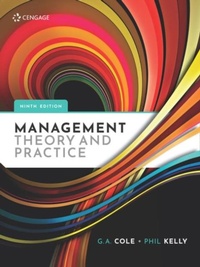
Management Theory and Practice
9th Edition
Published on 11. February 2020
Book
Paperback/Softback
640 pages
978-1-4737-6972-4 (ISBN)
Description
The 9th edition of this classic textbook provides students with a firm understanding of current management theories and practical skills to help smooth their transition into the workplace. Combining theory and practice it has been fully updated with a revised three-part structure to help learners focus on the many roles managers can play in an organization. It covers the topics most commonly taught on business courses at undergraduate and postgraduate level and gives students an insight into the latest trends in the ever-changing world of management.
More details
Edition
9th edition
Language
English
Place of publication
London
United Kingdom
Target group
College/higher education
Dimensions
Height: 195 mm
Width: 260 mm
Thickness: 22 mm
Weight
1270 gr
ISBN-13
978-1-4737-6972-4 (9781473769724)
Copyright in bibliographic data and cover images is held by Nielsen Book Services Limited or by the publishers or by their respective licensors: all rights reserved.
Schweitzer Classification
Persons
The late Gerald Cole worked and taught in a wide variety of large and small organizations in the public and private sectors. He held two non-executive directorships and was also an external examiner at Middlesex University. Phil Kelly is a Programme Leader and Reader at Liverpool Business School. He teaches management on a variety of undergraduate and postgraduate programmes. Prior to this, he was a business practitioner and worked for 20 major companies across the world. He has a Doctorate in Business Administration from Manchester University.
Content
Part One - Management Theory
Section One - Introduction
1. Management - An Introduction
2. Organizations
3. Classical Management
Section Two - Human Relations - Early Theories
4. Motivation Theories
5. Leadership Theories
6. Group Work Theories
7. Organizational Culture and Climate
Section Three - Systems Theories
8. Systems and Contingency Theories
9. Management Information Systems Theory
Section Four - Managing Strategically
10. Strategic Management
11. International Strategy and Leadership
Section Five - Contemporary Approaches to Management Theory- New Perspectives Explored
12. Management Theory in Turbulent Times
13. Management (Competence) Theories
Part Two - Management in Practice
Section Six - Planning, Leading and Strategizing
14. The Environment
15. Strategy
16. Implementing and Managing Strategy
Section Seven - Organizing
17. Organizing the Workforce
18. Organizing Work
19. Organizing for Innovation
20. Organizing for Productivity and Responsiveness
21. Reorganizing: Managing Change
Section Eight - Motivating
22. Motivating Individual Employees
23. Motivation in Groups and Teams
Section Nine - Controlling
24. Organizational Control
25. Managing Quality
26. Managing Risk
Part Three - Business Functions and Processes
Section Ten - Marketing
27. Marketing Fundamentals
28. Traditional Marketing Tools
29. Customer-Oriented Marketing Approaches
30. Digital Marketing
31. Sales Management
Section Eleven - Operations
32. Procurements
33. Logistics
34. Production
35. SCM Systems and Technology
Section Twelve - Human Resources
36. Human Resource Management (HRM)
37. Managing the Employee Lifecycle
38. Performance Management
39. International Human Resource Management (IHRM)
Section Thirteen - Financial Aspects of Management
40. Accounting and Finance
41. Budgeting
Section Fourteen - Managing Information Resources
42. Managing Information Resources
43. Digital Technologies
Section One - Introduction
1. Management - An Introduction
2. Organizations
3. Classical Management
Section Two - Human Relations - Early Theories
4. Motivation Theories
5. Leadership Theories
6. Group Work Theories
7. Organizational Culture and Climate
Section Three - Systems Theories
8. Systems and Contingency Theories
9. Management Information Systems Theory
Section Four - Managing Strategically
10. Strategic Management
11. International Strategy and Leadership
Section Five - Contemporary Approaches to Management Theory- New Perspectives Explored
12. Management Theory in Turbulent Times
13. Management (Competence) Theories
Part Two - Management in Practice
Section Six - Planning, Leading and Strategizing
14. The Environment
15. Strategy
16. Implementing and Managing Strategy
Section Seven - Organizing
17. Organizing the Workforce
18. Organizing Work
19. Organizing for Innovation
20. Organizing for Productivity and Responsiveness
21. Reorganizing: Managing Change
Section Eight - Motivating
22. Motivating Individual Employees
23. Motivation in Groups and Teams
Section Nine - Controlling
24. Organizational Control
25. Managing Quality
26. Managing Risk
Part Three - Business Functions and Processes
Section Ten - Marketing
27. Marketing Fundamentals
28. Traditional Marketing Tools
29. Customer-Oriented Marketing Approaches
30. Digital Marketing
31. Sales Management
Section Eleven - Operations
32. Procurements
33. Logistics
34. Production
35. SCM Systems and Technology
Section Twelve - Human Resources
36. Human Resource Management (HRM)
37. Managing the Employee Lifecycle
38. Performance Management
39. International Human Resource Management (IHRM)
Section Thirteen - Financial Aspects of Management
40. Accounting and Finance
41. Budgeting
Section Fourteen - Managing Information Resources
42. Managing Information Resources
43. Digital Technologies