

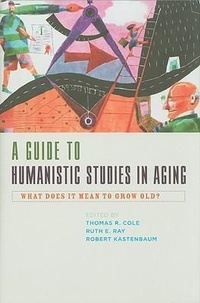
A Guide to Humanistic Studies in Aging
What Does It Mean to Grow Old?
Published on 27. July 2010
Book
Hardback
400 pages
978-0-8018-9433-6 (ISBN)
Description
This volume explores the moral, spiritual, and cultural terrain of aging through interdisciplinary scholarship and clinically based research. Aging has long been of interest to scholars and practitioners in a vast array of academic fields and professions. Thomas R. Cole, Ruth E. Ray, and Robert Kastenbaum have brought together leaders from a variety of academic realms to explore how aging is depicted in the modern era and the effect of these portrayals on individuals and society. The first section views aging and old age through the lenses of four disciplines: history, literature, religion, and philosophy. It probes the idea and effect of age in different places and times in history; discusses the concept as put forth in novels, memoirs, and literary studies and criticism; and raises important existential and spiritual questions about the meaning of growing old. The chapters in the second section demonstrate how interdisciplinary humanities can be applied to the study of aging through such thoughtful queries as: How do creativity and health relate in old age? What does "old" mean in an era of high-tech medicine, and what is our moral obligation to care for elderly persons?
Why are friendships of special importance to older people? Section three uses semiotics, cultural analysis, and ideological critiques to identify key social issues related to aging, including the concept of "home," ageism and discrimination, and our understanding of aging in the era of globalization. The text closes with Robert Kastenbaum's poignant reflection on his own considerations of meaning and mortality as he journeyed back to health following heart surgery. This comprehensive guide works at the nexus of the humanities and health professions to provide the intellectual rationale, history, and a substantive overview of humanistic gerontology as it has emerged in the United States and Europe.
Why are friendships of special importance to older people? Section three uses semiotics, cultural analysis, and ideological critiques to identify key social issues related to aging, including the concept of "home," ageism and discrimination, and our understanding of aging in the era of globalization. The text closes with Robert Kastenbaum's poignant reflection on his own considerations of meaning and mortality as he journeyed back to health following heart surgery. This comprehensive guide works at the nexus of the humanities and health professions to provide the intellectual rationale, history, and a substantive overview of humanistic gerontology as it has emerged in the United States and Europe.
Reviews / Votes
Recommended. ChoiceMore details
Language
English
Place of publication
Baltimore, MD
United States
Target group
College/higher education
Product notice
Unsewn / adhesive bound
Cloth over boards
With dust jacket
Illustrations
1 s/w Zeichnung
1 Line drawings, black and white
Dimensions
Height: 240 mm
Width: 164 mm
Thickness: 40 mm
Weight
781 gr
ISBN-13
978-0-8018-9433-6 (9780801894336)
DOI
10.56021/9780801894336
Copyright in bibliographic data and cover images is held by Nielsen Book Services Limited or by the publishers or by their respective licensors: all rights reserved.
Schweitzer Classification
Persons
Thomas R. Cole is the McGovern Chair in Medical Humanities and director of the John P. McGovern, M.D., Center for Health, Humanities, and the Human Spirit at the University of Texas Health Science Center in Houston. Ruth E. Ray is a professor of English at Wayne State University. Robert Kastenbaum is an emeritus professor of gerontology at Arizona State University. Cole, Ray, and Kastenbaum edited the Handbook of the Humanities and Aging, second edition.
Content
Introduction: The Humanistic Study of Aging Past and Present, or Why Gerontology Still Needs Interpretive Inquiry
Part I: Disciplinary Perspectives
Chapter 1. The History of Aging and Old Age in "Western" Cultures
Chapter 2. Resilience and Creativity in Aging: The Realms of Silver
Chapter 3. Literary Texts and Literary Critics Team Up Against Agism
Chapter 4. Philosophy of Aging, Time, and Finitude
Chapter 5. Aging in World Religions: An Overview
Part II: Interdisciplinary Perspectives
Chapter 6. The Value and Meaning of Friendship in Later Life
Chapter 7. Encountering the Numinous: Relationality, the Arts, and Religion in Later Life
Chapter 8. Creativity and Aging: Psychological Growth, Health, and Well-Being
Chapter 9. The Five People You Meet in Retirement
Chapter 10. The Age of Reflexive Longevity: How the Clinic and Changing Expectations of the Life Course are Reshaping Old Age
Chapter 11. Ethics and Aging, Retrospectively and Prospectively
Part III: Age Studies in the Public Sphere
Chapter 12. Age, Meaning, and Place: Cultural Narratives and Retirement Communities
Chapter 13. Old Age and Globalization
Chapter 14. Agism and Social Change: The New Regime of Decline
Part IV: Personal Perspectives
Chapter 15. Treadmilling to the Far Side: An Informal Guide to Coming of Age with Mortality
Chapter 16. The Experience of Aging in Feature-Length Films: A Selected and Annotated Filmography
Index
Part I: Disciplinary Perspectives
Chapter 1. The History of Aging and Old Age in "Western" Cultures
Chapter 2. Resilience and Creativity in Aging: The Realms of Silver
Chapter 3. Literary Texts and Literary Critics Team Up Against Agism
Chapter 4. Philosophy of Aging, Time, and Finitude
Chapter 5. Aging in World Religions: An Overview
Part II: Interdisciplinary Perspectives
Chapter 6. The Value and Meaning of Friendship in Later Life
Chapter 7. Encountering the Numinous: Relationality, the Arts, and Religion in Later Life
Chapter 8. Creativity and Aging: Psychological Growth, Health, and Well-Being
Chapter 9. The Five People You Meet in Retirement
Chapter 10. The Age of Reflexive Longevity: How the Clinic and Changing Expectations of the Life Course are Reshaping Old Age
Chapter 11. Ethics and Aging, Retrospectively and Prospectively
Part III: Age Studies in the Public Sphere
Chapter 12. Age, Meaning, and Place: Cultural Narratives and Retirement Communities
Chapter 13. Old Age and Globalization
Chapter 14. Agism and Social Change: The New Regime of Decline
Part IV: Personal Perspectives
Chapter 15. Treadmilling to the Far Side: An Informal Guide to Coming of Age with Mortality
Chapter 16. The Experience of Aging in Feature-Length Films: A Selected and Annotated Filmography
Index