

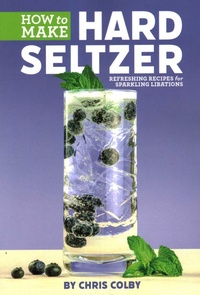
How to Make Hard Seltzer
Refreshing Recipes for Sparkling Libations
Published on 7. September 2020
Book
Paperback/Softback
176 pages
978-1-938469-65-7 (ISBN)
Description
Hard seltzer is a booming category in the world of lifestyle beverages and craft brewers are lending their artisanal skills to this refreshing beverage. Simple to make, hard seltzer is a sparkling alternative. In this guide, producers share instructions for making seltzer for both commercial and home enjoyment.
More details
Language
English
Place of publication
Boulder, CO
United States
Product notice
Paperback (trade)
Illustrations
10 BW Photos, 2 Charts, 20 Recipes, 2 Tables
Dimensions
Height: 225 mm
Width: 156 mm
Thickness: 12 mm
Weight
262 gr
ISBN-13
978-1-938469-65-7 (9781938469657)
Copyright in bibliographic data and cover images is held by Nielsen Book Services Limited or by the publishers or by their respective licensors: all rights reserved.
Schweitzer Classification
Other editions
Additional editions
E-Book
09/2020
Simon + Schuster LLC
€16.80
Available for download
Person
By Chris Colby
Content
How to Brew Hard Seltzer by Chris Colby
Table of Contents
I.History: Those That Paved the Way
II. Hard Seltzers
A. Fizz, Flavors, and Aroma
B. Alcohol, Sugars, and Other Carbohydrates
C. Carbonation and pH
D. Packaging and Marketing
1. Who is drinking hard seltzers?
III. Production
A. Malt-type Hard Seltzers
1. The Grist, Mash, and Lautering
a. Lightly-colored Malts and Adjuncts
b. Minimizing the Extraction of Flavored or Colored Malt Compounds
2. Boiling and Cooling
a. Minimizing Color Development
b. Adding Sugar
3. Fermentation
a. Yeast Strains
b. Yeast Nutrition
4. Filtration, Flavoring, and Packaging
a. Removing Unwanted Color and Malt Flavors
b. Adding Flavors
i. Flavor and Sweetness
ii. Acids, Acidity, and pH
c. Carbonation
d. Biological Stability
e. Oxidation
B. Sugar-type Hard Seltzers
1. The Must
a. Sugar
i. But is it Beer?
b. Boiling and Cooling
2. Fermentation
a. Yeast
b. Yeast Nutrition
3. Filtration, Flavoring, and Packaging
a. Adding Flavors
i. Sweetness
ii. Acids, Acidity, and pH
b. Carbonation
c. Biological Stability
d. Oxidation
i. Absence of Malt Compounds (Staling Precursors)
IV. Recipes
A. Malt-type Seltzers
1. [number of recipes TBD]
B. Sugar-type Seltzers
1. [number of recipes TBD]
Table of Contents
I.History: Those That Paved the Way
II. Hard Seltzers
A. Fizz, Flavors, and Aroma
B. Alcohol, Sugars, and Other Carbohydrates
C. Carbonation and pH
D. Packaging and Marketing
1. Who is drinking hard seltzers?
III. Production
A. Malt-type Hard Seltzers
1. The Grist, Mash, and Lautering
a. Lightly-colored Malts and Adjuncts
b. Minimizing the Extraction of Flavored or Colored Malt Compounds
2. Boiling and Cooling
a. Minimizing Color Development
b. Adding Sugar
3. Fermentation
a. Yeast Strains
b. Yeast Nutrition
4. Filtration, Flavoring, and Packaging
a. Removing Unwanted Color and Malt Flavors
b. Adding Flavors
i. Flavor and Sweetness
ii. Acids, Acidity, and pH
c. Carbonation
d. Biological Stability
e. Oxidation
B. Sugar-type Hard Seltzers
1. The Must
a. Sugar
i. But is it Beer?
b. Boiling and Cooling
2. Fermentation
a. Yeast
b. Yeast Nutrition
3. Filtration, Flavoring, and Packaging
a. Adding Flavors
i. Sweetness
ii. Acids, Acidity, and pH
b. Carbonation
c. Biological Stability
d. Oxidation
i. Absence of Malt Compounds (Staling Precursors)
IV. Recipes
A. Malt-type Seltzers
1. [number of recipes TBD]
B. Sugar-type Seltzers
1. [number of recipes TBD]