

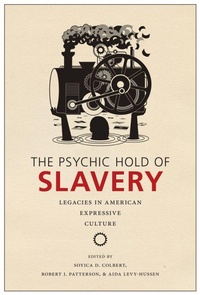
The Psychic Hold of Slavery
Legacies in American Expressive Culture
Published on 20. July 2016
Book
Paperback/Softback
258 pages
978-0-8135-8395-2 (ISBN)
Description
What would it mean to "get over slavery"? Is such a thing possible? Is it even desirable? Should we perceive the psychic hold of slavery as a set of mental manacles that hold us back from imagining a postracist America? Or could the psychic hold of slavery be understood as a tool, helping us get a grip on the systemic racial inequalities and restricted liberties that persist in the present day? Featuring original essays from an array of established and emerging scholars in the interdisciplinary field of African American studies, The Psychic Hold of Slavery offers a nuanced dialogue upon these questions. With a painful awareness that our understanding of the past informs our understanding of the present-and vice versa-the contributors place slavery's historical legacies in conversation with twenty-first-century manifestations of antiblack violence, dehumanization, and social death. Through an exploration of film, drama, fiction, performance art, graphic novels, and philosophical discourse, this volume considers how artists grapple with questions of representation, as they ask whether slavery can ever be accurately depicted, trace the scars that slavery has left on a traumatized body politic, or debate how to best convey that black lives matter. The Psychic Hold of Slavery thus raises provocative questions about how we behold the historically distinct event of African diasporic enslavement and how we might hold off the transhistorical force of antiblack domination.
Reviews / Votes
"Suggesting that even the violence against blacks that fueled the Black Lives Matter movement is on the slavery continuum, this volume argues that slavery continues to shape the US's fundamental psychology and its systemic racial hierarchy. A postracial US is yet to come ... Recommended" (Choice) "[The Psychic Hold of Slavery] is well written and well organized. The proficiency and writing style of the contributors serves to reassure readers that they are among knowledgeable experts in the field... This is a must read book for any African American Studies course." (Horizons in Humanities and Social Sciences) "This collection is a timely, fascinating, often brilliant scholarly intervention in matters central both to the range of scholars and artists whose work it discusses and to the field of Black Studies." - Michael Awkward (author of Philadelphia Freedoms: Black American Trauma, Memory & Culture after King) "These intelligent and provocative essays wonderfully show us what a rich array of art forms (films, literature, television, and cartoons) have to say about what slavery has done and undone." - Ashraf H. A. Rushdy (author of The End of American Lynching and A Guilted Age: Apologies for the Past)More details
Language
English
Place of publication
New Brunswick NJ
United States
Target group
Professional and scholarly
College/higher education
Product notice
Paperback (trade)
Unsewn / adhesive bound
Illustrations
14 photographs
Dimensions
Height: 226 mm
Width: 151 mm
Thickness: 17 mm
Weight
376 gr
ISBN-13
978-0-8135-8395-2 (9780813583952)
Copyright in bibliographic data and cover images is held by Nielsen Book Services Limited or by the publishers or by their respective licensors: all rights reserved.
Schweitzer Classification
Other editions
Additional editions
Unknown | Soyica Diggs Colbert | Robert J. Patterson
Psychic Hold of Slavery
Legacies in American Expressive Culture
E-Book
07/2016
1st Edition
Rutgers University Press
€99.99
Available for download
Persons
SOYICA DIGGS COLBERT is an associate professor of African American studies and theater and performance studies at Georgetown University in Washington, D.C. She is the author of The African American Theatrical Body: Reception, Performance and the Stage. ROBERT J. PATTERSON is an associate professor of African American studies and English at Georgetown University in Washington, D.C., where he also directs the African American Studies program. He is the author of Exodus Politics: Civil Rights and Leadership in African American Literature and Culture. AIDA LEVY-HUSSEN is an assistant professor of English at the University of Wisconsin-Madison. She is the author of the forthcoming book, How To Read African American Literature: Post-Civil Rights Fiction and the Task of Interpretation.
Content
AcknowledgmentsIntroduction: "Do You Want to Be Well?"Soyica Diggs ColbertChapter 1: 12 Years a What?: Slavery, Representation, and Black Cultural Politics in 12 Years a SlaveRobert J. PattersonChapter 2: The Fruit of Abolition: Discontinuity and Difference in Terrance Hayes's "The Avocado"Douglas A. Jones Jr.Chapter 3: Black Time: Slavery, Metaphysics, and the Logic of WellnessCalvin WarrenChapter 4: The Inside Turned Out Architecture of the Post-Neo-Slave NarrativeMargo Natalie CrawfordChapter 5: Memwa se paswa: Sifting the Slave Past in HaitiREgine Michelle Jean-CharlesChapter 6: Staging Social Death: Alienation and Embodiment in Aishah Rahman's Unfinished WomenGerShun AvilezChapter 7: Dancing with Death: Spike Lee's BamboozledSoyica Diggs ColbertChapter 8: Laughing to Keep from Crying: Dave Chappelle's Self-Exploration with "The Nigger Pixie"Brandon J. ManningChapter 9: The Cartoonal SlaveMichael ChaneyChapter 10: Trauma and the Historical Turn in Black Literary DiscourseAida Levy-HussenConclusion: Black Lives Matter, Except When They Don't: Why Slavery's Psychic Hold MattersRobert J. PattersonSelected BibliographyNotes on ContributorsIndex