

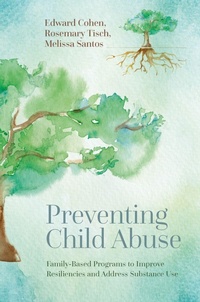
Preventing Child Abuse
Family-Based Programs to Improve Resiliencies and Address Substance Use
Published on 31. March 2026
Book
Hardback
304 pages
978-0-19-762960-4 (ISBN)
Description
Preventing Child Abuse introduces the evidence, theories, concepts, essential components, and practice issues for family-based prevention programs (FBPs) for families dealing with substance use problems. FBPs are interventions that involve the family in program practices which are trauma-informed, skills-oriented, and strengths-based, in an effort to prevent or minimize future problems. Guided by multiple theoretical perspectives, FBPs assume that improving parenting capacity, reducing harmful substance use, and improving family relationships will translate into a reduction of both violence in the home and neglect of children's needs.
To demonstrate the foundations and outcomes of FBPs, the book provides examples from existing programs and an in-depth case study of the Celebrating Families! program developed and piloted by the authors to specifically address caregivers' substance use. Chapters provide a comprehensive treatment of child welfare outcomes research, adverse and compensatory factors that inform FBPs' practices, prominent theories for FBPs, cultural adaptation, and evaluation methods. The book concludes by recommending that funders and policymakers sustain programs showing promise of preliminary efficacy while they work toward implementing increasingly robust evaluation research studies.
To demonstrate the foundations and outcomes of FBPs, the book provides examples from existing programs and an in-depth case study of the Celebrating Families! program developed and piloted by the authors to specifically address caregivers' substance use. Chapters provide a comprehensive treatment of child welfare outcomes research, adverse and compensatory factors that inform FBPs' practices, prominent theories for FBPs, cultural adaptation, and evaluation methods. The book concludes by recommending that funders and policymakers sustain programs showing promise of preliminary efficacy while they work toward implementing increasingly robust evaluation research studies.
Reviews / Votes
The authors review a remarkable number of family-based programs to improve resiliencies and address substance use. The book revealed that working with the entire family is the focus of scores of programs nation-wide, and these programs confirm that family-based programs can make positive changes in family life. ..The book discusses scores of family-based prevention programs from several countries, but primarily from the United States. Some are designed for Hispanic parents, others for Native American Families, still others for Black families, and for Asian families. All are of interest to those of us who work with families impacted by substance use. * Judge Leonard Edwards (ret.), NCJFCJ Past President, National Council of Juvenile and Family Court Judges * This excellent monograph is a vital contribution to advance efforts that respond to events at the intersection of child maltreatment and families experiencing substance use and mental disorders...I welcome these contributions to our understanding and advancement of realizing the dream of family-centered practice. * Nancy K. Young, Child and Family Futures (from the Foreward) * This book is a substantial and praiseworthy resource...By bridging theory, culture and evidence, Cohen, Tisch and Santos have delivered a text that not only informs but also inspires more compassionate and effective prevention efforts. * Shuxian Zhu, Child Abuse Reviews *More details
Language
English
Place of publication
New York
United States
Target group
College/higher education
Product notice
sewn/stitched
Cloth over boards
Dimensions
Height: 242 mm
Width: 167 mm
Thickness: 27 mm
Weight
599 gr
ISBN-13
978-0-19-762960-4 (9780197629604)
Copyright in bibliographic data and cover images is held by Nielsen Book Services Limited or by the publishers or by their respective licensors: all rights reserved.
Schweitzer Classification
Persons
Edward Cohen, PhD, MSW is Professor at the School of Social Work at San Jose State University in San Jose, California. He is former Director of the Center for Social Services Research at the University of California at Berkeley. His research interests include evaluation of programs for children and families, child welfare services, and justice system services. He has also worked in international social work and is lead author of The International Development of Social Work Education: The Vietnam Experience. He serves on the Editorial Board of Child and Adolescent Social Work.
Rosemary Tisch, MA is former Director of Prevention Partnership International and the lead author of Celebrating Families!. She holds a Master Degree in Counseling Psychology from Stanford University. Ms. Tisch has co-authored several publications in trade and professional journals about family-based prevention, and has been honored with several local and national awards recognizing her work in the
development of prevention programs for children and youth of caregivers with addictions.
Melissa Santos, BSW is the Vice President of Workforce & Business Development at Community Solutions in Santa Clara County, California. She has over 25 years of experience in the behavioral health field and is a national trainer and developer of the Celebrating Families! program.
Rosemary Tisch, MA is former Director of Prevention Partnership International and the lead author of Celebrating Families!. She holds a Master Degree in Counseling Psychology from Stanford University. Ms. Tisch has co-authored several publications in trade and professional journals about family-based prevention, and has been honored with several local and national awards recognizing her work in the
development of prevention programs for children and youth of caregivers with addictions.
Melissa Santos, BSW is the Vice President of Workforce & Business Development at Community Solutions in Santa Clara County, California. She has over 25 years of experience in the behavioral health field and is a national trainer and developer of the Celebrating Families! program.
Content
Foreword
--Nancy K. Young Preface Part 1. Background and Foundations
Chapter 1. The Scope, Challenges, and Potential of Family-Based Prevention Programs
Chapter 2. The Promise of Family-Centered and Community-Based Prevention
--Katherine Lucero
Chapter 3. Parental Substance Use and Child Maltreatment: Prevalence and Treatment Utilization
Chapter 4. Adverse Childhood Experiences, Child Welfare, and Substance Use
Chapter 5. Resilience, Protective Factors, and Family-Based Programs Part 2. From Theory to Practice in Family-Based Prevention Programs Chapter 6. Attachment Theory and Family-Based Prevention
Chapter 7. Family Systems Theories and Family-Based Prevention
Chapter 8. Theories of Social Support and Family-Based Prevention
Chapter 9. Cognitive Behavioral Theories and Family-Based Prevention Part 3. Practices for Family-Based Prevention
Chapter 10. Important Components of Family-Based Prevention Programs: A Multi-Level Approach
Chapter 11. Case Study - The Celebrating Families! Prevention Program Part 4. The Cultural Adaptation of Family-Based Programs for Communities Chapter 12. Family-Based Programs for Black Families
--Edward Cohen and Joshina Cluff
Chapter 13. Family Based Programs for Hispanic Families
--Edward Cohen and Maria Ramirez
Chapter 14. Family Based Programs for Native American and Indigenous Communities
--Edward Cohen and Bonnie Lockhart-Ochoa Chapter 15. Family Based Programs for Asian American Families
--Edward Cohen and Katrina Trinh
Chapter 16. Family-Based Programs for LGBTQ+ Family Caregivers
--Edward Cohen and Lisa Willmes Part 5. Evaluating Family-Based Programs
Chapter 17. Family-Based Programs Addressing Substance Use Problems and Child Welfare Outcomes
Chapter 18. Evaluating the Impact of Family-Based Programs
--Kiley W. Liming and Jody Brook
Chapter 19. Conclusions: Family-Based Prevention and System Transformation References
--Nancy K. Young Preface Part 1. Background and Foundations
Chapter 1. The Scope, Challenges, and Potential of Family-Based Prevention Programs
Chapter 2. The Promise of Family-Centered and Community-Based Prevention
--Katherine Lucero
Chapter 3. Parental Substance Use and Child Maltreatment: Prevalence and Treatment Utilization
Chapter 4. Adverse Childhood Experiences, Child Welfare, and Substance Use
Chapter 5. Resilience, Protective Factors, and Family-Based Programs Part 2. From Theory to Practice in Family-Based Prevention Programs Chapter 6. Attachment Theory and Family-Based Prevention
Chapter 7. Family Systems Theories and Family-Based Prevention
Chapter 8. Theories of Social Support and Family-Based Prevention
Chapter 9. Cognitive Behavioral Theories and Family-Based Prevention Part 3. Practices for Family-Based Prevention
Chapter 10. Important Components of Family-Based Prevention Programs: A Multi-Level Approach
Chapter 11. Case Study - The Celebrating Families! Prevention Program Part 4. The Cultural Adaptation of Family-Based Programs for Communities Chapter 12. Family-Based Programs for Black Families
--Edward Cohen and Joshina Cluff
Chapter 13. Family Based Programs for Hispanic Families
--Edward Cohen and Maria Ramirez
Chapter 14. Family Based Programs for Native American and Indigenous Communities
--Edward Cohen and Bonnie Lockhart-Ochoa Chapter 15. Family Based Programs for Asian American Families
--Edward Cohen and Katrina Trinh
Chapter 16. Family-Based Programs for LGBTQ+ Family Caregivers
--Edward Cohen and Lisa Willmes Part 5. Evaluating Family-Based Programs
Chapter 17. Family-Based Programs Addressing Substance Use Problems and Child Welfare Outcomes
Chapter 18. Evaluating the Impact of Family-Based Programs
--Kiley W. Liming and Jody Brook
Chapter 19. Conclusions: Family-Based Prevention and System Transformation References