

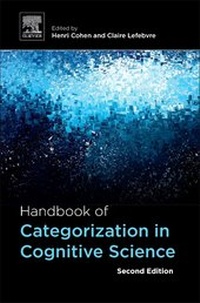
Handbook of Categorization in Cognitive Science
2nd Edition
Published on 30. June 2017
Book
Hardback
1276 pages
978-0-08-101107-2 (ISBN)
Description
Handbook of Categorization in Cognitive Science, Second Edition presents the study of categories and the process of categorization as viewed through the lens of the founding disciplines of the cognitive sciences, and how the study of categorization has long been at the core of each of these disciplines.
The literature on categorization reveals there is a plethora of definitions, theories, models and methods to apprehend this central object of study. The contributions in this handbook reflect this diversity. For example, the notion of category is not uniform across these contributions, and there are multiple definitions of the notion of concept. Furthermore, the study of category and categorization is approached differently within each discipline.
For some authors, the categories themselves constitute the object of study, whereas for others, it is the process of categorization, and for others still, it is the technical manipulation of large chunks of information. Finally, yet another contrast has to do with the biological versus artificial nature of agents or categorizers.
The literature on categorization reveals there is a plethora of definitions, theories, models and methods to apprehend this central object of study. The contributions in this handbook reflect this diversity. For example, the notion of category is not uniform across these contributions, and there are multiple definitions of the notion of concept. Furthermore, the study of category and categorization is approached differently within each discipline.
For some authors, the categories themselves constitute the object of study, whereas for others, it is the process of categorization, and for others still, it is the technical manipulation of large chunks of information. Finally, yet another contrast has to do with the biological versus artificial nature of agents or categorizers.
More details
Edition
2nd edition
Language
English
Place of publication
Oxford
United Kingdom
Publishing group
Elsevier Science & Technology
Target group
Professional and scholarly
Researchers and students in the cognitive sciences: psychology, neuroscience, linguistics, philosophy, computer science, and cognitive anthropology.
Dimensions
Height: 229 mm
Width: 152 mm
Weight
1670 gr
ISBN-13
978-0-08-101107-2 (9780081011072)
Copyright in bibliographic data and cover images is held by Nielsen Book Services Limited or by the publishers or by their respective licensors: all rights reserved.
Schweitzer Classification
Other editions
Additional editions
Henri Cohen | Claire Lefebvre
Handbook of Categorization in Cognitive Science
E-Book
06/2017
2nd Edition
Elsevier
€138.00
Available for download
Previous edition
Henri Cohen | Claire Lefebvre
Handbook of Categorization in Cognitive Science
Book
10/2005
Elsevier
€185.70
Article exhausted; check for reprint
Persons
Dr. Henri Cohen's research interests focus on speech and language development and neurological disorders, learning and emotion in Parkinson's disease, complexity and learning, skill acquisition and interference, and origin of language. He is Professor of Psychology (ret.) at Universite du Quebec a Montreal, and visiting scholar, at Pontificia Universidad Catolica de Chile, Universidad de la Frontera, Chile. He has published over 100 peer-reviewed articles, and edited two books (with Elsevier) on cognition and consciousness, and on categorization, and a book on the origins of language (Benjamins). He is the current editor of Brain and Cognition (Elsevier), and past editor of Journal of Neurolinguistics (Elsevier). Department of Linguistics, University of Quebec, Montreal, Canada. Dr. Lefebvre studies: linguistic theory, syntactic category theory; cognitive processes involved in the formation of new languages; languages in contact, French, Quechua, Creole Haitian, Fon, and other African languages.
Content
1. Bridging the Category Divide: Introduction to the First Edition
Part I: Categorization in Cognitive Science
2. To Cognize is to Categorize: Cognition is Categorization
3. The Role of Top-Down and Bottom-Up Mechanisms in the Maintenance of the Self-Concept: A Behavioral and Neuroscience Review
4. Categories and Cognitive Anthropology
5. Emotion Categorization
6. Philosophical Analysis as Cognitive Psychology: The Importance of Empty Concepts
Part II: Neuroscience of Categorization and Category Learning
7. Multiple Systems of Perceptual Category Learning: Theory and Cognitive Tests
8. The Neuropsychology of Perceptual Category Learning
9. Categorization in Neuroscience: Brain Response to Objects and Events
10. Neural Regions Associated with Categorical Speech Perception and Production
11. Food Perception and Categorization: From Food/No-Food to Different Types of Food
Part III: Semantic Categories
12. Semantic Categorization
13. Emotion Categories Across Languages
14. Relations Between Language and Thought: Individuation and the Count/Mass Distinction
15. Event Categorization in Sign Languages
16. Semantic Categeories in Acquisition
17. Atoms, Categorization, and conceptual Change
Part IV: Syntactic Categories
18. Lexical, Functional, Crossover, and Multifunctional Categories
19. Isolating-Monocategorial-Associational Nauguage
20. Linguistic Categories in Language Contact: Modularity and Diversity
21. Syntactic Categorization in Sign Languages
22. Syntactic Categories in Child Language Acquisition: Innate, Induced, or Illusory?
23. Syntactic Categories in Second Language Acquisition
Part V: Development of Categories
24. Constructing Race: How People Categorize Others and Themselves in Racial Terms
25. How Experience Affects Infants' Facial Categorization
26. The Development of Object Categories: What, When, and How?
27. Categorization and Aging
28. Auditory and Phonetic Category Formation
29. Perceptual and Abstract Category Learning in Pigeons
Part VI: Grounding and Categories in Perception and Inference
30. Situated Conceptualization
31. The Construction of Category Membership Judgments: Towards a Distributed Model
32. Connectionist and Robotics Approaches to Grounding Symbols in Perceptual and Sensorimotor Categories
33. Embodied Categorization
34. The Construction of Perceptual and Semantic Features During Category Learning
35. Categorization, Reasoning, and Memory From a Neo-Logical Point of View
36. The Time Course of Object, Scene, and Face Categorization
37. The Return of Concept Empiricism
Part VII: Machine Category Learning and Data Mining
38. Category Formation in Self-Organizing Embodied Agents
39. Concept Learning and Nonmonotonic Reasoning
40. Categorization in Symbolic Data Analysis
41. An Information-Based Discussion of Borderline Cases in Categorization: Six Scenarios Leading to Vagueness
42. The Neurodynamics of Categorization: Critical Challenges and Proposed Solutions
43. Genre-Specific Text Mining and Extensional Inductive Concept Recognition: A Pseudocognitive Approach
44. Graph Matching, System Design and Knowledge Modeling
Part VIII: The Naturalization of Categories
45. Nominalism and the Theory of concepts
46. Why Do We Think Racially? Culture, Evolution, and Cognition
47. How Language Influences the Way We Categorize Hybrids
48. Neurosemantics and Categories
Part I: Categorization in Cognitive Science
2. To Cognize is to Categorize: Cognition is Categorization
3. The Role of Top-Down and Bottom-Up Mechanisms in the Maintenance of the Self-Concept: A Behavioral and Neuroscience Review
4. Categories and Cognitive Anthropology
5. Emotion Categorization
6. Philosophical Analysis as Cognitive Psychology: The Importance of Empty Concepts
Part II: Neuroscience of Categorization and Category Learning
7. Multiple Systems of Perceptual Category Learning: Theory and Cognitive Tests
8. The Neuropsychology of Perceptual Category Learning
9. Categorization in Neuroscience: Brain Response to Objects and Events
10. Neural Regions Associated with Categorical Speech Perception and Production
11. Food Perception and Categorization: From Food/No-Food to Different Types of Food
Part III: Semantic Categories
12. Semantic Categorization
13. Emotion Categories Across Languages
14. Relations Between Language and Thought: Individuation and the Count/Mass Distinction
15. Event Categorization in Sign Languages
16. Semantic Categeories in Acquisition
17. Atoms, Categorization, and conceptual Change
Part IV: Syntactic Categories
18. Lexical, Functional, Crossover, and Multifunctional Categories
19. Isolating-Monocategorial-Associational Nauguage
20. Linguistic Categories in Language Contact: Modularity and Diversity
21. Syntactic Categorization in Sign Languages
22. Syntactic Categories in Child Language Acquisition: Innate, Induced, or Illusory?
23. Syntactic Categories in Second Language Acquisition
Part V: Development of Categories
24. Constructing Race: How People Categorize Others and Themselves in Racial Terms
25. How Experience Affects Infants' Facial Categorization
26. The Development of Object Categories: What, When, and How?
27. Categorization and Aging
28. Auditory and Phonetic Category Formation
29. Perceptual and Abstract Category Learning in Pigeons
Part VI: Grounding and Categories in Perception and Inference
30. Situated Conceptualization
31. The Construction of Category Membership Judgments: Towards a Distributed Model
32. Connectionist and Robotics Approaches to Grounding Symbols in Perceptual and Sensorimotor Categories
33. Embodied Categorization
34. The Construction of Perceptual and Semantic Features During Category Learning
35. Categorization, Reasoning, and Memory From a Neo-Logical Point of View
36. The Time Course of Object, Scene, and Face Categorization
37. The Return of Concept Empiricism
Part VII: Machine Category Learning and Data Mining
38. Category Formation in Self-Organizing Embodied Agents
39. Concept Learning and Nonmonotonic Reasoning
40. Categorization in Symbolic Data Analysis
41. An Information-Based Discussion of Borderline Cases in Categorization: Six Scenarios Leading to Vagueness
42. The Neurodynamics of Categorization: Critical Challenges and Proposed Solutions
43. Genre-Specific Text Mining and Extensional Inductive Concept Recognition: A Pseudocognitive Approach
44. Graph Matching, System Design and Knowledge Modeling
Part VIII: The Naturalization of Categories
45. Nominalism and the Theory of concepts
46. Why Do We Think Racially? Culture, Evolution, and Cognition
47. How Language Influences the Way We Categorize Hybrids
48. Neurosemantics and Categories