

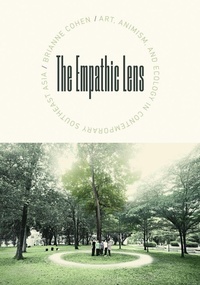
The Empathic Lens
Description
How lens-based art from Southeast Asia offers alternative visions for ecological sustainability
A new paradigm of ecologically minded artistic practices is taking shape in Southeast Asia – one that at once tracks ecological destruction and works specifically to cultivate deeper feelings of empathy toward the environment. Examining a range of photography and video work, The Empathic Lens explores how these lens-based projects respond to increasingly urgent concerns related to climate disaster and capitalist acceleration.
In this analysis of work produced across Cambodia, Vietnam, and Singapore, Brianne Cohen highlights artists for whom rampant urban development, resource extraction, and environmental toxicity are close at hand. As each artist takes their lens to these realities, Cohen shows, they draw on Indigenous knowledge and local traditions that have long recognized the kinship of humans and nonhumans. Engaging often-censored discourses of Indigenous land relations and environmental justice in a region with a long history of colonial and neocolonial development, Cohen traces genealogies of empathy and animism to demonstrate how these works develop sustainable visions for the future coexistence of planetary life.
The first critical account of marginalized artworks that depict the centrality of the more-than-human in Southeast Asian Indigenous worldviews, The Empathic Lens makes a powerful case for the relevance of Southeast Asian lens-based art in contemporary media practice and the art of the Anthropocene.
Retail e-book files for this title are screen-reader friendly with images accompanied by short alt text and/or extended descriptions.
More details
Person
Brianne Cohen is associate professor of contemporary art history at the University of Colorado Boulder. She is author of Don't Look Away: Art, Nonviolence, and Preventive Publics in Contemporary Europe and coeditor of Deep Horizons: A Multisensory Archive of Ecological Affects and Prospects and The Photofilmic: Entangled Images in Contemporary Art and Visual Culture.
Content
Contents
Introduction
1. A Feeling of Animacy with Air and Rocks
2. The Emotional Textures of Plants and Trees
3. Embodying Animal Matters and Spirits
4. More-than-Human Life
Conclusion: And They Die a ____ Death
Acknowledgments
Notes
Bibliography
Index