

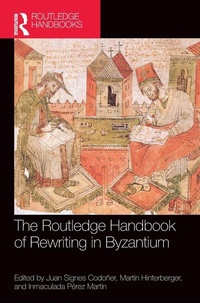
The Routledge Handbook of Rewriting in Byzantium
1st Edition
Will be published approx. on 15. December 2025
Book
Hardback
490 pages
978-1-032-22821-1 (ISBN)
Description
The Routledge Handbook of Rewriting in Byzantium presents an overview of the various rewriting processes involved in the production of Byzantine literature. Due to the lack of recent systematic research on the totality of Byzantine literature, which embraces a long millennium of texts, the fluid concept of 'rewriting', here studied for the first time in all its complexity, serves as a unifying criterion for understanding the literary task of the Byzantines. Literature in Byzantium went well beyond the problems of language and genre and was adapted according to the audience and the expectations of the readers, which varied greatly in different periods.
With contributions from 25 scholars, this book analyses and discusses a variety of topics, including the rewriting of the past, modes of persuasion as a driving force behind rewriting, changing muses, the adaptation of hagiography to changing patterns of behaviour, updating of technical texts, and the necessity for theological and philosophical reinterpretation of inherited texts.
This book will appeal to students and scholars alike interested in Byzantine literature, culture, and literary methods.
With contributions from 25 scholars, this book analyses and discusses a variety of topics, including the rewriting of the past, modes of persuasion as a driving force behind rewriting, changing muses, the adaptation of hagiography to changing patterns of behaviour, updating of technical texts, and the necessity for theological and philosophical reinterpretation of inherited texts.
This book will appeal to students and scholars alike interested in Byzantine literature, culture, and literary methods.
More details
Series
Language
English
Place of publication
London
United Kingdom
Publishing group
Taylor & Francis Ltd
Target group
College/higher education
Professional and scholarly
Academic and Postgraduate
Dimensions
Height: 250 mm
Width: 175 mm
Thickness: 31 mm
Weight
1037 gr
ISBN-13
978-1-032-22821-1 (9781032228211)
Copyright in bibliographic data and cover images is held by Nielsen Book Services Limited or by the publishers or by their respective licensors: all rights reserved.
Schweitzer Classification
Other editions
Additional editions
Juan Signes Codoner | Martin Hinterberger | Inmaculada Perez Martin
The Routledge Handbook of Rewriting in Byzantium
E-Book
11/2025
1st Edition
Routledge
€68.49
Available for download
Juan Signes Codoner | Martin Hinterberger | Inmaculada Perez Martin
The Routledge Handbook of Rewriting in Byzantium
E-Book
11/2025
1st Edition
Routledge
€68.49
Available for download
Persons
Juan Signes Codoner is Professor of Greek at Complutense University (Spain). His research interests include Byzantine historiography, the Greek grammatical tradition, Byzantine law, and the context of Homeric poetry. He is currently serving as President of the Spanish Association of Byzantine Studies (since 2017) and President of the research cluster Bosforo (Complutense University, since 2021).
Martin Hinterberger is Professor of Byzantine Literature at the University of Cyprus. His research interests include Byzantine biography and hagiography, medieval Greek as a literary language, Byzantine vernacular literature, Byzantine emotions, and editions of historiographical texts.
Inmaculada Perez Martin is Research Professor at the Instituto de Lenguas y Culturas (CSIC, Spain). Her interests include Greek palaeography, the transmission of Ancient Greek texts, Komnenian and Palaiologan scholars, and Byzantine geography. She led the digitization of the Greek manuscripts of El Escorial DIGITESC project and is currently working on the political and public use of writing in the Byzantine world.
Martin Hinterberger is Professor of Byzantine Literature at the University of Cyprus. His research interests include Byzantine biography and hagiography, medieval Greek as a literary language, Byzantine vernacular literature, Byzantine emotions, and editions of historiographical texts.
Inmaculada Perez Martin is Research Professor at the Instituto de Lenguas y Culturas (CSIC, Spain). Her interests include Greek palaeography, the transmission of Ancient Greek texts, Komnenian and Palaiologan scholars, and Byzantine geography. She led the digitization of the Greek manuscripts of El Escorial DIGITESC project and is currently working on the political and public use of writing in the Byzantine world.
Content
Introduction
0. Preliminary issues
0.1. Levels of Greek
Martin Hinterberger and Juan Signes Codoner
0.2. Vocabulary for rewriting in Byzantium
Juan Signes Codoner
0.3. Tracing the Byzantine authors' understanding of literary imitation
Elisabeth Schiffer
0.4. ?????, dossiers, ????????, compilations, excerpta
Filippo Ronconi
0.5. "Seeds for our tongue's and our intellect's training": Rewriting and Textual Transmission
Inmaculada Perez Martin
0.6. Collective Rewriting from Late Antiquity to the Palaiologan Period: An Attempt to Trace Collaboration in Literary, Scientific Projects and Manuscript Production
Andras Nemeth
1. REWRITING OR INVENTING THE PAST?: Historiography and novel
1.1. The unending (re)writing of history
Juan Signes Codoner
1.2. Rewriting in Historiography: the evidence of the Proems
Eirene Kiapidou
1.3. Late metaphraseis of Byzantine historiographical texts
Martin Hinterberger
1.4. Reworking, Rewriting, and Mouvance in Late-Byzantine Vernacular Literature
Carolina Cupane and Martin Hinterberger
2. THE PLACES OF PERSUASION: Oratory and rhetoric
2.1. Rewriting Homilies and Homilies Rewriting
Petros Tsagkaropoulos
2.2. The rhetoric of rewriting and the rewriting of rhetoric in John Tzetzes
Aglae Pizzone
2.3. Rewriting letters in Byzantium
Michael Gruenbart
3. THE CHANGING MUSES: poetry
3.1. The Reuse of Ancient Epigram in Byzantine Poetry. An Overview
Ugo Mondini
3.2. Prosifying classical verses
David Perez Moro
3.3. Memory and Rewriting in Schedography: The Cases of Fables and Narratives
Nikos Zagklas
4. SELLING PATTERNS OF BEHAVIOUR: Hagiography
4.1. Same Saints, Different Garments: Hagiographic rewriting before Symeon Metaphrastes
Daria Resh
4.2. Hagiography of the Macedonian period and Symeon Metaphrastes Christian Hogel
4.3. Hagiography of the Palaiologan period
Lev Lukhovitskiy
5. SHARING TECHNICAL COMPETENCE: Law, medicine and science
5.1. Rewriting Byzantine law
Marios Tantalos
5.2. The process of re-writing in the production of acts in the Byzantine world
Raul Estanguei
5.3. Rewriting in Byzantine Medical Literature
Isabel Grimm-Stadelmann
5.4. Rewriting pharmacological treatises
Monica Duran
5.5. Rewriting Mathematical and Astronomical Treatises
Fabio Acerbi
5.6. Rewriting Ancient Geography
Paula Caballero
6. THE QUEST OF KNOWLEDGE: Philosophy and theology
6.1. Rewriting Techniques in Byzantine Philosophical Commentaries
Michele Trizio
6.2. The last dogmatic conundrum: transmitting and innovating patristic theology on the Holy Spirit
Alessandra Bucossi
0. Preliminary issues
0.1. Levels of Greek
Martin Hinterberger and Juan Signes Codoner
0.2. Vocabulary for rewriting in Byzantium
Juan Signes Codoner
0.3. Tracing the Byzantine authors' understanding of literary imitation
Elisabeth Schiffer
0.4. ?????, dossiers, ????????, compilations, excerpta
Filippo Ronconi
0.5. "Seeds for our tongue's and our intellect's training": Rewriting and Textual Transmission
Inmaculada Perez Martin
0.6. Collective Rewriting from Late Antiquity to the Palaiologan Period: An Attempt to Trace Collaboration in Literary, Scientific Projects and Manuscript Production
Andras Nemeth
1. REWRITING OR INVENTING THE PAST?: Historiography and novel
1.1. The unending (re)writing of history
Juan Signes Codoner
1.2. Rewriting in Historiography: the evidence of the Proems
Eirene Kiapidou
1.3. Late metaphraseis of Byzantine historiographical texts
Martin Hinterberger
1.4. Reworking, Rewriting, and Mouvance in Late-Byzantine Vernacular Literature
Carolina Cupane and Martin Hinterberger
2. THE PLACES OF PERSUASION: Oratory and rhetoric
2.1. Rewriting Homilies and Homilies Rewriting
Petros Tsagkaropoulos
2.2. The rhetoric of rewriting and the rewriting of rhetoric in John Tzetzes
Aglae Pizzone
2.3. Rewriting letters in Byzantium
Michael Gruenbart
3. THE CHANGING MUSES: poetry
3.1. The Reuse of Ancient Epigram in Byzantine Poetry. An Overview
Ugo Mondini
3.2. Prosifying classical verses
David Perez Moro
3.3. Memory and Rewriting in Schedography: The Cases of Fables and Narratives
Nikos Zagklas
4. SELLING PATTERNS OF BEHAVIOUR: Hagiography
4.1. Same Saints, Different Garments: Hagiographic rewriting before Symeon Metaphrastes
Daria Resh
4.2. Hagiography of the Macedonian period and Symeon Metaphrastes Christian Hogel
4.3. Hagiography of the Palaiologan period
Lev Lukhovitskiy
5. SHARING TECHNICAL COMPETENCE: Law, medicine and science
5.1. Rewriting Byzantine law
Marios Tantalos
5.2. The process of re-writing in the production of acts in the Byzantine world
Raul Estanguei
5.3. Rewriting in Byzantine Medical Literature
Isabel Grimm-Stadelmann
5.4. Rewriting pharmacological treatises
Monica Duran
5.5. Rewriting Mathematical and Astronomical Treatises
Fabio Acerbi
5.6. Rewriting Ancient Geography
Paula Caballero
6. THE QUEST OF KNOWLEDGE: Philosophy and theology
6.1. Rewriting Techniques in Byzantine Philosophical Commentaries
Michele Trizio
6.2. The last dogmatic conundrum: transmitting and innovating patristic theology on the Holy Spirit
Alessandra Bucossi