

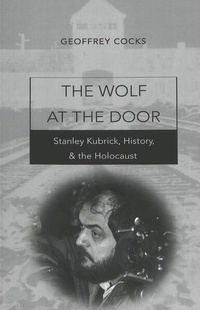
The Wolf at the Door
Stanley Kubrick, History, and the Holocaust
Will be published approx. on 28. September 2004
Book
Paperback/Softback
348 pages
978-0-8204-7115-0 (ISBN)
Description
The Wolf at the Door explores the remarkable formal and substantive patterns of cinematic discourse on Germany and the Holocaust in Stanley Kubrick's films. It is the first book on Kubrick to place his cinema into the full context of his life and times - his Jewish past, early years spent under the shadows of fascism and war, and his 1957 marriage into a German family of artists and filmmakers - all provoked his deeply ambivalent preoccupation with the history of Nazi Germany and the Holocaust. While personal and artistic reservations caused Kubrick to abandon several plans for a film on the Holocaust, this preoccupation combined with related cultural discourses in the 1970s, and culminated in a curiously indirect but compelling Holocaust subtext in his 1980 horror film, The Shining. The Wolf at the Door draws on intensive study of all of Kubrick's films, interviews with members of Kubrick's immediate family, and archival research in the United States, Germany, the Netherlands, Poland, and Israel.
More details
Person
The Author: Geoffrey Cocks is Julian S. Rammelkamp Professor of History at Albion College in Michigan. A graduate of Occidental College, Los Angeles, California, he earned his Ph.D. in history at UCLA in 1975. He is the author of Psychotherapy in the Third Reich: The Goring Institute and Treating Mind and Body; editor of The Curve of Life: Correspondence of Heinz Kohut; and co-editor of Psycho/History; German Professions, 1800-1950; Medicine and Modernity; and Depth of Field: Stanley Kubrick, Film, and the Uses of History.