

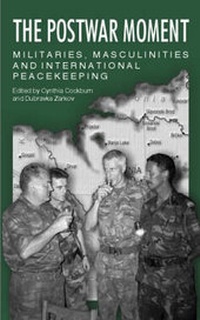
The Postwar Moment
Militaries, Masculinities and International Peacekeeping
Published on 18. July 2002
Book
Paperback/Softback
226 pages
978-0-85315-946-9 (ISBN)
Description
A postwar moment is one of promise - but too often of missed opportunities. Will peace bring a democratic, inclusive and equal society? This depends on many factors, but the contributors to this book argue that one of them - crucial but often overlooked - is the importance accorded to transforming gender power relations. Through a focus on two countries, Bosnia and the Netherlands, linked through a "peace-keeping operation", the contributors illuminate the many ways in which processes of demilitarisation and peace-keeping are structured by notions of masculinity and femininity. The Dayton Peace Agreement failed to acknowledge the gendered nature of the war it ended. Gender was also neglected by the many powerful international institutions and agencies which arrived in Bosnia-Herzegovina in 1995 to pacify and administer the war-torn country. Several chapters in the book consider these shortcomings in the Bosnian postwar moment, and the way they have impeded local women's efforts to reshape their world.
The Dutch contingent of the UN peace-keeping forces was widely held responsible for failing to prevent the massacre by Bosnian Serb forces of thousands of Bosnian Muslim men in Srebrenica. The self-questioning provoked in the Netherlands by this event here becomes a rich source of insight into relationships between soldiering and masculinities, war-fighting and peace-keeping. Show More Show Less
The Dutch contingent of the UN peace-keeping forces was widely held responsible for failing to prevent the massacre by Bosnian Serb forces of thousands of Bosnian Muslim men in Srebrenica. The self-questioning provoked in the Netherlands by this event here becomes a rich source of insight into relationships between soldiering and masculinities, war-fighting and peace-keeping. Show More Show Less
More details
Language
English
Place of publication
United Kingdom
Target group
College/higher education
Professional and scholarly
Product notice
Paperback (trade)
Illustrations
black & white illustrations
Dimensions
Height: 212 mm
Width: 163 mm
Thickness: 15 mm
Weight
286 gr
ISBN-13
978-0-85315-946-9 (9780853159469)
Copyright in bibliographic data and cover images is held by Nielsen Book Services Limited or by the publishers or by their respective licensors: all rights reserved.
Schweitzer Classification
Persons
Cynthia Cockburn is a feminist researcher and writer based at City University London, where she is a professor in the Department of Sociology. Her most recent book is The Space Between Us: (Zed Books 1998). Dubravka Zarkov studied sociology and anthropology in Belgrade, and development studies and women's studies in the Netherlands.
Content
Introduction: Dubravka Zarkov and Cynthia Cockburn - Dismantling militarism, decommissioning masculinity - 1. Demililtarization - or more of the same? Feminist Questions to Ask in the Postwar Moment Cynthia Enloe - 2. Masculinities, the reduction of violence and the pursuit of peace. R.W.Connell - 3. International Peacekeeping Operations: To Neglect Gender Is to Risk Peacekeeping Failure Dyan Mazurana - Gendered institutions, gendered interventions - 4. Intergovernmental actions in Bosnia-Herzegovina: the cost of ignoring gender Madeleine Rees - 5. Women's organization in the rebuilding of post-war Bosnia-Herzegovina Cynthia Cockburn - 6. Conflicts of interest: gender in Oxfam's emergency response Suzanne Williams - 7. Gender and the peace-keeping military: a view from Bosnian women's organizations Cynthia Cockburn and Meliha Hubic - 8. Enduring ambivalence: the Dutch Armed Forces and their women recruits - Jolanda Bosch and Desiree Verweij - soldiering and the nation: masculine relations - 9. The unheroic men of a moral nation: masculinity and nation in modern Dutch history Stefan Dudink - 10. A gentlemen's agreement: Srebrenica in the context of Dutch war history Marc de Leeuw - 11. Srebrenica Trauma: masculinity, military and national self-image in Dutch daily newspapers Dubravka Zarkov