

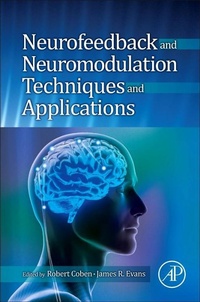
Neurofeedback and Neuromodulation Techniques and Applications
Published on 25. November 2010
Book
Hardback
450 pages
978-0-12-382235-2 (ISBN)
Description
The study of neurofeedback and neuromodulation offer a window into brain physiology and function, suggesting innovative approaches to the improvement of attention, anxiety, pain, mood and behavior. Resources for understanding what neurofeedback and neuromodulation are, how they are used, and to what disorders and patients they can be applied are scarce, and this volume serves as an ideal tool for clinical researchers and practicing clinicians in both neuroscience and psychology to understand techniques, analysis, and their applications to specific patient populations and disorders. The top scholars in the field have been enlisted, and contributions offer both the breadth needed for an introductory scholar and the depth desired by a clinical professional.
More details
Language
English
Place of publication
San Diego
United States
Publishing group
Elsevier Science Publishing Co Inc
Target group
Professional and scholarly
Neuropsychologists, clinical psychology practitioners, clinical neuroscience /psychology researchers and seeking a broad overview of neurofeedback and neuromodulation techniques for assessing brain function and dysfunction and treatment of disorders.
Product notice
sewn/stitched
Cloth over boards
Dimensions
Height: 235 mm
Width: 158 mm
Thickness: 35 mm
Weight
1004 gr
ISBN-13
978-0-12-382235-2 (9780123822352)
Copyright in bibliographic data and cover images is held by Nielsen Book Services Limited or by the publishers or by their respective licensors: all rights reserved.
Schweitzer Classification
Other editions
New editions

Robert Coben | Kristy Snyder Colling
Neurofeedback and Neuromodulation Techniques and Applications
Book
03/2023
2nd Edition
Academic Press
€138.50
The article will not be published
Additional editions
Robert Coben | James R. Evans
Neurofeedback and Neuromodulation Techniques and Applications
E-Book
05/2014
Academic Press
€78.95
Available for download
Persons
Dr. Coben received his doctoral degree in 1991 and has been a licensed psychologist in the state of New York since 1994 and in the state of Arkansas since 2015. He is the Director and Chief Neuropsychologist of NeuroRehabilitation and Neuropsychological Services, the Co-Director of Integrated Neuroscience Services, and works as a practicing Neuropsychologist at Integrated Neuropsychological Services. His post-doctoral training in clinical and rehabilitation neuropsychology was done at the UCLA Medical Center and Cedars-Sinai Medical Center in California. His experience in rehabilitation neuropsychology includes directing two separate inpatient neurorehabilitation programs. He is former director of inpatient and outpatient brain rehabilitation at Staten Island University Hospital. He is an affiliate of Winthrop University Hospital and an affiliated researcher of NYU Medical Center. Dr. Coben is a member in good standing of the American Psychological Association, International Neuropsychological Society, International Society for Neurofeedback and Research, and the American Association of Psychophysiology and Biofeedback. He is an associate editor for Frontiers in Child Health and Human Development and Frontiers in Public Health. He is also an editorial reviewer for the following journals: Journal of Autism and Developmental Disorders, Frontiers in Child Health and Human Development, Frontiers in Human Neuroscience, Clinical Neurophysiology, Neuroimage, and Journal of Psychophysiology. He has edited special issues of journals on EEG Connectivity, and Neuromodulation techniques for Autism and Epilepsy. His research interests include the study of Neuropsychology and Neurophysiology in the understanding of childhood neurodevelopmental disorders, especially autism, and treatment applications for the same. Dr. James Evans is licensed in clinical and school psychology. Following graduation with a bachelor's degree in education, and a tour of duty in the U.S. Army, he taught in a public high school. Later he earned a master's degree in psychology. After working for six years at a state hospital and a county mental health center, he attended Peabody College of Vanderbilt University where he received a Ph.D. degree in psychology. He was on the faculty of the Psychology Department at the University of South Carolina for thirty years, and is retired from that position. He has completed postdoctoral work in neuropsychology at the University of California at San Francisco, the University of Georgia and the Medical College of Georgia. For over thirty years he also has maintained a successful private practice involving working with children and adults in hospital, school, prison, and private office settings. He has expertise in psychological, neuropsychological and psychoeducational assessment, as well as years of experience in psychotherapy and neurotherapy. He is the author of thirty-five journal articles and nine book chapters, and editor or co-editor of ten psychology-related books, including Rhythmic Stimulation Procedures for Neuromodulation (2017) and Neurofeedback: The First Fifty Years ( 2019). Presently he is self-employed as a psychologist at the Sterlingworth Center in Greenville, SC.
Content
PART ONE: Neuromodulation: Analysis Techniques
Chapter 1
User of Quantitative EEG to Predict Therapeutic outcome in Neuropsychiatric Disorders
Jack Johnstone and Joy Lunt
Chapter 2
EEG Source Analysis: Methods and Clinical Implications
Marco Congedo and Leslie Sherlin
Chapter 3
ERP-Based Endophenotypes: Application in Diagnosis and Neurotherapy
Juri D. Kropotov, Andreas Mueller, and Valery A. Ponomarev
Chapter 4
EEG Vigilance and Phenotypes in Neuropsychiatry: Implications for Intervention
Martijn Arns, Jay Gunkelman, Sebastian Olbrich, Christian Sander, and Ulrich Hegerl
PART TWO: Endogenous Neuromodulation Strategies
Chapter 5
Neurofeedback with Children with Attention Deficit Hyperactivity Disorder: A Randomized Double-Blind Placebo-Controlled Study
Roger J. deBeus and David A. Kaiser
Chapter 6
Emerging Empirical Evidence Supporting Connectivity-Guided Neurofeedback for Autistic Disorders
Robert Coben and Lori A. Wagner
Chapter 7
Neurofeedback and Epilepsy
Gabriel Tan, D. Corydon Hammond, Jonathan Walker, Ellen Broelz, and Ute Strehl
Chapter 8
Feedback of Slow Cortical Potentials: Basics, Application, and Evidence
Sarah Wyckoff and Ute Strehl
Chapter 9
Real-Time Regulation and Detection of Brain States from fMRI Signals
Ranganatha Sitaram, Sangkyun Lee, Sergio Ruiz, and Niels Birbaumer
PART THREE: Exogenous Neuromodulation Strategies
Chapter 10
Repetitive Transcranial Magnetic Stimulation in Depression: Protocols, Mechanisms, and New Developments
Desiree Spronk, Martijn Arns, and Paul B. Fitzgerald
Chapter 11
Transcranial Magnetic Stimulation for Tinnitus
Berthold Langguth and Dirk de Ridder
Chapter 12
Neurophysiological Effects of Transcranial Direct Current Stimulation
Jay S. Reidler, Soroush Zaghi, and Felipe Fregni
PART FOUR: Mechanism of Change and Long-Term Consolidation: Beginning Evidence
Chapter 13
Functional Neuroimaging Evidence Supporting Neurofeedback in ADHD
Johanne Levesque and Mario Neauregard
Chapter 14
The Immediate Effects of EEG Neurofeedback on Cortical Excitability and Synchronization
Tomas Ros and John H. Gruzelier
Chapter 15
Enduring Effects of Neurofeedback in Children
Robert Coben, Martijn Arns, and Mirjam E. J. Kouijzer
Chapter 1
User of Quantitative EEG to Predict Therapeutic outcome in Neuropsychiatric Disorders
Jack Johnstone and Joy Lunt
Chapter 2
EEG Source Analysis: Methods and Clinical Implications
Marco Congedo and Leslie Sherlin
Chapter 3
ERP-Based Endophenotypes: Application in Diagnosis and Neurotherapy
Juri D. Kropotov, Andreas Mueller, and Valery A. Ponomarev
Chapter 4
EEG Vigilance and Phenotypes in Neuropsychiatry: Implications for Intervention
Martijn Arns, Jay Gunkelman, Sebastian Olbrich, Christian Sander, and Ulrich Hegerl
PART TWO: Endogenous Neuromodulation Strategies
Chapter 5
Neurofeedback with Children with Attention Deficit Hyperactivity Disorder: A Randomized Double-Blind Placebo-Controlled Study
Roger J. deBeus and David A. Kaiser
Chapter 6
Emerging Empirical Evidence Supporting Connectivity-Guided Neurofeedback for Autistic Disorders
Robert Coben and Lori A. Wagner
Chapter 7
Neurofeedback and Epilepsy
Gabriel Tan, D. Corydon Hammond, Jonathan Walker, Ellen Broelz, and Ute Strehl
Chapter 8
Feedback of Slow Cortical Potentials: Basics, Application, and Evidence
Sarah Wyckoff and Ute Strehl
Chapter 9
Real-Time Regulation and Detection of Brain States from fMRI Signals
Ranganatha Sitaram, Sangkyun Lee, Sergio Ruiz, and Niels Birbaumer
PART THREE: Exogenous Neuromodulation Strategies
Chapter 10
Repetitive Transcranial Magnetic Stimulation in Depression: Protocols, Mechanisms, and New Developments
Desiree Spronk, Martijn Arns, and Paul B. Fitzgerald
Chapter 11
Transcranial Magnetic Stimulation for Tinnitus
Berthold Langguth and Dirk de Ridder
Chapter 12
Neurophysiological Effects of Transcranial Direct Current Stimulation
Jay S. Reidler, Soroush Zaghi, and Felipe Fregni
PART FOUR: Mechanism of Change and Long-Term Consolidation: Beginning Evidence
Chapter 13
Functional Neuroimaging Evidence Supporting Neurofeedback in ADHD
Johanne Levesque and Mario Neauregard
Chapter 14
The Immediate Effects of EEG Neurofeedback on Cortical Excitability and Synchronization
Tomas Ros and John H. Gruzelier
Chapter 15
Enduring Effects of Neurofeedback in Children
Robert Coben, Martijn Arns, and Mirjam E. J. Kouijzer