

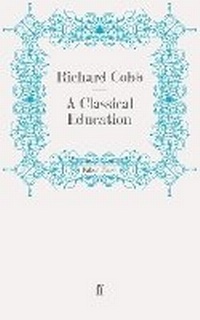
A Classical Education
Published on 29. May 2008
Book
Paperback/Softback
156 pages
978-0-571-24277-1 (ISBN)
Description
A Classical Education was first published in 1985. It followed immediately after Still Life and is again autobiographical though of a somewhat more macabre hue. At the centre is a murder committed by a school friend of Richard Cobb's.
'What gives A Classical Education its fascination is the author's description of how he himself, a shy and introverted schoolboy from Tunbridge Wells, is drawn into a nightmarish melodrama from which it seems he was lucky to escape... this book is beautifully written'. Richard Ingrams, The Times
'What gives A Classical Education its fascination is the author's description of how he himself, a shy and introverted schoolboy from Tunbridge Wells, is drawn into a nightmarish melodrama from which it seems he was lucky to escape... this book is beautifully written'. Richard Ingrams, The Times
More details
Edition
Main
Language
English
Place of publication
London
United Kingdom
Product notice
Paperback (UK-trade)
Dimensions
Height: 216 mm
Width: 135 mm
Thickness: 11 mm
Weight
19 gr
ISBN-13
978-0-571-24277-1 (9780571242771)
Copyright in bibliographic data and cover images is held by Nielsen Book Services Limited or by the publishers or by their respective licensors: all rights reserved.
Schweitzer Classification
Person
Richard Cobb (1917-1996) was born at Frinton-on-Sea, Essex, brought up in Tunbridge Wells, and educated at Shrewsbury School and Merton College, Oxford.
His first calling was as an historian, he was Professor of Modern History at Oxford from 1973-1984, and his passion was for France and more especially the radical phase of the French Revolution. He was winner of Wolfson Prize for History in 1979, and received several honours from the French government.
Later on in his life he turned to autobiography for which he had an idiosyncratic talent. Still Life and A Classical Education are two memorable examples of his writing in this vein.
His first calling was as an historian, he was Professor of Modern History at Oxford from 1973-1984, and his passion was for France and more especially the radical phase of the French Revolution. He was winner of Wolfson Prize for History in 1979, and received several honours from the French government.
Later on in his life he turned to autobiography for which he had an idiosyncratic talent. Still Life and A Classical Education are two memorable examples of his writing in this vein.