

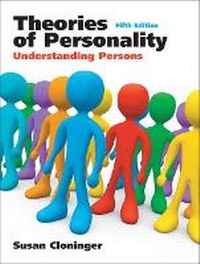
Theories of Personality
Understanding Persons (with Current Directions in Personality Psychology): United States Edition
5th Edition
Published on 31. January 2008
Book
Hardback
2 pages
978-0-13-600659-6 (ISBN)
Description
For undergraduate courses in Personality or Theories of Personality.
This engaging text provides an overview of major classic and current theories of personality, brings theories to life through the interpretation of illustrative biographies, and integrates a clear explanation of theory with the latest research.
Understanding persons is both Susan Cloninger's academic passion as well as her personal lifestyle. With so many years of research and instruction under her belt, she has come to several important conclusions, many of which have helped guide her text through six editions. For one, while theories of personality can never explain all the particulars of individual lives, the theories explored within this text can help open eyes towards the important nuances and themes that might otherwise go unnoticed. With this in mind, this engaging text provides an overview of major classic and current theories of personality, brings theories to life through the interpretation of illustrative biographies, and integrates a clear explanation of theory with the latest research. As well, it conveys thepositive value of various theories in a balanced and respectful way, preparing students to apply theoretical ideas to understanding particular individuals they may encounter in their professional work and personal lives.
This engaging text provides an overview of major classic and current theories of personality, brings theories to life through the interpretation of illustrative biographies, and integrates a clear explanation of theory with the latest research.
Understanding persons is both Susan Cloninger's academic passion as well as her personal lifestyle. With so many years of research and instruction under her belt, she has come to several important conclusions, many of which have helped guide her text through six editions. For one, while theories of personality can never explain all the particulars of individual lives, the theories explored within this text can help open eyes towards the important nuances and themes that might otherwise go unnoticed. With this in mind, this engaging text provides an overview of major classic and current theories of personality, brings theories to life through the interpretation of illustrative biographies, and integrates a clear explanation of theory with the latest research. As well, it conveys thepositive value of various theories in a balanced and respectful way, preparing students to apply theoretical ideas to understanding particular individuals they may encounter in their professional work and personal lives.
More details
Edition
5th edition
Language
English
Place of publication
United States
Publishing group
Pearson Education (US)
Target group
Professional and scholarly
Dimensions
Height: 208 mm
Width: 261 mm
Thickness: 40 mm
Weight
1546 gr
ISBN-13
978-0-13-600659-6 (9780136006596)
Copyright in bibliographic data and cover images is held by Nielsen Book Services Limited or by the publishers or by their respective licensors: all rights reserved.
Schweitzer Classification
Other editions
New editions
Book
08/2012
6th Edition
Pearson
€266.35
Article exhausted; check for reprint
Content
Preface
Chapter 1 Introduction to Personality Theory
Part I The Psychoanalytic Perspective
Chapter 2 Freud: Classical Psychoanalysis
Chapter 3 Jung: Analytical Psychology
Part II The Psychoanalytic-Social Perspective
Chapter 4 Adler: Individual Psychology
Chapter 5 Erikson: Psychosocial Development
Chapter 6 Horney and Relational Theory: Interpersonal
Psychoanalytic Theory
Part III The Trait Perspective
Chapter 7 Allport: Personological Trait Theory
Chapter 8 Cattell and the Big Five: Factor Analytic Trait Theories
Chapter 9 Evolution, Eysenck, Gray, and Others: Biological Theories
Part IV The Learning Perspective
Chapter 10 Skinner and Staats: The Challenge of Behaviorism
Chapter 11 Dollard and Miller: Psychoanalytic Learning Theory
Part V The Cognitive Social Learning Perspective
Chapter 12 Mischel and Bandura: Cognitive Social Learning Theory
Chapter 13 Kelly: Personal Construct Theory
Part VI The Humanistic Perspective
Chapter 14 Rogers: Person-Centered Theory
Chapter 15 Maslow: Need Hierarchy Theory
Chapter 16 Buddhist Psychology: Lessons from Eastern Culture
Chapter 17 Conclusion
Chapter 1 Introduction to Personality Theory
Part I The Psychoanalytic Perspective
Chapter 2 Freud: Classical Psychoanalysis
Chapter 3 Jung: Analytical Psychology
Part II The Psychoanalytic-Social Perspective
Chapter 4 Adler: Individual Psychology
Chapter 5 Erikson: Psychosocial Development
Chapter 6 Horney and Relational Theory: Interpersonal
Psychoanalytic Theory
Part III The Trait Perspective
Chapter 7 Allport: Personological Trait Theory
Chapter 8 Cattell and the Big Five: Factor Analytic Trait Theories
Chapter 9 Evolution, Eysenck, Gray, and Others: Biological Theories
Part IV The Learning Perspective
Chapter 10 Skinner and Staats: The Challenge of Behaviorism
Chapter 11 Dollard and Miller: Psychoanalytic Learning Theory
Part V The Cognitive Social Learning Perspective
Chapter 12 Mischel and Bandura: Cognitive Social Learning Theory
Chapter 13 Kelly: Personal Construct Theory
Part VI The Humanistic Perspective
Chapter 14 Rogers: Person-Centered Theory
Chapter 15 Maslow: Need Hierarchy Theory
Chapter 16 Buddhist Psychology: Lessons from Eastern Culture
Chapter 17 Conclusion