

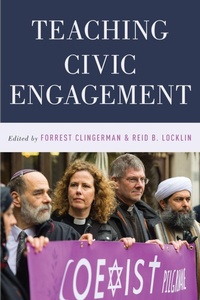
Teaching Civic Engagement
Published on 24. August 2017
Book
Paperback/Softback
336 pages
978-0-19-069299-5 (ISBN)
Description
Using a new model focused on four core capacities-intellectual complexity, social location, empathetic accountability, and motivated action--Teaching Civic Engagement explores the significance of religious studies in fostering a vibrant, just, and democratic civic order.
In the first section of the book, contributors detail this theoretical model and offer an initial application to the sources and methods that already define much teaching in the disciplines of religious studies and theology. A second section offers chapters focused on specific strategies for teaching civic engagement in religion classrooms, including traditional textual studies, reflective writing, community-based learning, field trips, media analysis, ethnographic methods, direct community engagement and a reflective practice of "ascetic withdrawal." The final section of the volume explores theoretical issues, including the delimitation of the "civic" as a category, connections between local and global in the civic project, the question of political advocacy in the classroom, and the role of normative commitments.
Collectively these chapters illustrate the real possibility of connecting the scholarly study of religion with the societies in which we, our students, and our institutions exist. The contributing authors model new ways of engaging questions of civic belonging and social activism in the religion classroom, belying the stereotype of the ivory tower intellectual.
In the first section of the book, contributors detail this theoretical model and offer an initial application to the sources and methods that already define much teaching in the disciplines of religious studies and theology. A second section offers chapters focused on specific strategies for teaching civic engagement in religion classrooms, including traditional textual studies, reflective writing, community-based learning, field trips, media analysis, ethnographic methods, direct community engagement and a reflective practice of "ascetic withdrawal." The final section of the volume explores theoretical issues, including the delimitation of the "civic" as a category, connections between local and global in the civic project, the question of political advocacy in the classroom, and the role of normative commitments.
Collectively these chapters illustrate the real possibility of connecting the scholarly study of religion with the societies in which we, our students, and our institutions exist. The contributing authors model new ways of engaging questions of civic belonging and social activism in the religion classroom, belying the stereotype of the ivory tower intellectual.
Reviews / Votes
Why civic engagement, and why in a religion classroom? This work wrestles with these questions and comes out a winner. It develops an original and helpful model to understand the continuum of teaching civic engagement that moves from critical thinking to motivated action. It fearlessly raises issues about the whole enterprise of teaching civic engagement while also providing practical pedagogical examples of how best to do it. What a valuable teaching and learning resource! * Joseph A. Favazza, Provost and Vice President for Academic Affairs and Professor of Religious Studies, Stonehill College* A wonderful addition to the pedagogical literature in higher education, this collection outlines with conceptual clarity the guiding objectives for faculty who wish to educate for civic engagement. Reflective essays from faculty members who teach across a broad range of institutional contexts give complexity and insight into how these objectives play out when teaching religious and theological studies. A must for any faculty member who is seeking to understand how and why to use experiential learning, service learning, action research, and other such community engagement formats of teaching. * Nadine S. Pence, Executive Director, Wabash Center for Teaching and Learning in Theology and Religion
* If one can truly begin to teach with and through the core principles of civic engagement-ethics and impact, reflection and justice-it is in the religious studies classroom. Clingerman and Locklin offer us a valuable contribution of essays that do so with insight, compassion, and power. * Dan Butin, author of Service-Learning in Theory and Practice
*
More details
Series
Language
English
Place of publication
New York
United States
Target group
College/higher education
Professional and scholarly
Illustrations
1 illus.
Dimensions
Height: 234 mm
Width: 156 mm
Thickness: 20 mm
Weight
573 gr
ISBN-13
978-0-19-069299-5 (9780190692995)
Copyright in bibliographic data and cover images is held by Nielsen Book Services Limited or by the publishers or by their respective licensors: all rights reserved.
Schweitzer Classification
Other editions
Additional editions
Forrest Clingerman | Reid B. Locklin
Teaching Civic Engagement
Book
01/2016
Oxford University Press Inc
€211.00
Shipment within 15-20 days
Forrest Clingerman | Reid B. Locklin
Teaching Civic Engagement
E-Book
01/2016
1st Edition
OUP eBook
€73.49
Available for download
Forrest Clingerman | Reid B. Locklin
Teaching Civic Engagement
E-Book
12/2015
1st Edition
OUP eBook
€73.49
Available for download
Persons
Forrest Clingerman is Associate Professor of Religion and Philosophy at Ohio Northern University. He is co-editor of Interpreting Nature: The Emerging Field of Environmental Hermeneutics (2013) and Placing Nature on the Borders of Religion, Philosophy and Ethics (2011). He has published on different topics related to environmental theology and philosophy, as well as in the scholarship of teaching and learning.
Reid B. Locklin holds a joint appointment in Christianity and Culture at Saint Michael's College and the Department for the Study of Religion at the University of Toronto. He is the author of Spiritual but Not Religious? (2005); Liturgy of Liberation (2011); and other works in comparative theology, Hindu-Christian studies, and the scholarship of teaching and learning.
Reid B. Locklin holds a joint appointment in Christianity and Culture at Saint Michael's College and the Department for the Study of Religion at the University of Toronto. He is the author of Spiritual but Not Religious? (2005); Liturgy of Liberation (2011); and other works in comparative theology, Hindu-Christian studies, and the scholarship of teaching and learning.
Content
Contributors
Introduction
Section I: What are the Dimensions of Teaching Civic Engagement in the Religious Studies or Theology Classroom?
Chapter 1: Reid B. Locklin, with Ellen Posman, Discourse, Democracy, and the Many Faces of Civic Engagement: Four Guiding Objectives for the University Classroom
Chapter 2: Ellen Posman, with Reid B. Locklin, Sacred Sites and Staging Grounds: The Four Guiding Objectives of Civic Engagement in the Religion Classroom
Section II: What Practical Strategies and Questions Emerge from Teaching Civic Engagement in Religious Studies and Theology?
Chapter 3: Melissa Stewart, Teaching for Civic Engagement: Insights from a Two-Year Workshop
Chapter 4: Marianne Delaporte, Giving and Receiving Hospitality during Community Engagement Courses
Chapter 5: Rebekka King, Civic Engagement in the Heart of the City
Chapter 6: Hans Wiersma, Engaging Media and Messages in the Religion Classroom
Chapter 7: Phil Wingeier-Rayo, Service and Community-Based Learning: A Pedagogy for Civic Engagement and Critical Thinking
Chapter 8: Nicholas Rademacher, Religious Diversity, Civic Engagement and Community-Engaged Pedagogy: Forging Bonds of Solidarity through Interfaith Dialogue
Chapter 9: Elizabeth W. Corrie, Stopping the Zombie Apocalypse: Ascetic Withdrawal as a Form of Civic Learning
Section III: What are the Theoretical Issues and Challenges in Teaching Civic Engagement in Religious Studies and Theology?
Chapter 10: Carolyn M. Jones Medine, Thinking about the 'Civic' in Civic Engagement and Its Deployment in the Religion Classroom
Chapter 11: Karen Derris and Erin Runions, More than Global Citizenship: How Religious Studies Expands Participation in Global Communities
Chapter 12: Forrest Clingerman and Swasti Bhattacharyya, Political Involvement, the Advocacy of Process, and the Religion Classroom
Chapter 13: Tom Pearson, The Difference between Religious Studies and Theology in the Teaching of Civic Engagement
Chapter 14: Tina Pippin, Dreams of Democracy
Introduction
Section I: What are the Dimensions of Teaching Civic Engagement in the Religious Studies or Theology Classroom?
Chapter 1: Reid B. Locklin, with Ellen Posman, Discourse, Democracy, and the Many Faces of Civic Engagement: Four Guiding Objectives for the University Classroom
Chapter 2: Ellen Posman, with Reid B. Locklin, Sacred Sites and Staging Grounds: The Four Guiding Objectives of Civic Engagement in the Religion Classroom
Section II: What Practical Strategies and Questions Emerge from Teaching Civic Engagement in Religious Studies and Theology?
Chapter 3: Melissa Stewart, Teaching for Civic Engagement: Insights from a Two-Year Workshop
Chapter 4: Marianne Delaporte, Giving and Receiving Hospitality during Community Engagement Courses
Chapter 5: Rebekka King, Civic Engagement in the Heart of the City
Chapter 6: Hans Wiersma, Engaging Media and Messages in the Religion Classroom
Chapter 7: Phil Wingeier-Rayo, Service and Community-Based Learning: A Pedagogy for Civic Engagement and Critical Thinking
Chapter 8: Nicholas Rademacher, Religious Diversity, Civic Engagement and Community-Engaged Pedagogy: Forging Bonds of Solidarity through Interfaith Dialogue
Chapter 9: Elizabeth W. Corrie, Stopping the Zombie Apocalypse: Ascetic Withdrawal as a Form of Civic Learning
Section III: What are the Theoretical Issues and Challenges in Teaching Civic Engagement in Religious Studies and Theology?
Chapter 10: Carolyn M. Jones Medine, Thinking about the 'Civic' in Civic Engagement and Its Deployment in the Religion Classroom
Chapter 11: Karen Derris and Erin Runions, More than Global Citizenship: How Religious Studies Expands Participation in Global Communities
Chapter 12: Forrest Clingerman and Swasti Bhattacharyya, Political Involvement, the Advocacy of Process, and the Religion Classroom
Chapter 13: Tom Pearson, The Difference between Religious Studies and Theology in the Teaching of Civic Engagement
Chapter 14: Tina Pippin, Dreams of Democracy