

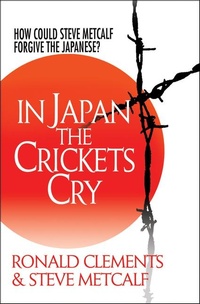
In Japan the Crickets Cry
How could Steve Metcalf forgive the Japanese?
Published on 20. August 2010
Book
Paperback/Softback
224 pages
978-1-85424-970-8 (ISBN)
Description
Steve had suffered under the brutal regime of his Japanese guards. He and his classmates at Chefoo school in China - for the most part the children of missionaries - had been interned in 1942. Resentment of the Japanese was a way of life. Could he possibly pray for them? Painfully, reluctantly, he found that he could, and his prayers sank deep. At the end of the war the China Inland Mission was seeking young men willing to go to Japan . Steve trained, packed and went. Thus began Steve's lifelong love of Japan. Over the years he would tussle with a culture where courtesy wins over truth; where suicide is an honourable choice; where to be foreign is to be forever alien. Time after time he would encounter miracles of healing, provision, and protection as God looked after him, his wife Evelyn and their growing family. In a resistant culture he would see many come to Christ. This is the story of how a boy's grudging prayers were remarkably answered.
More details
Edition
New edition
Language
English
Place of publication
United Kingdom
Publishing group
SPCK Publishing
Edition type
New edition
Product notice
Paperback (trade)
Unsewn / adhesive bound
Dimensions
Height: 193 mm
Width: 130 mm
Thickness: 20 mm
Weight
259 gr
ISBN-13
978-1-85424-970-8 (9781854249708)
Copyright in bibliographic data and cover images is held by Nielsen Book Services Limited or by the publishers or by their respective licensors: all rights reserved.
Schweitzer Classification
Other editions
Additional editions
Ronald Clements | Steve Metcalf
In Japan the Crickets Cry
How could Steve Metcalf forgive the Japanese?
E-Book
07/2012
Monarch Books
€12.49
Available for download
Persons
Steve Metcalf worked as a missionary in Japan for many years.
Content
Contents
Acknowledgments 9
Biographee's Note 11
Sudachi (Leave Home) 14
Kinkou (Balance) 24
Kyuchi (Straits) 31
Torikago (Caged Bird) 37
Keisou (Relay Race) 42
Yoake (Daybreak) 50
Jiyu (Freedom) 59
Kyokuro (Winding Path) 68
Kadowomagaru (Turn a Corner) 75
Oten (Stain) 81
Iriguchi (Doorway) 88
Yoromeki (Faltering Steps) 95
Seika (Fruit) 106
Enro (Long Road) 118
Gyakufuu (Adverse Wind) 126
Aika (Song of Lament) 134
Ai (Love) 143
Kaika (Blossom) 152
Osaetakoe (Muffled Voices) 162
Wakai (Reconciliation) 170
Heisei (Peace Everywhere) 181
Kumiawase (Dovetail) 187
Hikitsugi (Take the Torch) 196
Kikoku (Return Home) 202
Afterword: The Eastern Lisu and the Work of George
"Eddie" Metcalf (1906-51) 209
Author's Notes 212
Bibliography 213
Notes 218
Acknowledgments 9
Biographee's Note 11
Sudachi (Leave Home) 14
Kinkou (Balance) 24
Kyuchi (Straits) 31
Torikago (Caged Bird) 37
Keisou (Relay Race) 42
Yoake (Daybreak) 50
Jiyu (Freedom) 59
Kyokuro (Winding Path) 68
Kadowomagaru (Turn a Corner) 75
Oten (Stain) 81
Iriguchi (Doorway) 88
Yoromeki (Faltering Steps) 95
Seika (Fruit) 106
Enro (Long Road) 118
Gyakufuu (Adverse Wind) 126
Aika (Song of Lament) 134
Ai (Love) 143
Kaika (Blossom) 152
Osaetakoe (Muffled Voices) 162
Wakai (Reconciliation) 170
Heisei (Peace Everywhere) 181
Kumiawase (Dovetail) 187
Hikitsugi (Take the Torch) 196
Kikoku (Return Home) 202
Afterword: The Eastern Lisu and the Work of George
"Eddie" Metcalf (1906-51) 209
Author's Notes 212
Bibliography 213
Notes 218