

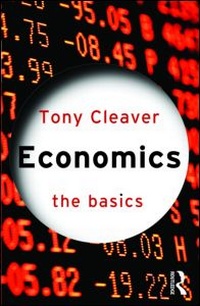
Economics: The Basics
Published on 19. August 2004
Book
Paperback/Softback
240 pages
978-0-415-31412-1 (ISBN)
Description
Economics: The Basics provides a fascinating introduction to the key issues in contemporary economics. With case studies ranging from the coffee plantations of El Salvador to the international oil industry and the economic slowdown in Japan, it addresses fundamental questions such as: *Must increasing wealth for some mean increasing poverty for others? *Does producing more food for humankind mean we drive other species to extinction? *Is it true that, if we buy less coffee, farm incomes from Brazil to Kenya take a beating? *Is granting people property rights the best way to preserve fish and wildlife stocks? *Do we really have to choose between low unemployment and low inflation? Comprehensive and easy to read, this accessible guidebook is essential reading for anyone who wants to understand how economics works and why it is important.
More details
Series
Language
English
Place of publication
London
United Kingdom
Publishing group
Taylor & Francis Ltd
Target group
College/higher education
Illustrations
47 s/w Zeichnungen
47 Line drawings, black and white
Dimensions
Height: 198 mm
Width: 129 mm
Weight
227 gr
ISBN-13
978-0-415-31412-1 (9780415314121)
Copyright in bibliographic data and cover images is held by Nielsen Book Services Limited or by the publishers or by their respective licensors: all rights reserved.
Schweitzer Classification
Other editions
New editions
Tony Cleaver
Economics: The Basics
Book
11/2010
2nd Edition
Routledge
€39.80
Article exhausted; check for reprint
Person
Tony Cleaver is Vice Master of Grey College and Lecturer in the Department of Economics and Finance at the University of Durham, UK.
Content
1. Wealth and Poverty; Rainforests and Tigers 2. Prices, Markets and a Simple Cup of Coffee 3. The Business of Supply: From Peasant Lands to Corporate Giants 4. Inflation and Unemployment; Boom and Bust 5. Money, Banks, Bubbles and Crises 6. National Income, World Trade and Multinational Enterprise 7. Can We Reduce Poverty and Protect the Environment?