

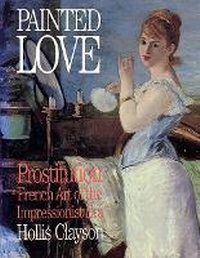
Painted Love
Prostitution and French Art of the Impressionist Era
Published on 25. December 1991
Book
Hardback
232 pages
978-0-300-04730-1 (ISBN)
Description
Prostitution was widespread in nineteenth-century Paris, and as French streets filled with prostitutes, French art and literature of the period paralleled this development. In this engrossing book, Hollis Clayson explains why. She provides the first description and analysis of French artistic interest in women prostitutes, examining how the subject was treated in the art of the 1870s and 1880s by such avant-garde painters as Cezanne, Degas, Manet, and Renoir, as well as by academic and low-brow painters who were their contemporaries.
Clayson illuminates not only the imagery of prostitution-with its contradictory connotations of disgust and fascination-but also issues and problems relevant to women and men in patriarchal society. She discuses the conspicuous sexual commerce during this era and the resulting public panic about the deterioration of social life and mores. She describes the system that evolved of regulating prostitutes and the subsequent rise of clandestine prostitutes who escaped police regulation and who were condemned both for blurring social boundaries and for spreading sexual licentiousness in their moral and social superiors. Clayson argues that the subject of covert prostitution was especially attractive to vanguard painters because it embodied key notions of modernity: it exemplified the commercialization and the ambiguity of modern life.
Clayson illuminates not only the imagery of prostitution-with its contradictory connotations of disgust and fascination-but also issues and problems relevant to women and men in patriarchal society. She discuses the conspicuous sexual commerce during this era and the resulting public panic about the deterioration of social life and mores. She describes the system that evolved of regulating prostitutes and the subsequent rise of clandestine prostitutes who escaped police regulation and who were condemned both for blurring social boundaries and for spreading sexual licentiousness in their moral and social superiors. Clayson argues that the subject of covert prostitution was especially attractive to vanguard painters because it embodied key notions of modernity: it exemplified the commercialization and the ambiguity of modern life.
More details
Language
English
Place of publication
United States
Target group
College/higher education
Product notice
Cloth over boards
Illustrations
63 b-w + 31 color illus.
Dimensions
Height: 279 mm
Width: 216 mm
Weight
1107 gr
ISBN-13
978-0-300-04730-1 (9780300047301)
Copyright in bibliographic data and cover images is held by Nielsen Book Services Limited or by the publishers or by their respective licensors: all rights reserved.
Schweitzer Classification
Content
Painting the traffic in women; in the brothel; testing the limits - the menace of fashion; the invasion of the boulevard; suspicious professions - working women for sale; mutual desire in the nightspots.