

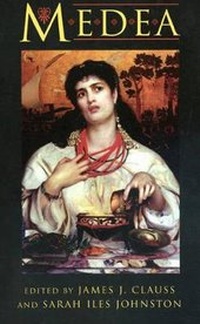
Medea
Essays on Medea in Myth, Literature, Philosophy, and Art
Published on 6. February 1997
Book
Hardback
376 pages
978-0-691-04377-7 (ISBN)
Description
From the dawn of European literature, the figure of Medea--best known as the helpmate of Jason and murderer of her own children--has inspired artists in all fields throughout all centuries. Euripides, Seneca, Corneille, Delacroix, Anouilh, Pasolini, Maria Callas, Martha Graham, Samuel Barber, and Diana Rigg are among the many who have given Medea life on stage, film, and canvas, through music and dance, from ancient Greek drama to Broadway. In seeking to understand the powerful hold Medea has had on our imaginations for nearly three millennia, a group of renowned scholars here examines the major representations of Medea in myth, art, and ancient and contemporary literature, as well as the philosophical, psychological, and cultural questions these portrayals raise. The result is a comprehensive and nuanced look at one of the most captivating mythic figures of all time.
Unlike most mythic figures, whose attributes remain constant throughout mythology, Medea is continually changing in the wide variety of stories that circulated during antiquity. She appears as enchantress, helper-maiden, infanticide, fratricide, kidnapper, founder of cities, and foreigner. Not only does Medea's checkered career illuminate the opposing concepts of self and other, it also suggests the disturbing possibility of otherness within self. In addition to the editors, the contributors include Fritz Graf, Nita Krevans, Jan Bremmer, Dolores M. O'Higgins, Deborah Boedeker, Carole E. Newlands, John M. Dillon, Martha C. Nussbaum, Christiane Sourvinou-Inwood, and Marianne McDonald.
Unlike most mythic figures, whose attributes remain constant throughout mythology, Medea is continually changing in the wide variety of stories that circulated during antiquity. She appears as enchantress, helper-maiden, infanticide, fratricide, kidnapper, founder of cities, and foreigner. Not only does Medea's checkered career illuminate the opposing concepts of self and other, it also suggests the disturbing possibility of otherness within self. In addition to the editors, the contributors include Fritz Graf, Nita Krevans, Jan Bremmer, Dolores M. O'Higgins, Deborah Boedeker, Carole E. Newlands, John M. Dillon, Martha C. Nussbaum, Christiane Sourvinou-Inwood, and Marianne McDonald.
Reviews / Votes
"Medea is a model of how one goes about configuring and interpreting any of our long-lasting inheritances from Greek myth.... The richness of its subject should make this book appeal to a wide audience."-Richard P. MartinMore details
Language
English
Place of publication
New Jersey
United States
Target group
College/higher education
Professional and scholarly
Product notice
Trade binding
Illustrations
5 halftones
Dimensions
Height: 254 mm
Width: 197 mm
Weight
482 gr
ISBN-13
978-0-691-04377-7 (9780691043777)
Copyright in bibliographic data and cover images is held by Nielsen Book Services Limited or by the publishers or by their respective licensors: all rights reserved.
Schweitzer Classification
Other editions
Additional editions
E-Book
02/2021
1st Edition
Princeton University Press
€73.49
Available for download
Persons
James J. Clauss is Associate Professor of Classics at the University of Washington and is the author of The Best of the Argonauts. Sarah Iles Johnston is Associate Professor of Classics at The Ohio State University and is the author of Hekate Soteira.