

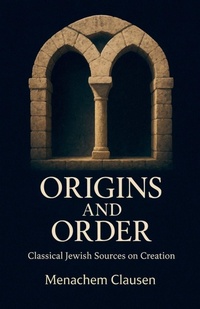
Origins and Order
Classical Jewish Sources on Creation
Published on 20. October 2025
Book
Paperback/Softback
196 pages
979-8-232-17548-1 (ISBN)
Description
Did you know the opening lines of Genesis are not a simple origin tale but a map of purpose and process. This book reads classic Jewish sources as a single conversation about ordered mystery. Menachem Clausen invites you to start with the text, hear the Sages, and watch how Rashi, Ramban, Midrash, and carefully framed kabbalistic teachings shape a coherent vision of creation.
Across twelve tightly crafted chapters you will explore tohu va vohu and the promise that the world was not created for chaos, worlds created and destroyed, six "days" read as stages, the geography and gates of Eden, Machpelah as a thin place, the serpent and Samael, legendary creatures in the Talmudic imagination, diet before and after the Flood, the "sons of Elokim," and the layered heavens of Chagigah.
The method is simple and disciplined. Begin with pshat, let Chazal set the frame, bring the Rishonim in their own voice, and add a bounded kabbalistic orientation only where it clarifies. Claims that lack classical grounding are placed in an audit appendix so the main path stays honest.
Origins and Order is for readers who want reverence without vagueness and courage without hype. It favors plain language, direct questions, and practices you can carry into study and life. The result is a faithful, provocative guide to creation that restores awe and responsibility without leaving the sources behind.
More details
Language
English
Product notice
Paperback (trade)
Unsewn / adhesive bound
Dimensions
Height: 216 mm
Width: 140 mm
Thickness: 11 mm
Weight
254 gr
ISBN-13
979-8-232-17548-1 (9798232175481)
Copyright in bibliographic data and cover images is held by Nielsen Book Services Limited or by the publishers or by their respective licensors: all rights reserved.
Schweitzer Classification
Person
Menachem Clausen is a Jerusalem-based writer and editor whose work turns classic sources toward lived practice. He gives steady attention to mesorah and to the limits of speculation, and uses contemporary science only as a clarifying analogy. His writing ranges from Jewish thought to public ethics. When not writing, he studies with neighbors and helps communities align words with deeds.