

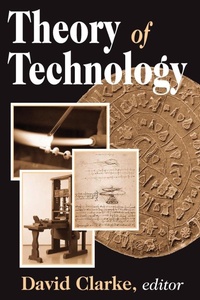
Theory of Technology
1st Edition
Published on 31. December 2004
Book
Paperback/Softback
168 pages
978-0-7658-0844-8 (ISBN)
Description
The history of technology is often troubled by good ideas that do not, for one reason or another, take off right away--sometimes for millennia. Sometimes, technology comes to a standstill, and sometimes, it even reverses itself. Thus, unlike science, which seems to proceed at a reasonable and calm rate, the progress of technology is difficult to theorize about. While in science many developments are predictable to a certain extent and this predictability may, at times, direct or stymie science's progress--as with stem-cell research and cloning--technological advances, such as the Internet, are often sudden and unpredictable, and therefore frightening.
In Theory of Technology, David Clarke brings together nine authors who try to understand technology from a variety of viewpoints. Rias van Wyk, in "Technology," parses the concept into many angles, including its anatomy, taxonomy, and evolution. Karol Pelc, in "Knowledge Mapping," discusses tracking the evolution of the emerging discipline of technology management. Jon Beard, in "Management of Technology," pursues a similar mapping endeavor, but looks to the patterns of the literature of technology management. Thomas Clarke, in "Unique Features of an R&D Work Environment and Research Scientists and Engineers," takes the reader on a tour of how people of technology present unique challenges to not just management but whole organizations.
Richard Howey, in "Understanding Software Technology," places enterprise software into a meaningful pattern of technology management. Fred Foldvary and Daniel Klein, in "The Half-Life of Policy Rationales," discuss how new technology affects old policy issues. John Cogan, in "Some Philosophical Thoughts on the Nature of Technology," maintains that our Aristotelian search for the essence of technology is doomed. And Peter Bond, in "The Biology of Technology," establishes a basis for the development of a socio-biological approach to understanding the phenomena of technological society and technical change.
In Theory of Technology, David Clarke brings together nine authors who try to understand technology from a variety of viewpoints. Rias van Wyk, in "Technology," parses the concept into many angles, including its anatomy, taxonomy, and evolution. Karol Pelc, in "Knowledge Mapping," discusses tracking the evolution of the emerging discipline of technology management. Jon Beard, in "Management of Technology," pursues a similar mapping endeavor, but looks to the patterns of the literature of technology management. Thomas Clarke, in "Unique Features of an R&D Work Environment and Research Scientists and Engineers," takes the reader on a tour of how people of technology present unique challenges to not just management but whole organizations.
Richard Howey, in "Understanding Software Technology," places enterprise software into a meaningful pattern of technology management. Fred Foldvary and Daniel Klein, in "The Half-Life of Policy Rationales," discuss how new technology affects old policy issues. John Cogan, in "Some Philosophical Thoughts on the Nature of Technology," maintains that our Aristotelian search for the essence of technology is doomed. And Peter Bond, in "The Biology of Technology," establishes a basis for the development of a socio-biological approach to understanding the phenomena of technological society and technical change.
More details
Language
English
Place of publication
Somerset
United Kingdom
Publishing group
Taylor & Francis Inc
Target group
College/higher education
Professional and scholarly
Dimensions
Height: 229 mm
Width: 152 mm
Thickness: 9 mm
Weight
254 gr
ISBN-13
978-0-7658-0844-8 (9780765808448)
Copyright in bibliographic data and cover images is held by Nielsen Book Services Limited or by the publishers or by their respective licensors: all rights reserved.
Schweitzer Classification
Other editions
Additional editions
Person
David Clarke, professor emeritus at Southern Illinois University, has degrees in philosophy, architecture, management science, and urban design. His is the editor of Technology and Terrorism, published by Transaction, as well as the editor of the Transaction journal Knowledge, Technology, & Policy.
Content
1: Technology: A Fundamental Structure?; 2: Knowledge Mapping: The Consolidation of the Technology Management Discipline; 3: Management of Technology: A Three-Dimensional Framework with Propositions for Future Research; 4: Unique Features of an R&D Work Environment and Research Scientists and Engineers; 5: Understanding Software Technology; 6: The Half-Life of Policy Rationales: How New Technology Affects Old Policy Issues; 7: Some Philosophical Thoughts on theNature of Technology; 8: The Biology of Technology-An Exploratory Essay 1; 9: Technological Semantics and Technological Practice: Lessons from an Enigmatic Episode in Twentieth-Century Technology Studies