

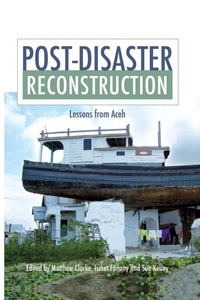
Post-Disaster Reconstruction
Lessons from Aceh
1st Edition
Published on 22. May 2015
Book
Paperback/Softback
288 pages
978-1-138-88127-3 (ISBN)
Description
On Sunday 26 December 2004, a tsunami of up to 30 metres high hit the northern tip of Sumatera in Indonesia, causing immediate destruction and the deaths of at least 130,000 in Indonesia alone. The scale of the devastation and ensuing human suffering prompted the biggest response endeavour to any natural disaster in history.
Post-Disaster Reconstruction will be the first major book that analyses the different perspectives and experiences of the enormous post-tsunami reconstruction effort. It looks specifically at the reconstruction efforts in Aceh, one of the regions most heavily-hit by the tsunami and a province that has until recently suffered nearly three decades of armed conflict. Positioning the reconstruction efforts within Aceh's multi-layered historical, cultural, socio-political and religious contexts, the authors explore diverse experiences and assessments of the reconstruction. It considers the importance of the political and religious settings of the reconstruction, the roles of communities and local non-government organisations and the challenges faced by Indonesian and international agencies. From the in-depth examination of this important case study of disaster reconstruction - significant not only because of the huge scale of the natural disaster and response but also the post-conflict issues - the editors draw together the lessons learned for the future of Aceh and make general recommendations for post-disaster and post-conflict reconstruction-making.
Post-Disaster Reconstruction will be the first major book that analyses the different perspectives and experiences of the enormous post-tsunami reconstruction effort. It looks specifically at the reconstruction efforts in Aceh, one of the regions most heavily-hit by the tsunami and a province that has until recently suffered nearly three decades of armed conflict. Positioning the reconstruction efforts within Aceh's multi-layered historical, cultural, socio-political and religious contexts, the authors explore diverse experiences and assessments of the reconstruction. It considers the importance of the political and religious settings of the reconstruction, the roles of communities and local non-government organisations and the challenges faced by Indonesian and international agencies. From the in-depth examination of this important case study of disaster reconstruction - significant not only because of the huge scale of the natural disaster and response but also the post-conflict issues - the editors draw together the lessons learned for the future of Aceh and make general recommendations for post-disaster and post-conflict reconstruction-making.
Reviews / Votes
'Post-Disaster Reconstruction : Lessons from Aceh is a landmark book in drawing together different experiences and insights of the post-conflict, post-tsunami reconstruction efforts in Aceh. It is the most comprehensive account of the voices and forces at work in the rebuilding of Aceh and shows in rich detail the ways in which the complexities and challenges have been addressed.'Irwandi Yusuf, Governor of Aceh (Nanggroe Aceh Darussalam) Indonesia
'This book offers the most wide-ranging and penetrating analysis of the post-tsunami reconstruction in Aceh and it is the best book I have read about post-disaster reconstruction in general. In considering the lessons learned during the reconstruction process, it effectively blends empirical observation and the voices of disaster survivors. This book should be read not only by anyone who is involved in post-disaster reconstruction but also by victims of disaster and others who wish to understand the experience of survivors.'
Professor Fuad Abdul Hamied, Deputy Minister for Education, Religion and Civil Service, Coordinating Ministry for People's Welfare, Indonesia
More details
Language
English
Place of publication
London
United Kingdom
Publishing group
Taylor & Francis Ltd
Target group
College/higher education
Dimensions
Height: 234 mm
Width: 156 mm
Thickness: 16 mm
Weight
442 gr
ISBN-13
978-1-138-88127-3 (9781138881273)
Copyright in bibliographic data and cover images is held by Nielsen Book Services Limited or by the publishers or by their respective licensors: all rights reserved.
Schweitzer Classification
Other editions
Additional editions
E-Book
08/2010
1st Edition
Routledge
€64.49
Available for download
E-Book
08/2010
1st Edition
Routledge
€64.49
Available for download
Book
04/2010
1st Edition
Earthscan Ltd
€215.41
Shipment within 3-4 weeks
Persons
Associate Professor Matthew Clarke is the Course Director of the postgraduate International and Community Development program at Deakin University, Australia. He has also written on the Millennium Development Goals, climate change, HIV and AIDS and human well-being indicators.
Dr Ismet Fanany lectures in Indonesian language and culture at Deakin University, Australia. His research interests includes capacity building within local Indonesian non-governmental organisations. His most recent publications include topics on Malay proverbs and metaphors and language and public policy. In addition, he also writes fiction and translates from English into Indonesian.
Professor Sue Kenny is the Director of the Centre for Citizenship, Development and Human Rights at Deakin University, Australia. She has extensive research and consultancy experience in community development and non-government organisations, about which she has published widely. Her study of post-tsunami Aceh has been part of a six year project investigating capacity-building in Indonesia.
Dr Ismet Fanany lectures in Indonesian language and culture at Deakin University, Australia. His research interests includes capacity building within local Indonesian non-governmental organisations. His most recent publications include topics on Malay proverbs and metaphors and language and public policy. In addition, he also writes fiction and translates from English into Indonesian.
Professor Sue Kenny is the Director of the Centre for Citizenship, Development and Human Rights at Deakin University, Australia. She has extensive research and consultancy experience in community development and non-government organisations, about which she has published widely. Her study of post-tsunami Aceh has been part of a six year project investigating capacity-building in Indonesia.
Content
Preface - Silence can be Deafening and Emptiness can be Blinding
Introduction
1. Deconstructing Aceh's Reconstruction
Part I: The Context of Reconstruction
2. The Role of Islamic Law (Shari'a) in Post-tsunami Reconstruction
3. Political Reconstruction in Aceh
4. Reconstruction through Participatory Practice?
Part II: Case Studies
5. Towards a Model of Constructive Engagement between Aid Deliverers and Recipients in a Disaster Situation: The Case of Lampuuk, Aceh
6. Village Government in Aceh, Three Years after the Tsunami
7. The Voices of International NGO Staff
8. The Role and Experiences of Badan Rehabilitasi dan Rekonstuksi (BRR)
9. Remaking Neighbourhoods in Banda Aceh: Post-tsunami Reconstruction of Everyday Life
Conclusion
10. Lessons from Aceh
Afterword - Reconstructing the Invisible Landscape
Introduction
1. Deconstructing Aceh's Reconstruction
Part I: The Context of Reconstruction
2. The Role of Islamic Law (Shari'a) in Post-tsunami Reconstruction
3. Political Reconstruction in Aceh
4. Reconstruction through Participatory Practice?
Part II: Case Studies
5. Towards a Model of Constructive Engagement between Aid Deliverers and Recipients in a Disaster Situation: The Case of Lampuuk, Aceh
6. Village Government in Aceh, Three Years after the Tsunami
7. The Voices of International NGO Staff
8. The Role and Experiences of Badan Rehabilitasi dan Rekonstuksi (BRR)
9. Remaking Neighbourhoods in Banda Aceh: Post-tsunami Reconstruction of Everyday Life
Conclusion
10. Lessons from Aceh
Afterword - Reconstructing the Invisible Landscape