

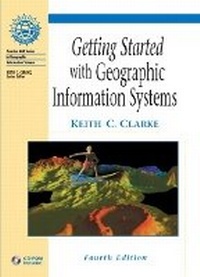
Getting Started with GIS
4th Edition
Published on 3. February 2003
Book
Hardback
340 pages
978-0-13-046027-1 (ISBN)
Description
For introductory courses in Geographic Information Systems.
Designed to make the complexity of this rapidly growing high-tech field accessible to beginning students, this text provides a basic, non-technical and student-friendly introduction to GIS. It uses a "learn-by-seeing" approach that features clear, simple explanations, an abundance of illustrations and photos, and generic practice labs for use with any GIS software. The Fourth Edition is updated with laboratory assignments for ArcView 8.
Designed to make the complexity of this rapidly growing high-tech field accessible to beginning students, this text provides a basic, non-technical and student-friendly introduction to GIS. It uses a "learn-by-seeing" approach that features clear, simple explanations, an abundance of illustrations and photos, and generic practice labs for use with any GIS software. The Fourth Edition is updated with laboratory assignments for ArcView 8.
More details
Edition
4th edition
Language
English
Place of publication
United States
Publishing group
Pearson Education (US)
Target group
Professional and scholarly
Dimensions
Height: 237 mm
Width: 185 mm
Thickness: 19 mm
Weight
696 gr
ISBN-13
978-0-13-046027-1 (9780130460271)
Copyright in bibliographic data and cover images is held by Nielsen Book Services Limited or by the publishers or by their respective licensors: all rights reserved.
Schweitzer Classification
Other editions
New editions
Keith Clarke
Getting Started with Geographic Information Systems
Book
07/2010
5th Edition
Pearson
€142.36
Shipment within 15-20 days
Previous edition
Keith C. Clarke
Getting Started with Geographic Information Systems
Book
09/2000
3rd Edition
Pearson
€48.27
Article exhausted; check for reprint
Content
(NOTE: Each chapter includes Study Guide, Exercises, References, and Key Terms and Definitions.)
1. What Is a GIS?
Getting Started. Some Definitions of GIS. A Brief History of GIS. Sources of Information on GIS. People in GIS: Nils Larsen.
2. GIS's Roots in Cartography.
Map and Attribute Information. Map Scale and Projections. Coordinate Systems. Geographic Information.
3. Maps as Numbers.
Representing Maps as Numbers. Structuring Attributes. Structuring Maps. Why Topology Matters. Formats for GIS Data. Exchanging Data. People in GIS: Mark Bosworth.
4. Getting the Map into the Computer.
Analog-to-Digital Maps. Finding Existing Map Data. Digitizing and Scanning. Field and Image Data. Data Entry. Editing and Validation. People in GIS: Susan Benjamin.
5. What Is Where?
Basic Database Management. Searches by Attribute. Searches by Geography. The Query Interface.
6. Why Is It There?
Describing Attributes. Statistical Analysis. Spatial Description. Spatial Analysis. Searching for Spatial Relationships. GIS and Spatial Analysis.
7. Making Maps with GIS.
The Parts of a Map. Choosing a Map Type. Designing the Map.
8. How to Pick a GIS.
The Evolution of GIS Software. GIS and Operating Systems. GIS Software Capabilities. GIS Software and Data Structures. Choosing the Best GIS. People in GIS: Assaf Anyamba.
9. GIS in Action.
Introducing GIS in Action. Case Study 1: GIS Fights the Gypsy Moth. Case Study 2: GIS and Road Accidents in Connecticut. Case Study 3: GIS Helps Environmental Assessment in Brooklyn. Case Study 4: The Channel Islands GIS. Case Study 5: Using GIS and GPS to Map the Sliding Rocks of Racetrack Playa.
10. The Future of GIS.
Why Speculate? Future Data. Future Hardware. Future Software. Some Future Issues and Problems. Conclusion. People in GIS: Michael Goodchild.
Glossary.
Index.
1. What Is a GIS?
Getting Started. Some Definitions of GIS. A Brief History of GIS. Sources of Information on GIS. People in GIS: Nils Larsen.
2. GIS's Roots in Cartography.
Map and Attribute Information. Map Scale and Projections. Coordinate Systems. Geographic Information.
3. Maps as Numbers.
Representing Maps as Numbers. Structuring Attributes. Structuring Maps. Why Topology Matters. Formats for GIS Data. Exchanging Data. People in GIS: Mark Bosworth.
4. Getting the Map into the Computer.
Analog-to-Digital Maps. Finding Existing Map Data. Digitizing and Scanning. Field and Image Data. Data Entry. Editing and Validation. People in GIS: Susan Benjamin.
5. What Is Where?
Basic Database Management. Searches by Attribute. Searches by Geography. The Query Interface.
6. Why Is It There?
Describing Attributes. Statistical Analysis. Spatial Description. Spatial Analysis. Searching for Spatial Relationships. GIS and Spatial Analysis.
7. Making Maps with GIS.
The Parts of a Map. Choosing a Map Type. Designing the Map.
8. How to Pick a GIS.
The Evolution of GIS Software. GIS and Operating Systems. GIS Software Capabilities. GIS Software and Data Structures. Choosing the Best GIS. People in GIS: Assaf Anyamba.
9. GIS in Action.
Introducing GIS in Action. Case Study 1: GIS Fights the Gypsy Moth. Case Study 2: GIS and Road Accidents in Connecticut. Case Study 3: GIS Helps Environmental Assessment in Brooklyn. Case Study 4: The Channel Islands GIS. Case Study 5: Using GIS and GPS to Map the Sliding Rocks of Racetrack Playa.
10. The Future of GIS.
Why Speculate? Future Data. Future Hardware. Future Software. Some Future Issues and Problems. Conclusion. People in GIS: Michael Goodchild.
Glossary.
Index.