

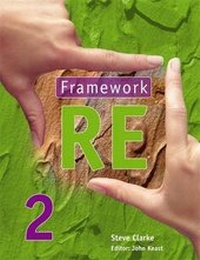
Framework RE: Pupil's Book Level 2
Published on 31. March 2006
Book
Paperback/Softback
128 pages
978-0-340-90409-1 (ISBN)
Description
Framework RE is designed to deliver the new National Framework for Religious Education at Key Stage 3. The 3 books (one book for Years 7, 8 and 9) combine to create a motivating activity-based course for pupils. Book 2 is aimed at Year 8 pupils. The course includes the Literacy and Thinking Skills strands of the Key Stage 3 Strategy; differentiated activities; Assessment for Learning; activities and assessments linked to the 8-level scale; philosophical and ethical issues in preparation for Key Stage 4; opportunities to reflect on personal experience; and religions with a significant presence in the UK and world.
More details
Language
English
Place of publication
United Kingdom
Publishing group
Hachette Learning
Target group
Primary & secondary/elementary & high school
Dimensions
Height: 276 mm
Width: 213 mm
Thickness: 8 mm
Weight
406 gr
ISBN-13
978-0-340-90409-1 (9780340904091)
Copyright in bibliographic data and cover images is held by Nielsen Book Services Limited or by the publishers or by their respective licensors: all rights reserved.
Schweitzer Classification
Persons
Steve Clarke is an experienced teacher and author. John Keast is the chairman of the National Framework for RE writing group.
Content
Unit 1. Can religion be true? 1. What is the difference between knowing and believing? 2. What is belief? 3. What is truth? 4. What counts as evidence? 5. What makes an experience religious? 6. So, is religion true? Summary of Unit 1 Unit 2. How is religion true? 1. How do people see the world? 2. How do beliefs affect people's world-views? 3. What has science got to do with religion? 4. Can religion and science agree? 5. Can religion make sense of the world? 6. How does religion make sense of the world? Summary of Unit 2 Unit 3. Where does evidence for religion come from? 1. What is authority? 2. Why do people form communities? 3. What do religious leaders do? 4. Why is tradition important? 5. What authority do religious texts have? 6. How do religious people learn about their faith? Summary of Unit 3 Unit 4. How is religious authority used? 1. How are Jewish scriptures used? 2. What does the Bible teach Christians about God? 3. How do the Buddhist scriptures guide people's lives? 4. What are the Hindu scriptures about? 5. What does the Qur'an tell us about Islamic beliefs? 6. What does the Guru Granth Sahib mean to Sikhs? Summary of Unit 4 Unit 5. What does religion say about being human? 1. What do Christians, Jews and Muslims say it means to be human? 2. What do Hindus, Sikhs and Buddhists say it means to be human? 3. Are we in control of what we do? 4. Are we in control of what happens to us? 5. What does Christianity teach about the world? 6. What do Buddhism and Hinduism teach about the world? Summary of Unit 5 Unit 6. How does religion affect human behaviour? 1. What is worship? 2. What is prayer? 3. What are ethics and morality? 4. What do Christians, Jews and Muslims say about ethics and morality? 5. What do Hindus, Sikhs and Buddhists say about ethics and morality? 6. How has religion affected the lives of individuals? Summary of Unit 6 Glossary Index