


Works of Man
Published on 28. March 2013
Book
Paperback/Softback
522 pages
978-1-4482-0657-5 (ISBN)
Description
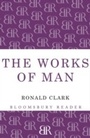
Works of Man is a chronicle of man's attempts from prehistoric times to the space age to exploit for his own purposes the slowly discerned laws of nature. Exciting, instructive, and eminently readable, this mine of information covers the broad sweep of technological achievements, from the invention of the wheel more than six millennia ago to the miniaturization of the electronic computer.
Beginning with a description of the early builders in the days of ancient Babylon, continuing through to the end of the Roman Empire, the author goes on to explain the engineering principles that were gradually developed in the Dark Ages, enabling men to build the medieval cathedrals; to try to drain the Pontine marshes near Rome, the meres of Holland, and the British fenlands; and to raise the new military defenses that transformed warfare. Discussion of the work of Leonardo da Vinci and Galileo leads on to the development of steam as a new source of power, and to the growth of civil engineering that followed in Europe and the rest of the world. Further chapters cover the change from sail to steam; canals; railways; the use of electricity; the growth of manned flight; the rise of the plastics industry; nuclear engineering; and the problems of space exploration.
Beginning with a description of the early builders in the days of ancient Babylon, continuing through to the end of the Roman Empire, the author goes on to explain the engineering principles that were gradually developed in the Dark Ages, enabling men to build the medieval cathedrals; to try to drain the Pontine marshes near Rome, the meres of Holland, and the British fenlands; and to raise the new military defenses that transformed warfare. Discussion of the work of Leonardo da Vinci and Galileo leads on to the development of steam as a new source of power, and to the growth of civil engineering that followed in Europe and the rest of the world. Further chapters cover the change from sail to steam; canals; railways; the use of electricity; the growth of manned flight; the rise of the plastics industry; nuclear engineering; and the problems of space exploration.
More details
Language
English
Place of publication
London
United Kingdom
Publishing group
Bloomsbury Publishing PLC
Product notice
Paperback (UK-trade)
Dimensions
Height: 234 mm
Width: 156 mm
Thickness: 27 mm
Weight
721 gr
ISBN-13
978-1-4482-0657-5 (9781448206575)
Copyright in bibliographic data and cover images is held by Nielsen Book Services Limited or by the publishers or by their respective licensors: all rights reserved.
Schweitzer Classification
Other editions
Additional editions
Person
Ronald Clark (1916-1987) born in London and educated at King's College School. In 1933 he chose journalism as a career. During the Second World War, after being turned down for military duty on medical grounds, he served as a war correspondent. During this time Clark landed on Juno Beach with the Canadians on D-Day and followed the war until it's end, then remained in Germany to report on the major War Crimes trials.
Clark returned to Britain in 1948 and wrote extensively on subjects ranging from mountain climbing to the atomic bomb, Balmoral Castle to world explorers. He also wrote a number of biographies on a myriad of figures, such as: Charles Darwin, Thomas Edison, Albert Einstein, Benjamin Franklin, Sigmund Freud, and Bertrand Russell.
Clark returned to Britain in 1948 and wrote extensively on subjects ranging from mountain climbing to the atomic bomb, Balmoral Castle to world explorers. He also wrote a number of biographies on a myriad of figures, such as: Charles Darwin, Thomas Edison, Albert Einstein, Benjamin Franklin, Sigmund Freud, and Bertrand Russell.
Content
Introduction
Big Buildings of the Ancient World
Ending 'By Guess and By God'
The Coming of Steam
Engineering Artificial Waterways
The Coming of the Iron Horse
New Metals and Better Bridges
Engines on the Oceans
Man Makes Materials
A New Source of Power
Men with Wings
Burrowing Through and Building Up
The Rise of the Number-Crunchers
Towards the Ultimate Power
Into Space
Futures
Bibliography
Big Buildings of the Ancient World
Ending 'By Guess and By God'
The Coming of Steam
Engineering Artificial Waterways
The Coming of the Iron Horse
New Metals and Better Bridges
Engines on the Oceans
Man Makes Materials
A New Source of Power
Men with Wings
Burrowing Through and Building Up
The Rise of the Number-Crunchers
Towards the Ultimate Power
Into Space
Futures
Bibliography