

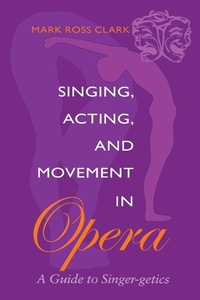
Singing, Acting, and Movement in Opera
A Guide to Singer-getics
Published on 9. April 2009
Book
Paperback/Softback
176 pages
978-0-253-21532-1 (ISBN)
Description
". . . a remarkable collection of observations and reflections on past experiences by many excellent artists and teachers that will doubtless help . . . those interested in creating 'opera magic.'" -Tito Capobianco
Singing, Acting, and Movement in Opera is designed for use in opera and musical theater workshops and by beginning professional singers. Drawing on years of research, teaching, and performing, Mark Ross Clark provides an overview of dramatic methodology for the singing actor, encouraging the student's active participation through practical exercises and application to well-known works. The Singer-getics method emphasizes integration of the various dimensions of opera performance, creating synergies among vocal performance, character development, facial expression, and movement on the stage. The book presents important information about stagecraft, characterization, posture, historical styles, performance anxiety, aria, and scene analysis. Excerpts from interviews with performers, directors, conductors, coaches, composers, and teachers offer insights and advice, allowing the reader to "meet the artists." An appendix by postural alignment specialist Emily Bogard describes techniques of relaxation and self-awareness for the performer. This lively book will appeal to students, teachers, professionals, and general readers alike.
Singing, Acting, and Movement in Opera is designed for use in opera and musical theater workshops and by beginning professional singers. Drawing on years of research, teaching, and performing, Mark Ross Clark provides an overview of dramatic methodology for the singing actor, encouraging the student's active participation through practical exercises and application to well-known works. The Singer-getics method emphasizes integration of the various dimensions of opera performance, creating synergies among vocal performance, character development, facial expression, and movement on the stage. The book presents important information about stagecraft, characterization, posture, historical styles, performance anxiety, aria, and scene analysis. Excerpts from interviews with performers, directors, conductors, coaches, composers, and teachers offer insights and advice, allowing the reader to "meet the artists." An appendix by postural alignment specialist Emily Bogard describes techniques of relaxation and self-awareness for the performer. This lively book will appeal to students, teachers, professionals, and general readers alike.
More details
Language
English
Place of publication
Bloomington, IN
United States
Target group
Professional and scholarly
Product notice
Paperback (trade)
Illustrations
1 figures, 1 bibliog., 1 index
Dimensions
Height: 234 mm
Width: 156 mm
Thickness: 9 mm
Weight
272 gr
ISBN-13
978-0-253-21532-1 (9780253215321)
Copyright in bibliographic data and cover images is held by Nielsen Book Services Limited or by the publishers or by their respective licensors: all rights reserved.
Schweitzer Classification
Person
A singer and teacher, Mark Ross Clark has taught opera workshop for 20 years and has directed and produced over 50 operas in professional and university venues. He holds a doctorate in opera production and degrees in vocal performance, and is currently Associate Professor in the Indiana University School of Music and IU Opera Theater Production Director.
Content
Preliminary Table of Contents:
Contents
Foreword: A Message from Tito Capobianco
List of Interviews
Using the Guidebook
I. PREPARATION
1. Body Awareness: Stretching For Flexibility and Power
2. Postural: Aligning the Body
3. The Expressive Face: Communicating Emotions Onstage
4. Character Study: Decoding the Clues to Character
5. Environment: Setting the Stage
II. INTEGRATION
6. Elements of Stagecraft: Learning the Language
7. Historical Etiquette: Bowing to Tradition
8. Improvisation: Unlocking the Imagination
9. Monologues: Talking Opera
10. Physical Analysis: Moving in Character
III. APPLICATION
11. The Aria: Making Choices
12. The Scene: Putting it all Together
13. The Opera: Preparing a Role
14. Performance Anxiety: Facing Fear
15. Careers in Opera: Stepping Out
Appendix A: Attitude Chart
Appendix B: "Postural Alignment" by Emily Bogard
Appendix C: Literary Background of Selected Operas
Appendix D: Stage Manager's Handbook
Appendix E: Stage Combat: Faints, Falls, and Fights
Bibliography
Contents
Foreword: A Message from Tito Capobianco
List of Interviews
Using the Guidebook
I. PREPARATION
1. Body Awareness: Stretching For Flexibility and Power
2. Postural: Aligning the Body
3. The Expressive Face: Communicating Emotions Onstage
4. Character Study: Decoding the Clues to Character
5. Environment: Setting the Stage
II. INTEGRATION
6. Elements of Stagecraft: Learning the Language
7. Historical Etiquette: Bowing to Tradition
8. Improvisation: Unlocking the Imagination
9. Monologues: Talking Opera
10. Physical Analysis: Moving in Character
III. APPLICATION
11. The Aria: Making Choices
12. The Scene: Putting it all Together
13. The Opera: Preparing a Role
14. Performance Anxiety: Facing Fear
15. Careers in Opera: Stepping Out
Appendix A: Attitude Chart
Appendix B: "Postural Alignment" by Emily Bogard
Appendix C: Literary Background of Selected Operas
Appendix D: Stage Manager's Handbook
Appendix E: Stage Combat: Faints, Falls, and Fights
Bibliography