

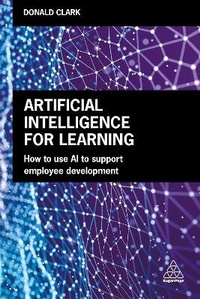
Artificial Intelligence for Learning
How to use AI to Support Employee Development
1st Edition
Published on 13. August 2020
Book
Hardback
320 pages
978-1-78966-083-8 (ISBN)
Description
Artificial intelligence is creating huge opportunities for workplace learning and employee development. However, it can be difficult for L&D professionals to assess what difference AI can make in their organization and where it is best implemented.
Artificial Intelligence for Learning is the practical guide L&D practitioners need to understand what AI is and how to use it to improve all aspects of learning in the workplace. It includes specific guidance on how AI can provide content curation and personalization to improve learner engagement, how it can be implemented to improve the efficiency of evaluation, assessment and reporting and how chatbots can provide learner support to a global workforce.
Artificial Intelligence for Learning debunks the myths and cuts through the hype around AI allowing L&D practitioners to feel confident in their ability to critically assess where artificial intelligence can make a measurable difference and where it is worth investing in. There is also critical discussion of how AI is an aid to learning and development, not a replacement as well as how it can be used to boost the effectiveness of workplace learning, reduce drop off rates in online learning and improve ROI. With real-world examples from companies who have effectively implemented AI and seen the benefits as well as case studies from organizations including Netflix, British Airways and the NHS, this book is essential reading for all L&D practitioners needing to understand AI and what it means in practice.
Artificial Intelligence for Learning is the practical guide L&D practitioners need to understand what AI is and how to use it to improve all aspects of learning in the workplace. It includes specific guidance on how AI can provide content curation and personalization to improve learner engagement, how it can be implemented to improve the efficiency of evaluation, assessment and reporting and how chatbots can provide learner support to a global workforce.
Artificial Intelligence for Learning debunks the myths and cuts through the hype around AI allowing L&D practitioners to feel confident in their ability to critically assess where artificial intelligence can make a measurable difference and where it is worth investing in. There is also critical discussion of how AI is an aid to learning and development, not a replacement as well as how it can be used to boost the effectiveness of workplace learning, reduce drop off rates in online learning and improve ROI. With real-world examples from companies who have effectively implemented AI and seen the benefits as well as case studies from organizations including Netflix, British Airways and the NHS, this book is essential reading for all L&D practitioners needing to understand AI and what it means in practice.
Reviews / Votes
"The world of workplace learning will be dominated by AI within a few years. Artificial Intelligence for Learning plots a clear and concise path through what is the biggest opportunity the industry has had for many years." * Paul McElvaney, CEO of Learning Pool * "Donald Clark has been at the leading edge of technology in learning for over 30 years. His take on tech is always informed by his detailed knowledge of learning theory. This book on AI is no exception - it's bold, thorough, bang up to date, well-researched, evidence-based and practical." * Kirstie Donnelly MBE, CEO of City & Guilds Group *More details
Language
English
Place of publication
London
United Kingdom
Target group
College/higher education
Professional and scholarly
Product notice
Cloth over boards
Dimensions
Height: 241 mm
Width: 165 mm
Thickness: 30 mm
Weight
765 gr
ISBN-13
978-1-78966-083-8 (9781789660838)
Copyright in bibliographic data and cover images is held by Nielsen Book Services Limited or by the publishers or by their respective licensors: all rights reserved.
Schweitzer Classification
Other editions
New editions
Donald Clark
Artificial Intelligence for Learning
Using AI and Generative AI to Support Learner Development
Book
05/2024
2nd Edition
Kogan Page Ltd
€127.90
Shipment within 10-20 days
Additional editions
Book
08/2020
1st Edition
Kogan Page Ltd
€41.50
Article exhausted; check for reprint
Person
Donald Clark has over 30 years' experience in online learning, simulations, virtual reality, mobile and artificial intelligence projects. He was a founding member of Epic Group plc and the Founder and CEO of Wildfire Learning. He is a frequent global speaker, blogger, advisor and researcher on AI in learning and is also a Visiting Professor at the University of Derby.
Content
Section - PART ONE: Introduction;
Section - 01: Homo technus;
Section - 02: What is AI?;
Section - PART TWO: Teaching;
Section - 03: Robot teacher fallacy;
Section - 04: Teaching;
Section - PART THREE: Chatbots;
Section - 05: AI is the new UI;
Section - 06: Chatbots;
Section - 07: Building chatbots;
Section - PART FOUR: Learning;
Section - 08: Content creation;
Section - 09: Video;
Section - 10: Push learning;
Section - 11: Adaptive learning;
Section - 12: Learning organizations;
Section - 13: Assessment;
Section - PART FIVE: Data;
Section - 14: Data analytics;
Section - 15: Sentiment analysis;
Section - PART SIX: Future;
Section - 16: Future skills;
Section - 17: Ethics and bias;
Section - 18: Employment;
Section - 19: The final frontier;
Section - 20: Where next?;
Section - 21: Index
Section - 01: Homo technus;
Section - 02: What is AI?;
Section - PART TWO: Teaching;
Section - 03: Robot teacher fallacy;
Section - 04: Teaching;
Section - PART THREE: Chatbots;
Section - 05: AI is the new UI;
Section - 06: Chatbots;
Section - 07: Building chatbots;
Section - PART FOUR: Learning;
Section - 08: Content creation;
Section - 09: Video;
Section - 10: Push learning;
Section - 11: Adaptive learning;
Section - 12: Learning organizations;
Section - 13: Assessment;
Section - PART FIVE: Data;
Section - 14: Data analytics;
Section - 15: Sentiment analysis;
Section - PART SIX: Future;
Section - 16: Future skills;
Section - 17: Ethics and bias;
Section - 18: Employment;
Section - 19: The final frontier;
Section - 20: Where next?;
Section - 21: Index