

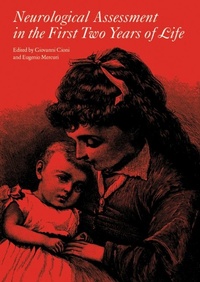
Neurological Assessment in the First Two Years of Life
Instruments for the Follow-Up of High-Risk Newborns
1st Edition
Will be published approx. on 21. January 2008
Book
Hardback
256 pages
978-1-898683-54-4 (ISBN)
Description
Clinics in Developmental Medicine No. 176 The book provides a review of the state of the art of neurological assessment in the first two years of life and identifies the most appropriate instruments for the follow-up of newborns who are at risk of developing neurological abnormalities.
After a brief description of the neurophysiological basis of development in the first years, the book provides a comprehensive review of the various methods used for the neurological assessment in young infants describing how a combined approach of clinical and instrumental investigations can provide important diagnostic and prognostic information.
The first part of the book describes the most used clinical neurological examinations and their applications in infants with neurological abnormalities, followed by a description of the value of neuroimaging and neurophysiological techniques in normal preterm and full term infants in the first two years and the main types of abnormal MR findings of neurophysiological findings (EEG and evoked potentials) in relation to brain lesions.
Other sections include chapters describing techniques assessing specific aspects of cognitive, perceptual and sensory abilities. Special attention is given to hearing, language and communication and to development of vision and visual attention both in normal infants and in those with neonatal brain lesions.
The final chapters are devoted to intervention, describing how the identification of specific profiles of impairment can lead to the development of appropriate plans of early intervention.
After a brief description of the neurophysiological basis of development in the first years, the book provides a comprehensive review of the various methods used for the neurological assessment in young infants describing how a combined approach of clinical and instrumental investigations can provide important diagnostic and prognostic information.
The first part of the book describes the most used clinical neurological examinations and their applications in infants with neurological abnormalities, followed by a description of the value of neuroimaging and neurophysiological techniques in normal preterm and full term infants in the first two years and the main types of abnormal MR findings of neurophysiological findings (EEG and evoked potentials) in relation to brain lesions.
Other sections include chapters describing techniques assessing specific aspects of cognitive, perceptual and sensory abilities. Special attention is given to hearing, language and communication and to development of vision and visual attention both in normal infants and in those with neonatal brain lesions.
The final chapters are devoted to intervention, describing how the identification of specific profiles of impairment can lead to the development of appropriate plans of early intervention.
More details
Series
Language
English
Place of publication
Cambridge
United Kingdom
Target group
Professional and scholarly
Product notice
sewn/stitched
Cloth over boards
With dust jacket
Dimensions
Height: 255 mm
Width: 177 mm
Thickness: 22 mm
Weight
669 gr
ISBN-13
978-1-898683-54-4 (9781898683544)
Copyright in bibliographic data and cover images is held by Nielsen Book Services Limited or by the publishers or by their respective licensors: all rights reserved.
Schweitzer Classification
Other editions
Additional editions

Giovanni Cioni | Eugenio Mercuri
Neurological Assessment in the First Two Years of Life
E-Book
01/2008
1st Edition
Mac Keith Press
€133.29
Available for download

Giovanni Cioni | Eugenio Mercuri
Neurological Assessment in the First Two Years of Life
E-Book
01/2008
Mac Keith Press
€112.99
Available for download
Persons
Giovanni Cioni and Eugenio Mercuri are the authors of Neurological Assessment in the First Two Years of Life, published by Wiley.
Content
Authors' Appointments
Chapter 1: Introduction
Chapter 2: Neurophysiological Basis of Development
Chapter 3: Neurological Assessment in Normal Young Infants
Chapter 4: Classical Neurological Examination in Young Infants with Neonatal Brain Lesions
Chapter 5: Other Approaches to Neurological Assessment
Chapter 6: Magnetic Resonance Imaging of the Infant Brain
Chapter 7: Diagnostic and Prognostic Value of Electrophysiology
Chapter 8: Assessment of the Development of High-Risk Infants in the First Two Years
Chapter 9: Cognitive Development in the First Two Years of Life
Chapter 10: Hearing, Language and Communication
Chapter 11: Development of Vision and Visual Attention
Chapter 12: Visual Function in Children with Neonatal Brain Lesions
Chapter 13: From Observation to Rehabilitation
Chapter 14: Longitudinal Multi-Centre Follow-Up of High-Risk Neonates: Current Status and Future Prospects
Index
Chapter 1: Introduction
Chapter 2: Neurophysiological Basis of Development
Chapter 3: Neurological Assessment in Normal Young Infants
Chapter 4: Classical Neurological Examination in Young Infants with Neonatal Brain Lesions
Chapter 5: Other Approaches to Neurological Assessment
Chapter 6: Magnetic Resonance Imaging of the Infant Brain
Chapter 7: Diagnostic and Prognostic Value of Electrophysiology
Chapter 8: Assessment of the Development of High-Risk Infants in the First Two Years
Chapter 9: Cognitive Development in the First Two Years of Life
Chapter 10: Hearing, Language and Communication
Chapter 11: Development of Vision and Visual Attention
Chapter 12: Visual Function in Children with Neonatal Brain Lesions
Chapter 13: From Observation to Rehabilitation
Chapter 14: Longitudinal Multi-Centre Follow-Up of High-Risk Neonates: Current Status and Future Prospects
Index