

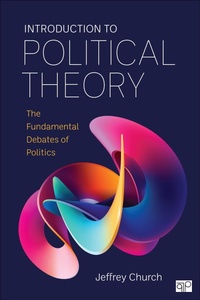
Introduction to Political Theory
The Fundamental Debates of Politics
1st Edition
Published on 28. April 2026
Book
Paperback/Softback
368 pages
978-1-0719-7179-6 (ISBN)
Description
Introduction to Political Theory makes political theory approachable for students, pairing classical exercises with contemporary examples to engage readers and give them a strong foundation for future study.
Reviews / Votes
Jeff Church provides an invaluable introduction to the major themes and problems of contemporary political theory. His Socratic approach of weighing the pros and cons of every argument will make this a truly useful classroom guide. This is a book that can be read with profit by both students and their teachers. -- Steven B. Smith * Review * Jeffrey Church has undertaken the daunting task of synthesizing in plain language some of history's most difficult, yet essential, ideas about the nature of political thinking, institutions, and reasoning. Through appealing examples, provoking questions, and impeccably organized chapters, the book confronts the fundamental questions of political theory. It's an outstanding introduction to the major issues in the field -- highly recommended! -- David Lay Williams * Review * Jeffrey Church's Introduction to Political Theory: The Fundamental Debates of Politics is a model of pedagogical clarity. The chapters are written in a way that does justice to the complexity of the concepts and texts under consideration, while sacrificing nothing in the way of accessibility for students new to political theory. This book is a fantastic choice for instructors and addresses the requests we often get from students for supplemental materials to help them synthesize information, assess their comprehension, and practice applying the ideas to real-world problems. -- Sara Rushing * Review * Jeffrey Church's book is a masterpiece that in a conversational manner teaches students about the main themes, concepts, figures, and books in the history of political theory. As long-time host of The Political Theory Review, Church knows about the latest developments in the field, and his textbook helps teachers and students understand and participate in the most urgent debates about justice, democracy, freedom of speech, and international relations. -- Nicholas Tampio * Review * An excellent introductory text. It strikes a perfect balance between informing newcomers about the classic works in the field and using their contributions to provoke readers' own thinking. -- Colin Bird * Review *More details
Edition
First Edition
Language
English
Place of publication
Thousand Oaks
United States
Publishing group
Sage Publications Inc Ebooks
Target group
College/higher education
Dimensions
Height: 228 mm
Width: 152 mm
Weight
490 gr
ISBN-13
978-1-0719-7179-6 (9781071971796)
Copyright in bibliographic data and cover images is held by Nielsen Book Services Limited or by the publishers or by their respective licensors: all rights reserved.
Schweitzer Classification
Person
Jeffrey Church is Professor of Political Science at the University of Wisconsin, Madison. His research is in the history of political thought, and he has published four books, three book-length translations, and many articles and book chapters in prestigious academic outlets. He is the host of the podcast The Political Theory Review, which keeps listeners up to date on the most recent research in Political Theory. He is the co-founder of the Association for the History of Political Thought, an academic organization that promotes scholarship in this area of study.
Content
Preface
Acknowledgements
About the Author
Introduction
Chapter 1: The Basic Political Goods
What Are Basic Goods?
Security
Freedom
Development
Excellence
Well-Being
Intrinsic Goods are also Instrumental Goods
The Goods in Conflict
Discussion Questions
Further Reading
Key Terms
Chapter 2: Justice
What is Justice?
Justice and Power
Corrective Justice
Distributive Justice
Discussion Questions
Further Reading
Key Terms
Chapter 3: Human Nature
What is Human Nature?
The Fundamental Debates Over Human Nature
How Human Nature Influences Political Debate
Discussion Questions
Further Reading
Key Terms
Chapter 4: The State
What is the State?
Security versus Liberty in the Use of State Power
Liberty versus Well-Being in the Use of State Power
The State's Different Forms of Power
Centralization versus Decentralization of State Power
Discussion Questions
Further Reading
Key Terms
Chapter 5: The Rule of Law
What is the Rule of Law?
The Case Against the Rule of Law
The Case for the Rule of Law
What Kind of Rule of Law?
What Kind of Rule of Law?
Discussion Questions
Further Reading
Key Terms
Chapter 6: Democracy
What is Democracy?
Direct Democracy
Indirect Democracy
Epistocracy against Democracy
Human Nature and Democracy
Discussion Questions
Further Reading
Key Terms
Chapter 7: Capitalism
What is Capitalism?
The Case for and against Capitalism: Freedom
The Case for and against the Welfare and Regulatory State: Freedom
The Case for Capitalism: Development
The Case for and against Capitalism: Justice
The Case against Capitalism: Well-Being
Capitalism and Human Nature
Discussion Questions
Further Reading
Key Terms
Chapter 8: Nation and Culture
The National Community
The Case for Patriotism and Nationalism: Security
The Case against Patriotism and Nationalism: Freedom and Justice
The Case for Patriotism: Freedom and Justice
The Case for Patriotism: Freedom and Justice
Political Communities: Excellence and Well-Being
Human Nature and Political Community
Discussion Questions
Further Reading
Key Terms
Chapter 9: Science and Religion
What are science and religion?
The Case for Science: Development and Well-Being
The Case against Science: Freedom and Happiness
The Case for Religion: Freedom, Justice, and Well-Being
The Case against Religion: Freedom, Justice, and Development
Education to Science and Religion: Arguments For and Against
Discussion Questions
Further Reading
Key Terms
Chapter 10: Freedom of Speech and Its Critics
What is the Freedom of Speech?
The Case for the Freedom of Speech: Freedom and Development
The Case against the Freedom of Speech: Security, Freedom, Equality, Well-Being
The Case against Censorship: Freedom and Development
Human Nature and Freedom of Speech
Discussion Questions
Further Reading
Key Terms
Chapter 11: Imperialism and International Relations
How Should International Relations be Conducted?
The Case for Raison d'Etat: Security and Liberty
Raison d'Etat: Isolation or Expansion?
The Case against Raison D'Etat: Justice and Well-Being
The Case for Idealism: Justice and Well-Being
Idealism: Intervention or Imperialism?
The Case against Idealism: Security and Liberty
A World State? Raison d'Etat and Idealist Perspectives
Discussion Questions
Further Reading
Key Terms
Glossary
Notes
Index
Acknowledgements
About the Author
Introduction
Chapter 1: The Basic Political Goods
What Are Basic Goods?
Security
Freedom
Development
Excellence
Well-Being
Intrinsic Goods are also Instrumental Goods
The Goods in Conflict
Discussion Questions
Further Reading
Key Terms
Chapter 2: Justice
What is Justice?
Justice and Power
Corrective Justice
Distributive Justice
Discussion Questions
Further Reading
Key Terms
Chapter 3: Human Nature
What is Human Nature?
The Fundamental Debates Over Human Nature
How Human Nature Influences Political Debate
Discussion Questions
Further Reading
Key Terms
Chapter 4: The State
What is the State?
Security versus Liberty in the Use of State Power
Liberty versus Well-Being in the Use of State Power
The State's Different Forms of Power
Centralization versus Decentralization of State Power
Discussion Questions
Further Reading
Key Terms
Chapter 5: The Rule of Law
What is the Rule of Law?
The Case Against the Rule of Law
The Case for the Rule of Law
What Kind of Rule of Law?
What Kind of Rule of Law?
Discussion Questions
Further Reading
Key Terms
Chapter 6: Democracy
What is Democracy?
Direct Democracy
Indirect Democracy
Epistocracy against Democracy
Human Nature and Democracy
Discussion Questions
Further Reading
Key Terms
Chapter 7: Capitalism
What is Capitalism?
The Case for and against Capitalism: Freedom
The Case for and against the Welfare and Regulatory State: Freedom
The Case for Capitalism: Development
The Case for and against Capitalism: Justice
The Case against Capitalism: Well-Being
Capitalism and Human Nature
Discussion Questions
Further Reading
Key Terms
Chapter 8: Nation and Culture
The National Community
The Case for Patriotism and Nationalism: Security
The Case against Patriotism and Nationalism: Freedom and Justice
The Case for Patriotism: Freedom and Justice
The Case for Patriotism: Freedom and Justice
Political Communities: Excellence and Well-Being
Human Nature and Political Community
Discussion Questions
Further Reading
Key Terms
Chapter 9: Science and Religion
What are science and religion?
The Case for Science: Development and Well-Being
The Case against Science: Freedom and Happiness
The Case for Religion: Freedom, Justice, and Well-Being
The Case against Religion: Freedom, Justice, and Development
Education to Science and Religion: Arguments For and Against
Discussion Questions
Further Reading
Key Terms
Chapter 10: Freedom of Speech and Its Critics
What is the Freedom of Speech?
The Case for the Freedom of Speech: Freedom and Development
The Case against the Freedom of Speech: Security, Freedom, Equality, Well-Being
The Case against Censorship: Freedom and Development
Human Nature and Freedom of Speech
Discussion Questions
Further Reading
Key Terms
Chapter 11: Imperialism and International Relations
How Should International Relations be Conducted?
The Case for Raison d'Etat: Security and Liberty
Raison d'Etat: Isolation or Expansion?
The Case against Raison D'Etat: Justice and Well-Being
The Case for Idealism: Justice and Well-Being
Idealism: Intervention or Imperialism?
The Case against Idealism: Security and Liberty
A World State? Raison d'Etat and Idealist Perspectives
Discussion Questions
Further Reading
Key Terms
Glossary
Notes
Index