

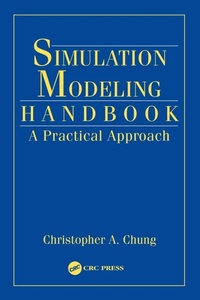
Simulation Modeling Handbook
A Practical Approach
1st Edition
Published on 15. July 2003
Book
Hardback
602 pages
978-0-8493-1241-0 (ISBN)
Description
The use of simulation modeling and analysis is becoming increasingly more popular as a technique for improving or investigating process performance. This book is a practical, easy-to-follow reference that offers up-to-date information and step-by-step procedures for conducting simulation studies. It provides sample simulation project support material, including checklists, data-collection forms, and sample simulation project reports and publications to facilitate practitioners' efforts in conducting simulation modeling and analysis projects.
Simulation Modeling Handbook: A Practical Approach has two major advantages over other treatments. First, it is independent of any particular simulation software, allowing readers to use any commercial package or programming language. Second, it was written to insulate practitioners from unnecessary simulation theory that does not focus on their average, practical needs.
As the popularity of simulation studies continues to grow, the planning and execution of these projects, more and more engineering and management professionals will be called upon to perform these tasks. With its simple, no-nonsense approach and focus on application rather than theory, this comprehensive and easy-to-understand guide is the ideal vehicle for acquiring the background and skills needed to undertake effective simulation projects.
Features
Presents step-by-step procedures for conducting successful simulation modeling and analysis
Addresses every phase of performing simulations, from formulating the problem to presenting study results and recommendations
Uses approaches applicable regardless of the specific simulation or software used
Includes a summary of the major simulation software packages and discusses the pros and cons of using general purpose programming languages
Simulation Modeling Handbook: A Practical Approach has two major advantages over other treatments. First, it is independent of any particular simulation software, allowing readers to use any commercial package or programming language. Second, it was written to insulate practitioners from unnecessary simulation theory that does not focus on their average, practical needs.
As the popularity of simulation studies continues to grow, the planning and execution of these projects, more and more engineering and management professionals will be called upon to perform these tasks. With its simple, no-nonsense approach and focus on application rather than theory, this comprehensive and easy-to-understand guide is the ideal vehicle for acquiring the background and skills needed to undertake effective simulation projects.
Features
Presents step-by-step procedures for conducting successful simulation modeling and analysis
Addresses every phase of performing simulations, from formulating the problem to presenting study results and recommendations
Uses approaches applicable regardless of the specific simulation or software used
Includes a summary of the major simulation software packages and discusses the pros and cons of using general purpose programming languages
More details
Series
Language
English
Place of publication
Bosa Roca
United States
Publishing group
Taylor & Francis Inc
Target group
Professional and scholarly
Professional Practice & Development
Dimensions
Height: 260 mm
Width: 183 mm
Thickness: 37 mm
Weight
1311 gr
ISBN-13
978-0-8493-1241-0 (9780849312410)
Copyright in bibliographic data and cover images is held by Nielsen Book Services Limited or by the publishers or by their respective licensors: all rights reserved.
Schweitzer Classification
Other editions
Additional editions
Book
09/2019
1st Edition
CRC Press
€99.30
Shipment within 15-20 days
E-Book
07/2003
CRC Press
€92.49
Available for download
E-Book
07/2003
CRC Press
€92.49
Available for download
Person
Christopher A. Chung
Content
Introduction. Problem Definition. Project Planning. System Definition. Model Formulation. Input Data collection and Analysis. Model Transition. Verification and Validation. Experimentation and Analysis. Generating Conclusions and Recommendations. New Developments in Simulation Analysis.