

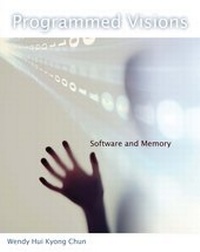
Programmed Visions
Software and Memory
Published on 29. April 2011
Book
Hardback
256 pages
978-0-262-01542-4 (ISBN)
Description
New media thrives on cycles of obsolescence and renewal: from celebrations of
cyber-everything to Y2K, from the dot-com bust to the next big things -- mobile mobs, Web 3.0, cloud
computing. In Programmed Visions, Wendy Hui Kyong Chun argues that these cycles
result in part from the ways in which new media encapsulates a logic of programmability. New media
proliferates "programmed visions," which seek to shape and predict -- even embody -- a
future based on past data. These programmed visions have also made computers, based on metaphor,
metaphors for metaphor itself, for a general logic of substitutability.
Chun
argues that the clarity offered by software as metaphor should make us pause, because software also
engenders a profound sense of ignorance: who knows what lurks behind our smiling interfaces, behind
the objects we click and manipulate? The combination of what can be seen and not seen, known
(knowable) and not known -- its separation of interface from algorithm and software from hardware --
makes it a powerful metaphor for everything we believe is invisible yet generates visible, logical
effects, from genetics to the invisible hand of the market, from ideology to culture.
cyber-everything to Y2K, from the dot-com bust to the next big things -- mobile mobs, Web 3.0, cloud
computing. In Programmed Visions, Wendy Hui Kyong Chun argues that these cycles
result in part from the ways in which new media encapsulates a logic of programmability. New media
proliferates "programmed visions," which seek to shape and predict -- even embody -- a
future based on past data. These programmed visions have also made computers, based on metaphor,
metaphors for metaphor itself, for a general logic of substitutability.
Chun
argues that the clarity offered by software as metaphor should make us pause, because software also
engenders a profound sense of ignorance: who knows what lurks behind our smiling interfaces, behind
the objects we click and manipulate? The combination of what can be seen and not seen, known
(knowable) and not known -- its separation of interface from algorithm and software from hardware --
makes it a powerful metaphor for everything we believe is invisible yet generates visible, logical
effects, from genetics to the invisible hand of the market, from ideology to culture.
More details
Series
Language
English
Place of publication
Cambridge, Mass.
United States
Publishing group
MIT Press Ltd
Target group
College/higher education
US School Grade: College Graduate Student and over
Illustrations
27 Schaubilder
27 figures
Dimensions
Height: 229 mm
Width: 178 mm
Thickness: 0 mm
Weight
454 gr
ISBN-13
978-0-262-01542-4 (9780262015424)
Copyright in bibliographic data and cover images is held by Nielsen Book Services Limited or by the publishers or by their respective licensors: all rights reserved.
Schweitzer Classification
Other editions
Additional editions
Book
01/2013
MIT Press
€27.10
Article exhausted; check different version