

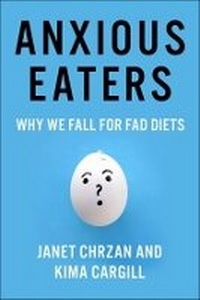
Anxious Eaters
Why We Fall for Fad Diets
Will be published approx. on 30. August 2022
Book
Hardback
360 pages
978-0-231-19244-6 (ISBN)
Description
What makes fad diets so appealing to so many people? How did there get to be so many different ones, often with eerily similar prescriptions? Why do people cycle on and off diets, perpetually searching for that one simple trick that will solve everything? And how did these fads become so central to conversations about food and nutrition?
Anxious Eaters shows that fad diets are popular because they fulfill crucial social and psychological needs-which is also why they tend to fail. Janet Chrzan and Kima Cargill bring together anthropology, psychology, and nutrition to explore what these programs promise yet rarely fulfill for dieters. They demonstrate how fad diets help people cope with widespread anxieties and offer tantalizing glimpses of attainable self-transformation. Chrzan and Cargill emphasize the social contexts of diets, arguing that beliefs about nutrition are deeply rooted in pervasive cultural narratives. Although people choose to adopt new eating habits for individual reasons, broader forces shape why fad diets seem to make sense.
Considering dietary beliefs and practices in terms of culture, nutrition, and individual psychological needs, Anxious Eaters refrains from moralizing or promoting a "right" way to eat. Instead, it offers new ways of understanding the popularity of a wide range of eating trends, including the Atkins Diet and other low- or no-carb diets; beliefs that ingredients like wheat products and sugars are toxic, allergenic, or addictive; food avoidance and "Clean Eating" practices; and paleo or primal diets. Anxious Eaters sheds new light on why people adopt such diets and why these diets remain so attractive even though they often fail.
Anxious Eaters shows that fad diets are popular because they fulfill crucial social and psychological needs-which is also why they tend to fail. Janet Chrzan and Kima Cargill bring together anthropology, psychology, and nutrition to explore what these programs promise yet rarely fulfill for dieters. They demonstrate how fad diets help people cope with widespread anxieties and offer tantalizing glimpses of attainable self-transformation. Chrzan and Cargill emphasize the social contexts of diets, arguing that beliefs about nutrition are deeply rooted in pervasive cultural narratives. Although people choose to adopt new eating habits for individual reasons, broader forces shape why fad diets seem to make sense.
Considering dietary beliefs and practices in terms of culture, nutrition, and individual psychological needs, Anxious Eaters refrains from moralizing or promoting a "right" way to eat. Instead, it offers new ways of understanding the popularity of a wide range of eating trends, including the Atkins Diet and other low- or no-carb diets; beliefs that ingredients like wheat products and sugars are toxic, allergenic, or addictive; food avoidance and "Clean Eating" practices; and paleo or primal diets. Anxious Eaters sheds new light on why people adopt such diets and why these diets remain so attractive even though they often fail.
Reviews / Votes
[A] smart and comprehensive survey. * Publishers Weekly * Rather than guiding readers to weight loss or body acceptance, Chrzan and Cargill hope to turn the popular notion of "good" and "bad" foods inside out. * Atlantic * Two leading food scholars tackle the phenomenon of fad diets and our susceptibility to sign on to them. Akin to religious experience, the diet promises transformation, social fulfillment, and ultimately happiness and redemption. Even after repeated failures, we return to the quick and easy diet - which marketers in the industry know all too well. Chrzan and Cargill dissect our urge to control our bodies through food intake, a perennially and vitally important topic. -- Ken Albala, author of <i>At the Table: Food and Family around the World</i> In the face of overwhelming evidence that diets don't work, why do Americans continue to follow one fad diet after another? Chrzan and Cargill persuasively explain that it's not because they promote weight loss or guarantee health, but because they make cultural sense and fulfill crucial psychological needs. -- Amy Bentley, author of <i>Inventing Baby Food: Taste, Health, and the Industrialization of the American Diet</i> This enlightening and informative book explores not only how fad diets work but also why they are so wildly successful, as they provide templates for the expression of individual and social anxieties in contemporary American food culture and beyond. -- Fabio Parasecoli, author of <i>Gastronativism: Food, Identity, Politics</i> A very helpful read for anyone who finds themselves stuck in the loop of fad diets. * What's Nonfiction * A terrific book... Highly recommended. * Choice * Chrzan and Cargill effectively use their conceptual apparatus to clearly demonstrate how diets capitalize on broad social anxieties. * Gastronomica *More details
Series
Language
English
Place of publication
New York
United States
Target group
Professional and scholarly
Product notice
Trade binding
Dimensions
Height: 229 mm
Width: 152 mm
ISBN-13
978-0-231-19244-6 (9780231192446)
Copyright in bibliographic data and cover images is held by Nielsen Book Services Limited or by the publishers or by their respective licensors: all rights reserved.
Schweitzer Classification
Other editions
Additional editions
E-Book
08/2022
1st Edition
Columbia University Press
€34.49
Available for download
Persons
Janet Chrzan teaches nutritional anthropology at the University of Pennsylvania. She is the author of Alcohol: Social Drinking in Cultural Context (2013) as well as coeditor of Research Methods for the Anthropological Study of Food and Nutrition (2017) and Organic Food, Farming, and Culture (2019).
Kima Cargill is professor of psychology at the University of Washington, Tacoma. Her books include The Psychology of Overeating: Food, Culture, and Consumerism (2015) and Food Cults: How Fads, Dogma, and Doctrine Influence Diet (2016).
Kima Cargill is professor of psychology at the University of Washington, Tacoma. Her books include The Psychology of Overeating: Food, Culture, and Consumerism (2015) and Food Cults: How Fads, Dogma, and Doctrine Influence Diet (2016).
Content
Acknowledgments
Introduction
1. Why We Love Fad Diets
2. Food Removal Diets
3. Food Addiction
4. Clean Eating
5. Paleo Diets
6. Final Thoughts
Notes
Bibliography
Index
Introduction
1. Why We Love Fad Diets
2. Food Removal Diets
3. Food Addiction
4. Clean Eating
5. Paleo Diets
6. Final Thoughts
Notes
Bibliography
Index