

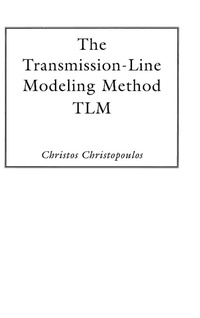
The Transmission-Line Modeling Method
TLM
1st Edition
Published on 15. September 1996
Book
Hardback
232 pages
978-0-7803-1017-9 (ISBN)
Description
Co-published with Oxford University Press. A volume in the IEEE Press/OUP Electromagnetic Wave Series. Gain a thorough understanding of one of the most important simulation tools in computational electromagnetics with this comprehensive introduction to the TLM method. Written by one of the foremost researchers in the TLM method, this book covers the entire area of electromagnetics from the basic principles to advanced formulations and applications and including microwaves, antennas, RCS, electromagnetic compatibility, and electromagnetic heating, while providing a clear explanation of modeling principles from lumped components through 1, 2 and 3 dimensional complex systems.
More details
Series
Language
English
Place of publication
United States
Publishing group
John Wiley & Sons Inc
Target group
College/higher education
Professional and scholarly
Product notice
sewn/stitched
Cloth over boards
Dimensions
Height: 235 mm
Width: 157 mm
Thickness: 17 mm
Weight
500 gr
ISBN-13
978-0-7803-1017-9 (9780780310179)
Copyright in bibliographic data and cover images is held by Nielsen Book Services Limited or by the publishers or by their respective licensors: all rights reserved.
Schweitzer Classification
Person
Christos Christopoulos is the author of The Transmission-Line Modeling Method: TLM, published by Wiley.
Content
Preface. Acknowledgments.
Chapter 1: Introduction to Numerical Modeling.
Modeling as an Intellectual Activity.
Classification of Numerical Methods.
Electrical Circuit Analogs of Physical Systems.
References.
Chapter 2: Transmission Line Theory.
Transient Response of a Line.
Sinusoidal Steady-State Response of a Line.
Dispersive Effects in Discretized Transmission Line Models.
References.
Chapter 3: Discrete Models of Lumped Components.
"Link" and "Stub" Models of Capacitors.
"Link" and "Stub" Models of Inductors.
Examples of Mixed Link and Stub Models.
Modeling of Nonlinear Elements.
Modeling of Coupled Elements.
Generalized Discrete TLM Modeling.
References.
Chapter 4: One-Dimensional TLM Models.
TLM Model of a Lossy Transmission Line.
TLM Models for One-Dimensional Electromagnetic Problems.
Study of Dispersive Effects in One-Dimensional TLM Models.
References.
Chapter 5: Two-Dimensional TLM Models.
The Series TLM Node.
The Shunt TLM Node.
Dispersion in a Two-Dimensional Mesh.
Duality in Electromagnetics.
References.
Chapter 6: Three-Dimensional TLM Models.
The Development of Three-Dimensional Nodes.
The Symmetrical Condensed Node.
The Variable Mesh SCN.
The Hybrid SCN.
An Alternative Derivation of Scattering Properties.
The Multigrid TLM Mesh.
References.
Chapter 7: The Application of TLM to Diffusion Problems.
One-Dimensional Diffusion Models.
Two-Dimensional Diffusion Models.
Three-Dimensional Diffusion Models.
Applications of the TLM Model of Diffusion Processes.
References.
Chapter 8: TLM in Vibration and Acoustics.
Torsional Waves.
Sound Waves.
References.
Chapter 9: Application of TLM to Electromagnetic Problems.
Electromagnetic Compatibility.
Microwave Design.
Radar Cross-Section (RCS).
Antennas.
Electromagnetic Heating.
References.
Chapter 10: Special Topics in TLM.
Thin-Wire Formulations.
Narrow-Slot Formulations.
Thin-Panel Formulations.
Infinitely Adjustable Boundaries.
Frequency-Domain TLM (TLM-FD).
Implementation Issues in TLM.
References.
Index.
Chapter 1: Introduction to Numerical Modeling.
Modeling as an Intellectual Activity.
Classification of Numerical Methods.
Electrical Circuit Analogs of Physical Systems.
References.
Chapter 2: Transmission Line Theory.
Transient Response of a Line.
Sinusoidal Steady-State Response of a Line.
Dispersive Effects in Discretized Transmission Line Models.
References.
Chapter 3: Discrete Models of Lumped Components.
"Link" and "Stub" Models of Capacitors.
"Link" and "Stub" Models of Inductors.
Examples of Mixed Link and Stub Models.
Modeling of Nonlinear Elements.
Modeling of Coupled Elements.
Generalized Discrete TLM Modeling.
References.
Chapter 4: One-Dimensional TLM Models.
TLM Model of a Lossy Transmission Line.
TLM Models for One-Dimensional Electromagnetic Problems.
Study of Dispersive Effects in One-Dimensional TLM Models.
References.
Chapter 5: Two-Dimensional TLM Models.
The Series TLM Node.
The Shunt TLM Node.
Dispersion in a Two-Dimensional Mesh.
Duality in Electromagnetics.
References.
Chapter 6: Three-Dimensional TLM Models.
The Development of Three-Dimensional Nodes.
The Symmetrical Condensed Node.
The Variable Mesh SCN.
The Hybrid SCN.
An Alternative Derivation of Scattering Properties.
The Multigrid TLM Mesh.
References.
Chapter 7: The Application of TLM to Diffusion Problems.
One-Dimensional Diffusion Models.
Two-Dimensional Diffusion Models.
Three-Dimensional Diffusion Models.
Applications of the TLM Model of Diffusion Processes.
References.
Chapter 8: TLM in Vibration and Acoustics.
Torsional Waves.
Sound Waves.
References.
Chapter 9: Application of TLM to Electromagnetic Problems.
Electromagnetic Compatibility.
Microwave Design.
Radar Cross-Section (RCS).
Antennas.
Electromagnetic Heating.
References.
Chapter 10: Special Topics in TLM.
Thin-Wire Formulations.
Narrow-Slot Formulations.
Thin-Panel Formulations.
Infinitely Adjustable Boundaries.
Frequency-Domain TLM (TLM-FD).
Implementation Issues in TLM.
References.
Index.