


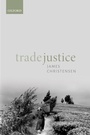
Trade Justice
Published on 16. November 2017
Book
Hardback
172 pages
978-0-19-881035-3 (ISBN)
Description
The international trading system remains a locus of fierce social conflict. The protesters who besiege gatherings of its managers-most famously on the streets of Seattle at the turn of the millennium-regard it with suspicion and hostility, as a threat to their livelihoods, an enemy of global justice, and their grievances are exploited by populist statesmen peddling their own mercantilist agendas. If we are to support the trading system, we must first assure ourselves that it can withstand moral scrutiny. We must ensure that it works for and not against those whom it envelops; that it serves to emancipate, not ensnare.
While there is an extensive literature addressing the economic and legal aspects of trade, the ethical questions its raises have escaped close inspection. This book contributes to resetting the balance. It grapples with moral quandaries relating to world politics, globalization, and international commerce, and recognizes that resolving these problems is essential if we are to move toward a world in which trade justice is a reality.
While there is an extensive literature addressing the economic and legal aspects of trade, the ethical questions its raises have escaped close inspection. This book contributes to resetting the balance. It grapples with moral quandaries relating to world politics, globalization, and international commerce, and recognizes that resolving these problems is essential if we are to move toward a world in which trade justice is a reality.
Reviews / Votes
This book represents a significant step forwards in debates on trade justice. Christensen wrestles with tremendously difficult moral questions how should trade be restricted, if ever? how should its proceeds be distributed? - and handles them with impressive clarity and acuity. His (often surprising) conclusions will be of interest to both scholars and policy-makers. * Chris Armstrong, Professor in Political Theory, University of Southampton * Whilst concerned citizens have campaigned for fair trade, political philosophers have (with some distinguished exceptions) not engaged in ethical analyses of international trade. In this excellent work, James Christensen addresses this lacuna. Trade Justice provides a sophisticated and illuminating normative evaluation of many aspects of international trade. Combining philosophical argument with empirical evidence, Christensen develops a plausible account of when trade may be permissibly restricted, how the benefits of trade should be distributed, and what role equality should play in accounts of trade justice. * Simon Caney, Professor in Political Theory, University of Oxford * James Christensens Trade Justice probes a wide array of issues related to international trade, many of which have been overlooked by political theorists Christensens text is refreshingly pragmatic. It takes the world as it is and asks where justice and injustice lie in this nonideal landscape. For a work in political philosophy, it is admirably conversant with the relevant economics and social science research. Future normative inquiry into international trade would do well to begin here [This is a] well argued and largely persuasive book. Christensen deserves praise for his attentiveness to often-neglected problems as well as for his generally innovative approach. * Ethics and International Affairs *More details
Language
English
Place of publication
Oxford
United Kingdom
Target group
College/higher education
Professional and scholarly
Dimensions
Height: 240 mm
Width: 161 mm
Thickness: 14 mm
Weight
429 gr
ISBN-13
978-0-19-881035-3 (9780198810353)
Copyright in bibliographic data and cover images is held by Nielsen Book Services Limited or by the publishers or by their respective licensors: all rights reserved.
Schweitzer Classification
Other editions
Additional editions
Person
James Christensen is a Lecturer in Political Theory at the University of Essex. He completed his doctoral research at the University of Oxford.
Content
1: Introduction
2: The Harms of Trade I: Weapons, Drugs, and Hazardous Waste
3: The Harms of Trade II: Non-Human Animals
4: The Harms of Trade III: Labour, Culture, and Development
5: The Opportunities of Trade
6: The Gains From Trade
7: Conclusion
2: The Harms of Trade I: Weapons, Drugs, and Hazardous Waste
3: The Harms of Trade II: Non-Human Animals
4: The Harms of Trade III: Labour, Culture, and Development
5: The Opportunities of Trade
6: The Gains From Trade
7: Conclusion