

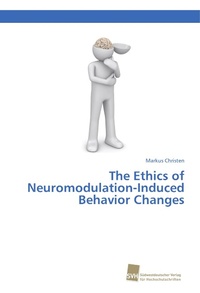
The Ethics of Neuromodulation-Induced Behavior Changes
Published on 15. March 2018
Book
Paperback/Softback
92 pages
978-3-8381-5240-0 (ISBN)
Description
Understanding how the brain produces behavior is a guiding idea in neuroscience. Thus, establishing an interrelation between the brain and moral behavior has a long history in brain research. However, linking the brain with moral agency is tricky both with respect to the scientific endeavor as to therapy and rehabilitation of patients affected by brain lesions or neuromodulation interventions. Most of these interventions do not target moral or social behavior per se, but behavior changes with a moral or social connotation may result as mostly unintended side effects. This study outlines the complexity of the relationship between the brain and moral behavior and discusses ethical issues with a particular focus on neuromodulation in clinical settings. Brain interventions with a therapeutic aim affect the human being as a whole. Therefore, their ethical evaluation requires a broad approach that goes beyond a mere individualistic focus. This is due to the fact that moral behavior is a genuine social phenomenon.
More details
Language
English
Product notice
Paperback (trade)
Unsewn / adhesive bound
Dimensions
Height: 220 mm
Width: 150 mm
Thickness: 7 mm
Weight
155 gr
ISBN-13
978-3-8381-5240-0 (9783838152400)
Copyright in bibliographic data and cover images is held by Nielsen Book Services Limited or by the publishers or by their respective licensors: all rights reserved.
Schweitzer Classification
Person
Markus Christen is a Senior Research Fellow at the Centre for Ethics of the University of Zurich. His research interests are in empirical ethics, neuroethics, ICT ethics and data analysis methodologies.